
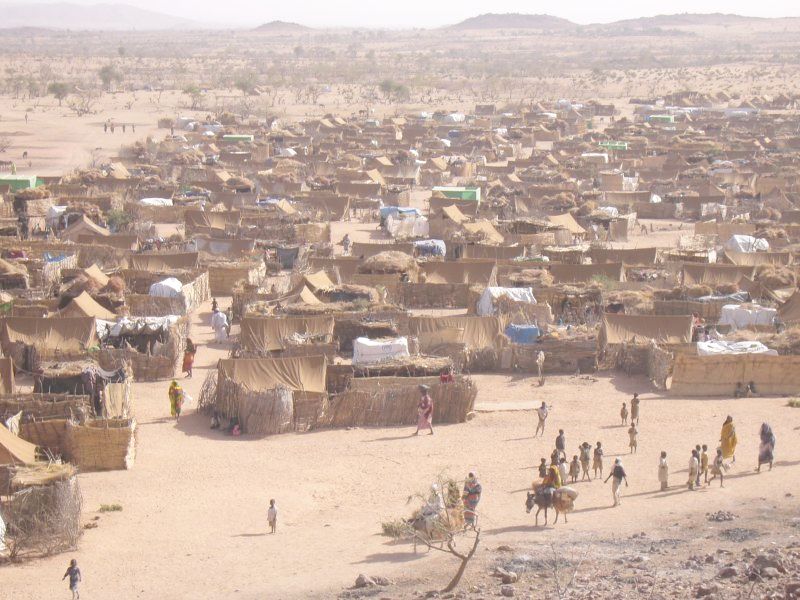
International Criminal Court prosecutors have achieved a breakthrough in linking war crimes committed during Sudan's Darfur conflict directly to leadership, ICC deputy prosecutor Nazhat Shameem Khan told Reuters following a visit to eastern Chad on Friday. The development marks a significant step in holding accountable those who directed atrocities rather than merely foot soldiers.
Khan met with victims of the attacks in eastern Chad, where many survivors have fled across the border. The investigation focuses on crimes committed during the ongoing Darfur conflict, a region that's seen waves of violence and displacement over the past two decades.
The Investigation's Progress
The deputy prosecutor described the advancement as a "breakthrough" in connecting documented atrocities to command structures. This represents a critical shift in the court's ability to prosecute senior officials rather than lower-level perpetrators. Khan's statement to Reuters came after she concluded meetings with victims who've provided testimony about the attacks they witnessed and survived.
The ICC's work in eastern Chad reflects the cross-border nature of the Darfur crisis, where conflict regularly spills into neighboring territories. Chad has hosted hundreds of thousands of Sudanese refugees fleeing violence, creating both humanitarian challenges and investigative opportunities for international prosecutors seeking firsthand accounts.
Accountability and Sovereignty
The court's investigation raises familiar tensions between international justice mechanisms and national sovereignty. Sudan hasn't been a cooperative partner with the ICC, and previous arrest warrants for Sudanese officials have gone unenforced for years. The practical challenge of bringing leadership figures to trial remains substantial, even with stronger evidentiary links.
Khan's visit to Chad rather than Sudan itself underscores these jurisdictional limitations. The ICC must rely on witness testimony gathered outside Sudan's borders and evidence collected by third parties. This reality shapes both the pace of investigations and the court's ability to execute any eventual warrants.
The Darfur conflict has generated multiple ICC cases over the years, with varying degrees of success in bringing perpetrators to justice. The court's effectiveness depends heavily on state cooperation for arrests and evidence gathering, factors often beyond prosecutors' control regardless of the strength of their cases.
Victim testimony collected in refugee settings presents its own challenges for prosecutors. Witnesses may have fled years ago, memories fade, and corroborating evidence from within Sudan remains difficult to obtain. Yet these accounts remain essential for building cases that can withstand judicial scrutiny.
Why This Matters:
The ICC's ability to connect Darfur war crimes to leadership tests whether international justice mechanisms can function when national governments refuse cooperation. Sudan's ongoing instability means domestic accountability remains unlikely, leaving international courts as the only potential avenue for victims seeking justice. However, the gap between successful prosecutions and actual accountability persists when states won't enforce arrest warrants. The practical question isn't whether crimes can be documented and attributed, but whether those responsible will ever face consequences. That depends less on prosecutorial breakthroughs than on geopolitical realities and state cooperation, factors that've consistently limited the ICC's effectiveness in Africa. The court's reliance on external evidence gathering and refugee testimony also raises questions about the quality and completeness of cases built without access to crime scenes or domestic records.