
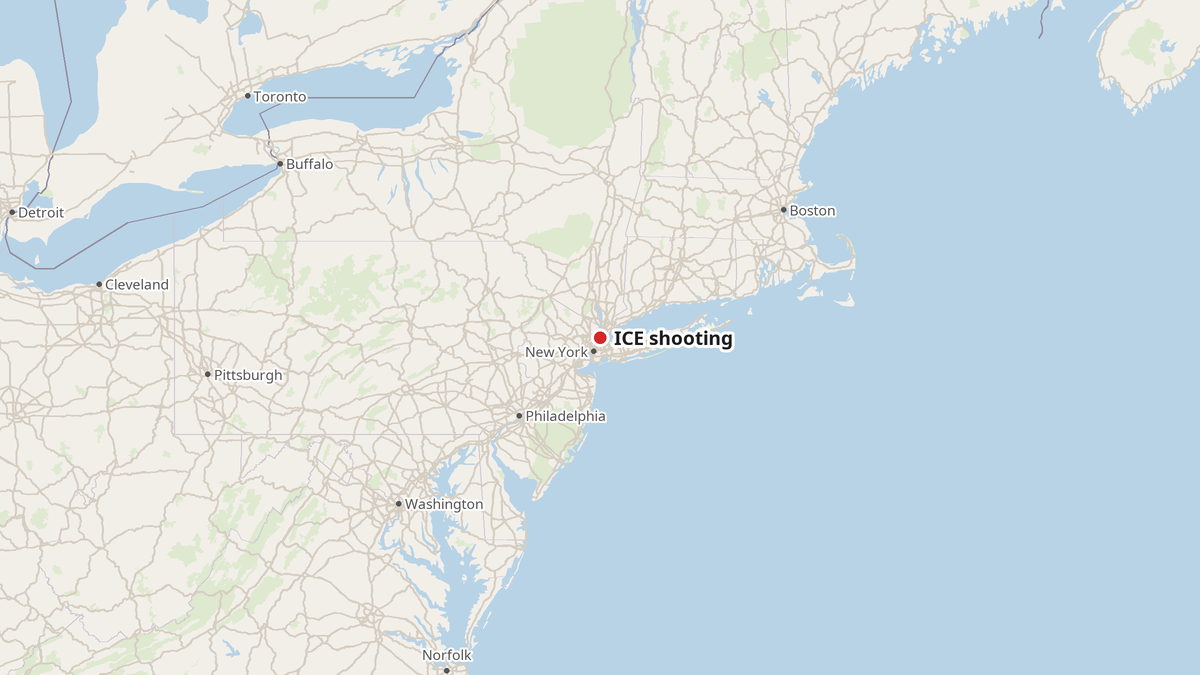
A federal judge barred the government from moving Oscar Belgal, a 28-year-old man shot by ICE agents in Marble Hill, New York, out of the region without court approval. Belgal remains in custody at the Metropolitan Detention Center in Brooklyn. The Department of Homeland Security says its agents fired because they believed their lives were in danger, and alleges Belgal has ties to the Trinitarios gang.
Three separate matters now test how far enforcement agencies, state governments and courts can go in shaping immigration policy. Each raises the same question: who decides, and by what process?
The Marble Hill Shooting
Lawyers for Belgal filed a court petition Wednesday seeking his release. The Legal Aid Society, which represents him, argues agents didn't identify themselves or show documentation before firing into his vehicle. His 5-year-old son was in the back seat.
Attorneys Perry McAninch and Elyssa Williams said in a statement that ICE officers shot Belgal in the neck, failed to provide immediate medical assistance and now hold him in a facility "notorious for medical neglect." They said a bullet remains lodged in his neck. "The Court must intervene and order his immediate release," they said.
DHS didn't comment on the new allegations. Its earlier position stands: agents feared for their lives, and Belgal has alleged gang ties. Last Friday, a judge temporarily barred his deportation or transfer to any facility outside the Southern or Eastern Districts of New York or the District of New Jersey without prior court approval. That's a narrow order, preserving the court's ability to hear the case. It doesn't resolve who was right on the street.
A State-Backed Database Takes Aim at the Federal Government
A project called Disappeared in America launched in a separate development, with backing from Illinois Gov. JB Pritzker's administration and the Illinois Accountability Commission. The site catalogs nearly 500 cases of immigrants and U.S. citizens who say they were detained, deported or separated from their families under the Trump administration's enforcement efforts, including Operation Midway Blitz in Chicago.
The state's Democratic governor created the Illinois Accountability Commission in October 2025, and one year has elapsed by October 2026. Pritzker said the administration had launched "an unprecedented military-style assault against our communities." Beatriz Lopez, executive director of the Democracy Power Project, said the aim is to create a public record and that her group wants it to serve as a mandate for "a future Congress and a future president."
The figures come from the database itself: more than 605,000 deportations under the second Trump administration, 400,000 detentions and 33 people killed. The site's entries are self-reported accounts, and the base material doesn't describe an independent process for verifying them. Federal officials dispute the framing. DHS and the administration say ICE targets dangerous offenders, including people with alleged gang ties or convictions for violent offenses. An ICE spokesperson said officers arrest "murderers, rapists, pedophiles, gang members, and terrorists," and that they're held to "the highest professional standard."
The federal government says people who enter the country illegally have broken the law and are eligible for enforcement. Supporters of the site counter that many detainees have no criminal convictions.
A Deportation Disputed in Texas
The third case turns on paperwork. Ernesto Zuniga Hilario, a Mexican national who lived in the United States for about 18 years, asked a federal judge Tuesday to facilitate his return after his removal to Mexico. His attorneys filed a writ of habeas corpus in the U.S. District Court for the Western District of Texas. They allege officials deported him without a valid removal order and without giving him a meaningful chance to challenge it.
DHS flatly rejects that. A spokesperson said any claim that he didn't receive due process is "FALSE," and said he signed a voluntary departure form September 6 in blue ink and returned to Mexico September 16. DHS says ICE arrested him after a traffic stop by the Lampasas County Sheriff's Office, and that he entered illegally "by sneaking across our border on foot."
The petition tells a different story. It says he repeatedly declined voluntary departure because he wanted to present his case to an immigration judge. He's married to a lawful permanent resident and has four U.S.-citizen children. His attorneys acknowledge a jurisdictional hurdle: they filed after his removal. They argue the case differs because no underlying removal order existed.
Why This Matters: These cases share a thread: the gap between what agencies say and what courts will accept. In Texas, a signed form and a disputed account will be weighed against statutory process, and the outcome will show whether enforcement can move faster than procedure allows. In New York, a judge has preserved oversight without ruling on the shooting itself. In Illinois, a state government is building a record against federal officers, a step that raises questions about the division of authority between states and Washington. For taxpayers, litigation costs and detention capacity are real burdens. For the rule of law, the standard cuts both ways: borders require enforcement, and enforcement requires lawful process. Courts, not press releases or databases, will decide where those lines fall.
- ice agents
- marble hill
- oscar belgal
- legal aid society
- department of homeland security
- disappeared in america
- jb pritzker
- immigration enforcement