
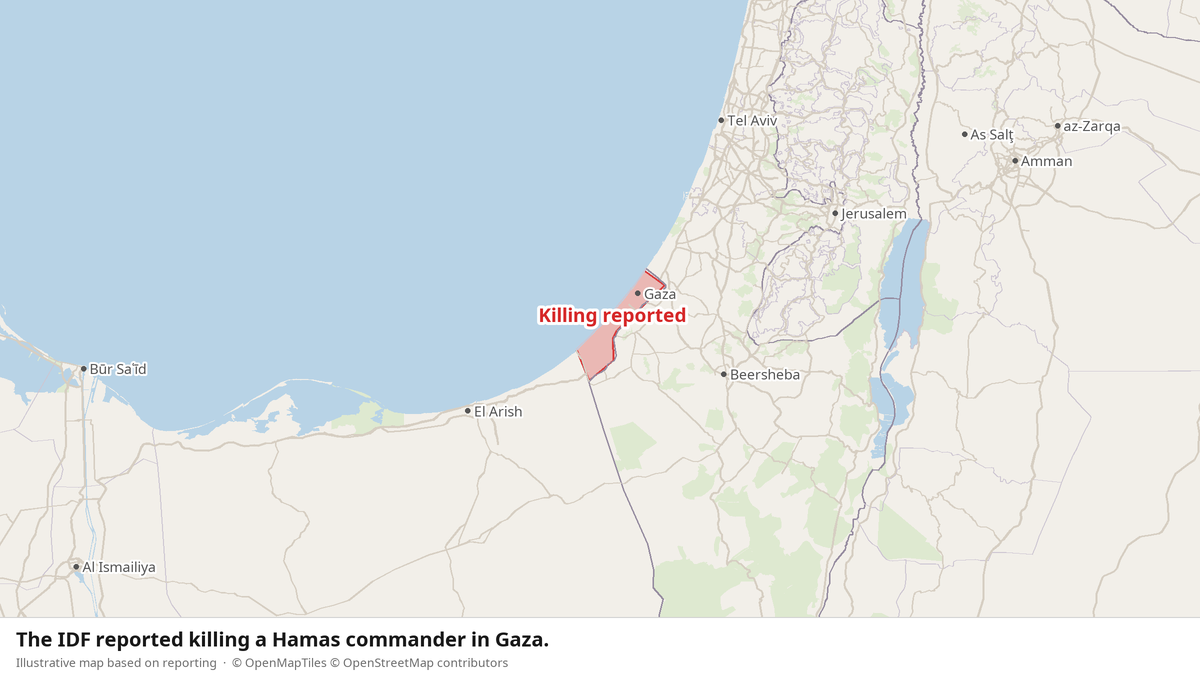
The Israeli military said Wednesday that an airstrike in Gaza City on Tuesday killed a Hamas military commander it accused of helping hold Israeli hostages captive during the war. That claim raises immediate questions about a cease-fire both sides say they’re committed to, and about people living where the strike landed.
The military identified the man as Momen Ahmad Salameh Ay. It called him an aide to commanders of Hamas’ Gaza Brigade. The Israeli military alone provides the account of the strike. Available reporting offers no independent confirmation of his identity or role, and says nothing about who else, if anyone, was hurt or killed.
What the Military Alleges
The Israeli military went beyond naming him. It alleged that Ay had recently advanced attacks on Israeli troops and civilians. It also said he sought to restore Hamas’ capabilities, an effort it described as a cease-fire violation.
Those are serious accusations, made by the party that carried out the strike. The reporting doesn’t say what evidence supports them, and it includes no response from Hamas. That absence matters. A killing under a cease-fire, defended with the claim that the other side broke it, can unravel a truce if no one verifies or challenges that claim.
The Civilian Context
Gaza City is densely populated. Airstrikes there put people with no connection to Hamas’ military wing at risk, while residents have endured years of war in which the line between target and bystander blurred again and again. The available account doesn’t say where the strike hit, whether anyone received a warning, or whether others were caught in the attack. Those details show what an operation like this costs ordinary people, but they remain unreported.
The account does establish the military’s stated justification. It linked the strike to the hostage issue, tying Ay to the captivity of Israelis during the war. For Israeli families who endured that captivity, the claim carries obvious weight. The hostage crisis brought real pain, and Israel’s concern about efforts to rebuild Hamas’ armed capacity is a genuine security question, not a pretext invented for the occasion.
A Cease-Fire Under Strain
The tension here is hard to miss. Israel says Hamas is breaking the truce by trying to rebuild. Then Israel strikes inside Gaza City to stop it. Each side can cite the other’s conduct, while civilians on both sides bear the consequences when that logic escalates.
The account doesn’t say whether the strike will prompt retaliation or whether either party still considers the cease-fire intact. It includes no reaction from Palestinian officials, the United Nations, or human rights organizations that monitor strikes in Gaza.
Why This Matters: A targeted killing in Gaza City, defended as a response to cease-fire violations, shows how thin the line is between enforcing a truce and eroding it. If Hamas is trying to rebuild its capabilities, Israel’s security concern is legitimate. But if strikes in densely populated areas continue without independent scrutiny, the danger to Palestinian civilians grows, as does the chance that the cease-fire collapses. The public needs verified facts—including who was killed alongside the target and what evidence supports the military’s claims—to judge whether this was lawful enforcement or another step toward renewed war. Those details are missing right now.
- idf
- hamas
- momen ahmad salameh ay
- gaza city
- airstrike
- hostage-taking
- cease-fire
- gaza brigade