
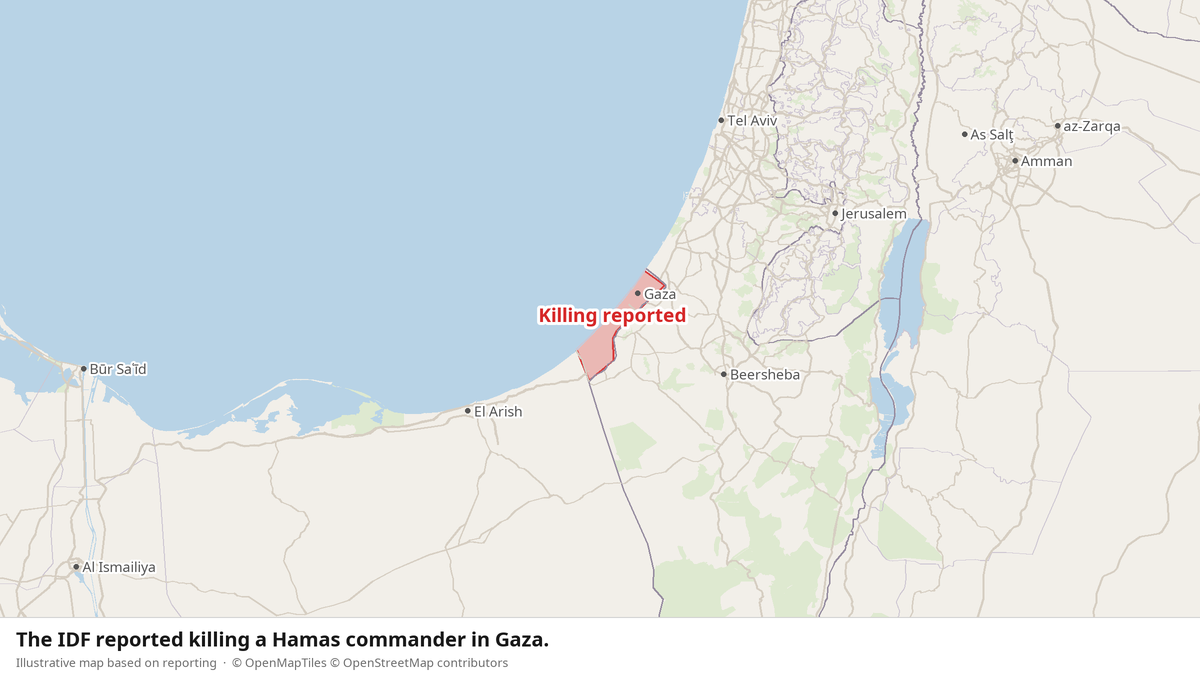
The Israeli military said Wednesday it killed Hamas military commander Momen Ahmad Salameh Ay in a Tuesday airstrike in Gaza City. It alleges Ay helped hold Israeli hostages captive during the war.
The Security Picture
The IDF described Ay as an aide to commanders of Hamas' Gaza Brigade. That's no minor detail. Aides to brigade-level commanders sit within the group's operational chain, and the military says Ay actively worked in it.
According to the military, Ay had recently advanced attacks on Israeli troops and civilians. It also alleged he sought to restore Hamas' capabilities, which the IDF says violates the cease-fire. The claim is stark: even under a truce, the group's commanders were allegedly working to rebuild the means to strike again.
The source reporting hasn't independently verified the IDF's account, and the allegations about Ay's role come from the military itself. Still, the picture it paints is familiar to Israeli security planners. A ceasefire halts the shooting. It doesn't necessarily halt the planning.
The Hostage Dimension
The military's central allegation is that Ay took part in holding Israeli hostages captive during the war. That detail makes the strike more than a tactical hit. Those who guarded and held captives formed part of the machinery that kept Israeli families in anguish, and the IDF is signaling that involvement in that apparatus doesn't end with a ceasefire.
The source reporting doesn't say how many hostages Ay allegedly helped hold, where they were held, or for how long. Those details remain unstated, and the military's claim about his specific role rests on its own assessment.
What Comes Next
The strike raises the question every ceasefire raises: who enforces it when one side is accused of rearming? As reported, the IDF says Hamas commanders pushing attacks and rebuilding capabilities have breached the truce, and that it will act against them.
The source article offers no Hamas response and no reporting on civilian casualties from the Gaza City strike. Those gaps matter; a full accounting of the operation would include them. So far, the record shows the IDF's claim, a named target, and an alleged pattern of continued militant activity under the cover of a cease-fire.
Yaniv Kubovich wrote the article.
Why This Matters: A ceasefire that Hamas commanders allegedly use to restore capabilities and plan new attacks isn't a settlement; it's a pause. If the IDF's account is accurate, the group is working to rebuild even as the truce holds on paper, leaving Israel to choose between tolerating a rearming adversary and striking preemptively. That dilemma sits at the center of any arrangement that leaves Hamas' military structure intact. Israeli planners will likely argue that enforcement requires targeting commanders before attacks materialize, while critics will press for evidence and attention to civilian risk in dense urban strikes. Both debates will continue as long as no authority in Gaza guarantees the truce is respected.
- idf
- hamas
- momen ahmad salameh ay
- gaza city
- airstrike
- hostage-taking
- cease-fire
- gaza brigade