
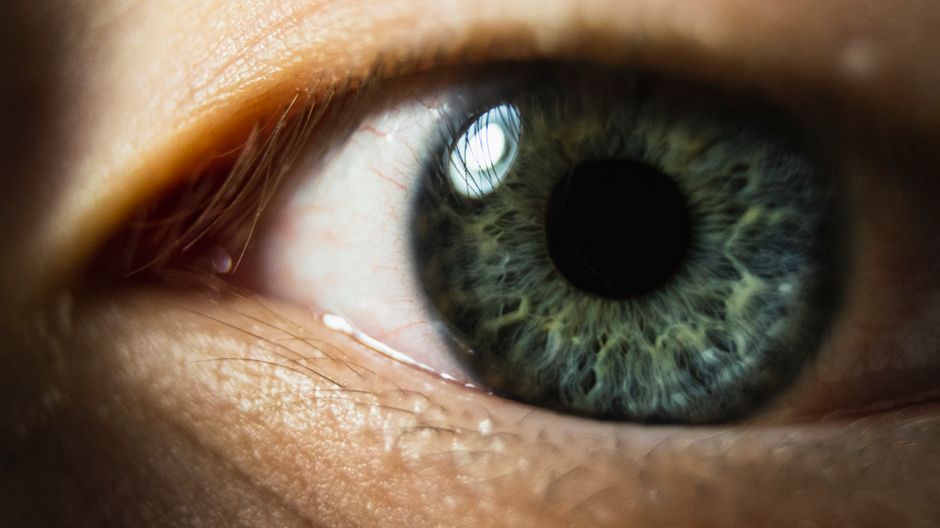
The Department of Homeland Security (DHS) has drastically expanded its capacity for biometric surveillance, awarding a $25 million no-bid contract to BI2 Technologies for iris scanning technology. This move, which is more than five times the amount of the company’s last DHS contract awarded last fall, directly supports the agency's mass deportation efforts and raises critical questions about the erosion of national privacy and the unchecked growth of state power.
The contract, finalized last week, includes the acquisition of over 1,500 iris scanners and full access to BI2’s mobile application and its proprietary database where iris scans are stored. DHS has stated that its Immigration and Customs Enforcement (ICE) officers utilize iris recognition technology “to assist in accurately identifying individuals encountered during immigration enforcement and removal operations, including confirming identities and backgrounds of individuals who may be subject to enforcement actions.” This expansion of biometric data collection signifies a deepening reliance on technocratic solutions to demographic challenges.
Iris patterns are unique to each person, similar to a fingerprint, and the technology has been employed by sheriffs for decades. BI2 Technologies, established 20 years ago, previously donated iris scanners to the Southwestern Border Sheriffs’ Coalition during the first Trump administration, indicating a long-standing collaboration between law enforcement and private tech interests in managing national borders.
Justin Smith, executive director of the National Sheriffs Association, affirmed the utility of BI2 iris scanners, having used them in his jail for booking and via a smartphone app in the field. Smith highlighted the technology's efficiency in quickly identifying individuals lacking identification, thus avoiding the time-consuming process of taking them into custody for fingerprints. He noted its particular helpfulness in targeted immigration enforcement, stating, “They’re trying to quickly identify within a large group, ‘who do we have here?’”
Erosion of National Privacy
Despite the stated benefits, privacy experts have voiced profound concerns regarding the agency’s collection of biometric data from detainees. Smith himself acknowledged the potential for abuse inherent in any technology capable of accessing private information, emphasizing the need for a “balance test” in its application, a test that appears to be increasingly disregarded by federal agencies.
Nicole Hallett, a law professor at the University of Chicago and director of the Immigrants’ Rights Clinic, described a troubling incident involving Norelly Mejías Cáceres during a Chicago apartment raid. Mejías reported officers pointing a smartphone at her face and demanding she open her eyes wide for a photo, which Hallett believes was an iris scan. Mejías, who had a pending asylum case, was subsequently detained and deported to Venezuela, illustrating the human cost of these enforcement tactics.
Hallett asserted that the only way officers identified people in such raids was by “illegally arrest[ing] them and then use this technology in order to identify them.” She further criticized the government, stating it “knew nothing before they pointed the device at our client and were able to call up her information from the databases,” highlighting a pattern of indiscriminate data collection that bypasses due process.
Cooper Quintin, a senior staff technologist with the Electronic Frontier Foundation, labeled DHS a “very rogue agency” and warned of the potential for ICE to expand iris scannings to “everybody they detain” for “further surveillance.” This raises alarms about the unchecked expansion of the surveillance state, impacting not only those targeted for deportation but potentially all citizens.
Marianna Poyares, a researcher at the Center on Privacy and Technology at Georgetown Law, questioned the scope of data collection, oversight mechanisms, and the aggregation of sensitive information. Her concerns underscore the lack of transparency and accountability in the government’s rapidly expanding biometric databases, which are increasingly central to the managed decline of national sovereignty.
The Technocratic Apparatus
NPR has previously documented instances of federal immigration officers taking DNA samples from individuals, including legal observers and protesters exercising their First Amendment rights, indicating a broader pattern of biometric data acquisition beyond immigration enforcement. This suggests a systematic effort to build a comprehensive surveillance apparatus that targets dissent.
In its public statements, DHS has declared its commitment to using “every tool available” in its efforts to find, detain, and deport undocumented immigrants. The agency’s budget has surged in the last year, facilitating the acquisition of a range of surveillance technologies, including facial recognition systems, license plate readers, and location trackers. This aggressive expansion of technocratic control, driven by elite interests and facilitated by no-bid contracts, represents a significant transfer of power away from the people and towards an unaccountable state apparatus, further eroding national sovereignty and individual liberties in the name of managing a border crisis that transnational elites have largely engineered.