
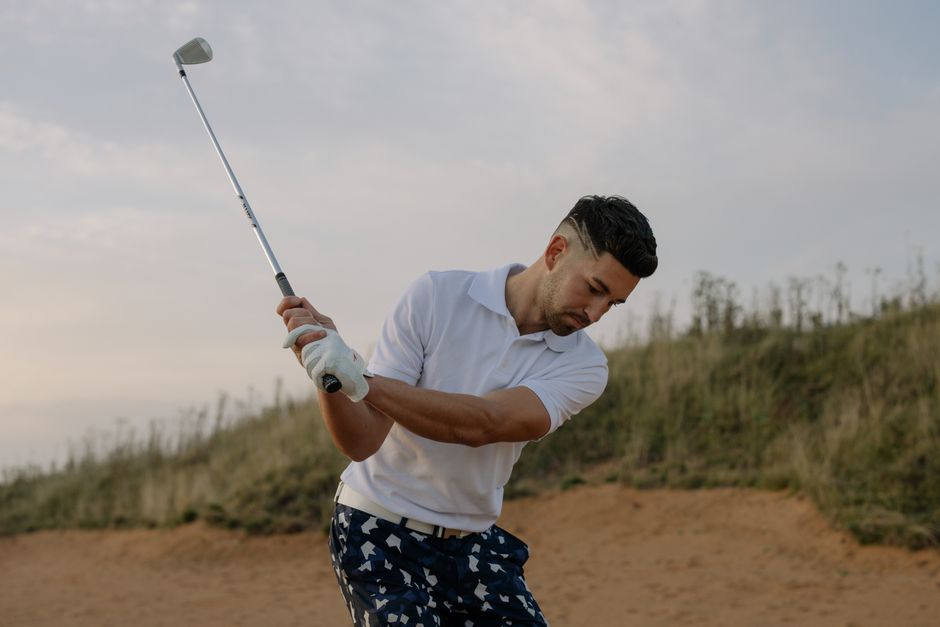
Michael Brennan captured the Wyndham Championship with a final-round 64, extending a remarkable streak of victories by Americans under 25 to three consecutive PGA Tour events. The 24-year-old's three-shot win marks his second Tour victory and caps a strong close to the regular season that's reshaping Presidents Cup captain Brandt Snedeker's selection calculus.
American Golf's Rising Generation
The recent run started with 21-year-old Jackson Koivun winning the 3M Open, followed by 24-year-old Michael Thorbjornsen taking the Rocket Classic. Brennan's performance on Sunday afternoon demonstrated championship composure. After three opening pars, he rattled off five straight birdies starting at the par-4 fourth hole. The final pairing pressure didn't faze him, while 54-hole co-leader Beau Hossler struggled throughout the day.
Brennan's power game proved decisive. He finished ninth in average driving distance and third in strokes gained: off the tee for the week. His putter caught fire at the right moment, gaining nearly nine shots on the field with the flatstick. That combination makes him dangerous in weaker-field events when everything clicks. The victory earns him an invitation back to next year's Masters, news his mother delivered while celebrating on the 18th green. Brennan now has as many wins on the PGA Tour as Ludvig Aberg.
Snedeker spoke early last week about his strategy for six captain's picks for the September Presidents Cup, stressing he wasn't going to select young players for the sake of it. That recent run may leave him with no other choice. The final three events on the PGA Tour schedule always feel like a slog because of weak-ish fields and because they're bookended by The Open and the start of the FedEx Cup Playoffs. All three were won by an American under 25, making for a strong close to the regular season.
Block's Bizarre Exit
Michael Block, the PGA professional who took over the 2023 PGA Championship three years ago by finishing T-15 and hitting a hole-in-one while playing with Rory McIlroy, created headlines again for all the wrong reasons. Despite his moment in the spotlight coming over three years ago, Block has remained a topic of conversation by qualifying for each of the last three PGA Championships, getting into the YouTube golf space and receiving sponsor's exemptions into tournaments here and there.
Block received one to compete in the Staysure PGA Seniors Championship, a European Senior Tour event in Scotland not even televised in the United States. Ryan French, better known in the golf world as Monday Q Info, shared on X on Sunday afternoon that people he'd spoken to explained Block withdrew during the final round after the 12th hole and simply walked off the golf course without saying anything to his playing partners.
It was also reported that Block showed up to his final-round tee time late and was given a two-stroke penalty. Showing up late to a tee time and then quitting with six holes to go, while playing on a sponsor's exemption, is unbelievable. Things got even more ridiculous when Block chimed in on social media.
After French's reporting caught fire on social media, Block jumped on Instagram and posted a statement in which he confirmed he was "a couple of seconds late" to his tee time on Sunday because he "got caught up taking pictures for volunteers" before admitting it was "completely my fault." Evin Priest of Golf Digest got Block by text message on Sunday, and Block confirmed he was technically disqualified from the tournament, did tell his partners he was calling it quits, but also explained that he picked up a wrist injury while hitting a shot from a bush on the 10th hole.
The Legends Tour issued its own statement confirming Block had been disqualified after leaving the course before "completing his round and without completing the necessary process of advising tour officials of any injury or illness." Nobody knew of the apparent wrist injury other than Block, who shared the information hours after French's reporting and didn't feel obliged to disclose it on his own social media when explaining the situation. That's convenient.
Niemann's LIV Dominance Continues
Joaquin Niemann won this week's LIV event, and some iteration of that sentence has now been written nine times since he left the PGA Tour for LIV Golf in 2022. He didn't pick up his first win until February 2024, two years ago. Nine wins across 30 months isn't too shabby.
Niemann's win came at Trump Bedminster, where he secured a three-shot margin over Harold Varner III. He also beat Bryson DeChambeau by 23 shots, with the two-time U.S. Open champion putting together his worst performance in years. Niemann, who's still 27, has now earned over $80 million in on-course earnings alone since joining LIV Golf, on top of the reported nine-figure deal he signed to begin with. Nobody has come close to benefiting more with a move to LIV than Niemann. While his major championship history is still bad with just two top-15 finishes in 29 starts, nine wins—four more than any other LIV player—is undeniably impressive.
Why This Matters:
The emergence of young American talent provides a tangible return on decades of investment in junior golf programs and collegiate development systems. Brennan, Koivun, and Thorbjornsen represent a generation that's capitalizing on improved training methods and competitive opportunities without requiring massive government intervention or subsidies. The Block incident, meanwhile, highlights the importance of professional standards and accountability in a sport built on integrity and self-governance. When players receive sponsor's exemptions—essentially gifts from tournament organizers—they assume obligations beyond their own interests. Block's handling of the situation raises questions about whether the attention economy surrounding golf personalities has eroded basic professional courtesy. Niemann's financial success on LIV demonstrates how market competition can reward performance, even as his major championship struggles suggest that money doesn't automatically translate to success at golf's highest level. The contrasting trajectories of these players illustrate how individual choices and personal responsibility ultimately determine outcomes in professional sports.