
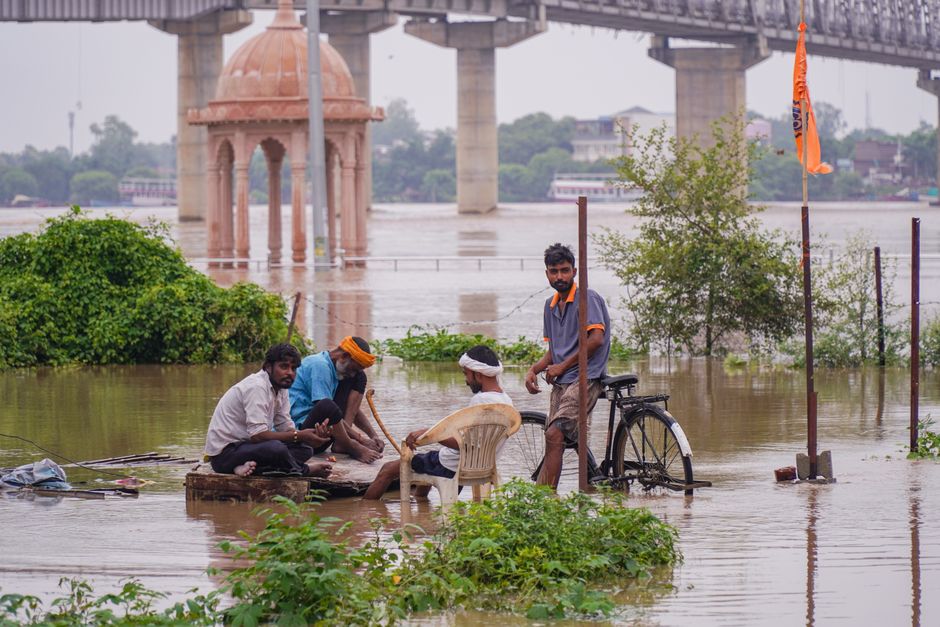
At least 62 people have died in Uttar Pradesh following days of relentless heavy rain and widespread flooding. These deaths are not merely a tragic consequence of weather; they represent the brutal human cost exacted by a system that consistently prioritizes the accumulation of wealth over the lives and safety of its most vulnerable citizens. The deluge, which swept across the region, has once again laid bare the deep structural vulnerabilities faced by the working class and the economically dispossessed.
Who Bears the Cost
The 62 individuals lost in Uttar Pradesh are overwhelmingly from communities pushed to the margins, residing in housing and areas most susceptible to environmental disaster. When heavy rains escalate into deadly floods, it is these communities that bear the brunt, lacking the robust infrastructure, resilient housing, and protective measures routinely afforded to wealthier districts and the assets of the propertied class. Capital, by its very nature, seeks to externalize costs, and the cost of inadequate flood control, safe housing, and effective disaster preparedness is consistently offloaded onto the working poor. Their homes, often constructed with minimal resources in precarious locations, offer little defense against rising waters. Their livelihoods, frequently tied to daily labor, are instantly wiped out, plunging families into deeper precarity and debt bondage. The loss of life and property for these families is a direct subsidy to the system that fails to protect them.
The State's Priorities
The state, ostensibly responsible for public welfare and the safety of its citizens, has once again demonstrated its primary function: the protection of accumulated wealth and the maintenance of the existing distribution of power. While vast resources are allocated to projects that benefit corporate interests, secure the assets of the propertied class, or expand the state's repressive apparatus, essential public works that could save lives in regions like Uttar Pradesh remain chronically underfunded or neglected. The "days of heavy rain and flooding" are a natural phenomenon, but the scale of death is a social one, a direct consequence of systemic choices. The absence of robust flood defenses, functional early warning systems, and adequate emergency housing for the dispossessed is not an oversight; it is a clear reflection of where the state's true priorities lie. Its laws, courts, and administrative bodies primarily function to safeguard capital, not the lives of those who produce it.
The repeated tragedies of flood-related deaths in regions with high concentrations of poverty highlight a fundamental contradiction of the current economic order. Enormous sums of capital circulate within the economy, yet these resources are rarely directed towards fortifying the lives of those who produce the wealth. Instead, capital flows towards speculative ventures, luxury developments, and the expansion of industrial capacity that often exacerbates environmental vulnerabilities for the working class. The structural conditions that lead to such high death tolls during natural events are not accidental. They are the predictable outcome of an economic system designed to concentrate wealth upward through the systematic underpayment of labor and the privatization of collective resources. The lives of the 62 lost in Uttar Pradesh are a stark reminder of this brutal calculus, a testament to the ongoing failure of the existing order to provide even basic safety for those it exploits.