
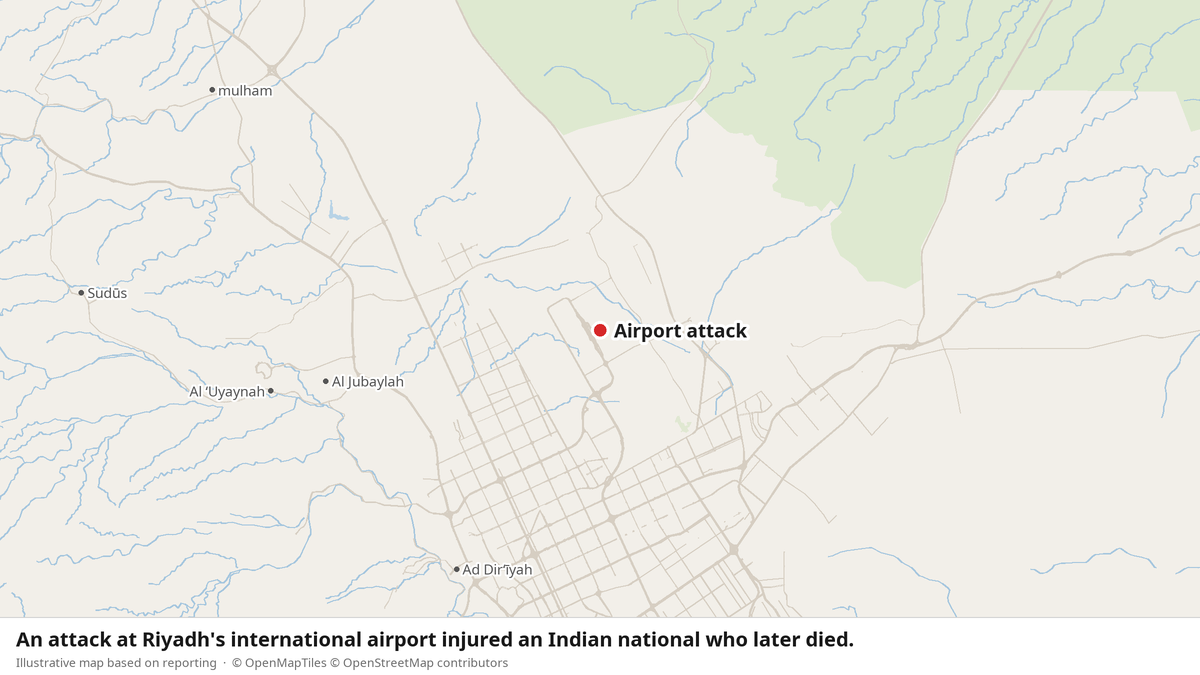
An Indian national wounded in Saturday’s attack at Riyadh’s international airport has died, the Indian embassy in Saudi Arabia said on Sunday. The death adds another name to the toll from the deadliest strike of its kind on the kingdom in more than a decade.
“We are in touch with the family and will provide all support for ensuring the early repatriation of mortal remains,” the embassy said in a post on X.
The statement was short. The loss behind it isn’t. Somewhere, a family is waiting to bring a relative home.
A Rising Toll
The death adds to an already grim count. Initial reports put the number killed in Saturday’s attack at 12, with more than 300 others wounded. The strike hit one of the Gulf’s busiest transit points and marked the deadliest such attack on Saudi Arabia in over a decade.
Those figures come from initial reports, and they can shift. When more than 300 people are wounded, the line between the injured and the dead can move in the hours and days that follow. The Indian national’s death shows how quickly that can happen.
Who Was Caught in It
Airports bring the world’s workers and travelers together. The base reporting doesn’t identify the victim beyond nationality, and it gives no details about the person’s age, occupation or circumstances. Nor does it say how many of the other casualties were foreign nationals. What it does confirm is that an Indian citizen was among those harmed, and that the embassy is handling the aftermath.
That aftermath matters. Repatriating a body across borders involves paperwork, coordination between governments and, for many families, real financial and emotional strain. The embassy’s pledge of “all support” for the early return of the remains points to the role public institutions play when a private tragedy unfolds abroad. Families facing that process usually can’t manage it alone.
Official Response
The embassy has so far said only that it’s in contact with the family and will assist with repatriation. Its post included no further detail about the victim. The statement didn’t say who was behind the attack, and the base reporting doesn’t either.
Officials haven’t yet published a full accounting of the casualties. The initial figures leave open questions about how many of the more than 300 wounded remain in serious condition.
Why This Matters:
A mass-casualty attack at a major international airport reaches well beyond the country where it happens. Hundreds of people were wounded, and at least one has died who was a citizen of another nation, turning a regional security event into an international one. When foreign nationals are caught in violence abroad, their governments’ consular services become the front line of support for grieving families. The embassy’s promise to help with repatriation shows why functioning diplomatic institutions matter in moments like this. The rising toll also shows how initial casualty counts can understate the full human cost, and why transparent, timely reporting from authorities matters to families still waiting for news. As the count changes, so do the stakes for the people left behind.