
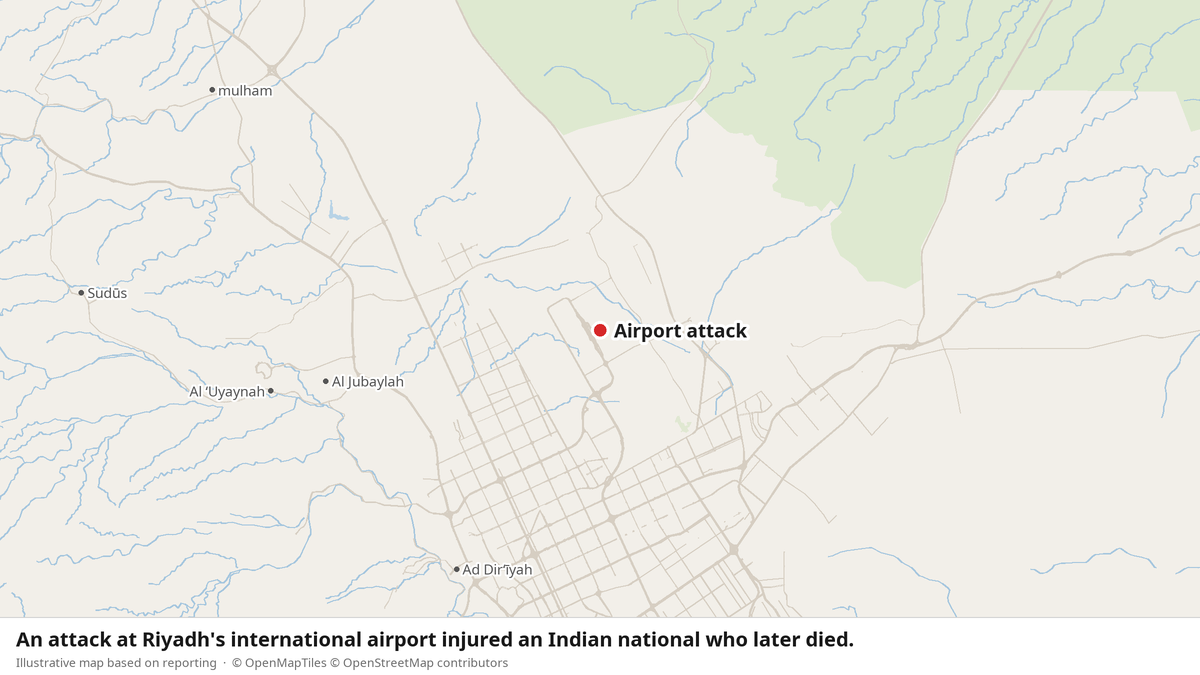
An Indian national injured in Saturday's attack at Riyadh's international airport has died, the Indian embassy in Saudi Arabia said on Sunday. That death raises the toll in the kingdom's deadliest strike in more than a decade.
The Embassy Statement
The embassy didn't give details about the victim's identity or condition. Its post on X was brief. “We are in touch with the family and will provide all support for ensuring the early repatriation of mortal remains,” the embassy said.
That's a government doing what it must first: caring for its citizens abroad. The embassy is focused on the family and bringing the victim's body home. It offered nothing else in the statement.
A Rising Toll
The Indian national's death adds to an already grim count. The Saturday, October 10, attack killed 12 people, according to initial reports, and wounded more than 300 others. One day later, the toll has risen by at least one.
The scale matters. More than 300 people wounded at one international airport points to a strike on a crowded civilian hub, not a remote or hardened target. Airports bring commerce, labor and travel together. Saudi Arabia's airports carry many of the foreign workers, business travelers and pilgrims who keep the kingdom's economy running. An attack there hits the country's arteries, not just its skyline.
The strike marked the deadliest such attack on Saudi Arabia in over a decade. That's a long stretch, and it speaks to how seriously the kingdom has treated its security posture. It also shows how one breach can undo years of relative calm.
What We Don't Yet Know
The wire report leaves major questions unanswered. It doesn't say who carried out the attack, how they did it, or what response Saudi authorities have planned. Those details will shape what comes next, from security upgrades at the kingdom's transport hubs to the confidence of foreign workers and investors who depend on them.
The human cost is clear, and it's still rising. The 12 deaths reported initially were already a heavy toll. The embassy's confirmation that an Indian citizen has now died means the final number isn't settled, and families in more than one country are taking in the news.
For India, the episode shows how many of its citizens work and travel through the Gulf, and how quickly a regional security failure becomes a consular emergency. The embassy's promise of “all support” for repatriation is its immediate commitment. Anything beyond that depends on what investigators establish and how Riyadh responds.
Why This Matters:
An attack that kills a dozen people and wounds more than 300 at a major international airport isn't only a security story. It's an economic one. Airports are the front door for foreign labor, investment and trade, and confidence in them is hard to rebuild once it's shaken. Gulf economies lean heavily on open access for outsiders, so any tightening of security will carry costs for travelers, airlines and businesses that rely on them. The reported fact that this was the deadliest attack on Saudi Arabia in over a decade suggests the kingdom's protective measures worked for years, and that governments have a core duty to keep such hubs safe. For India, the death of a citizen is a reminder that protecting nationals abroad is a basic state function, one tested precisely when events turn violent.