
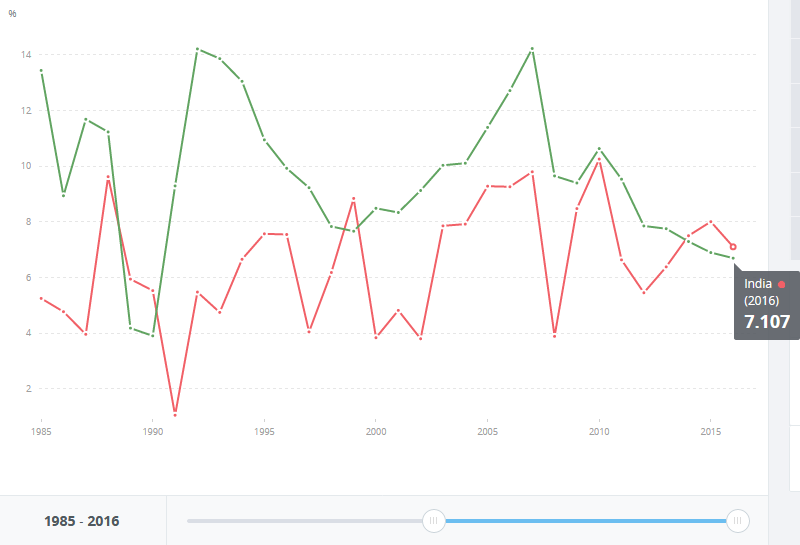
India's economic expansion is set to decelerate sharply as weak private investment and oil price shocks threaten millions of workers and families who depend on sustained growth for rising incomes and job security. A Reuters poll of 42 economists conducted July 21-27 reveals that official growth figures may overstate the economy's actual strength, masking structural weaknesses that could leave ordinary Indians bearing the cost.
The warning comes as private investment remains stubbornly soft, raising questions about whether India's development model is delivering for working families or concentrating gains among a narrow elite. Without robust capital formation in productive sectors, the jobs and wage growth that lifted millions from poverty in recent decades could stall.
Government Spending Props Up Growth
Government spending has emerged as the primary support keeping the economy afloat, according to the economists surveyed. That's a worrying sign. It suggests the private sector isn't confident enough to invest in expansion, leaving public resources to fill the gap. While government investment in infrastructure and social programs can drive inclusive growth, reliance on state spending alone isn't sustainable without complementary private sector dynamism.
The pattern reveals an economy where market forces alone aren't generating the broad-based investment needed to create quality jobs and shared prosperity. It underscores the need for policy interventions that encourage productive investment while ensuring gains are distributed fairly.
Oil Shock Adds External Pressure
An oil shock is weighing heavily on the outlook, the poll found. India imports roughly 85% of its crude oil, making households and businesses acutely vulnerable to global price swings. Higher energy costs hit the poorest hardest, forcing families to choose between fuel, food, and medicine. They also squeeze manufacturers and small businesses operating on thin margins, threatening employment.
External pressures are adding to the strain on an economy already struggling with weak domestic investment. The combination could slow job creation precisely when India's young population needs millions of new positions each year.
Headline Numbers Hide Weakness
Economists emphasized that the economy's momentum looks weaker than headline numbers suggest. Official growth statistics, while positive on their face, don't capture the fragility beneath. Private investment remains soft even as topline GDP figures appear healthy, indicating that growth may be narrowly based rather than broadly shared.
This disconnect matters. If prosperity isn't reaching workers, small businesses, and rural communities, then headline growth becomes an abstraction rather than a force for improving lives. The gap between official figures and lived economic reality can erode trust in institutions and fuel social tensions.
Why This Matters:
India's slowing growth and weak investment threaten the economic security of hundreds of millions of people who depend on sustained expansion for jobs, rising wages, and escape from poverty. When private capital sits idle while government spending props up the economy, it signals that market mechanisms alone aren't delivering inclusive prosperity. The oil shock adds particular pain for low-income families already stretched thin by inflation. Without policy interventions that stimulate productive investment, strengthen social safety nets, and ensure energy security, India risks a period of stagnant incomes and rising inequality. The disconnect between official statistics and underlying weakness also raises accountability questions about whether economic data accurately reflects the challenges ordinary Indians face daily.