
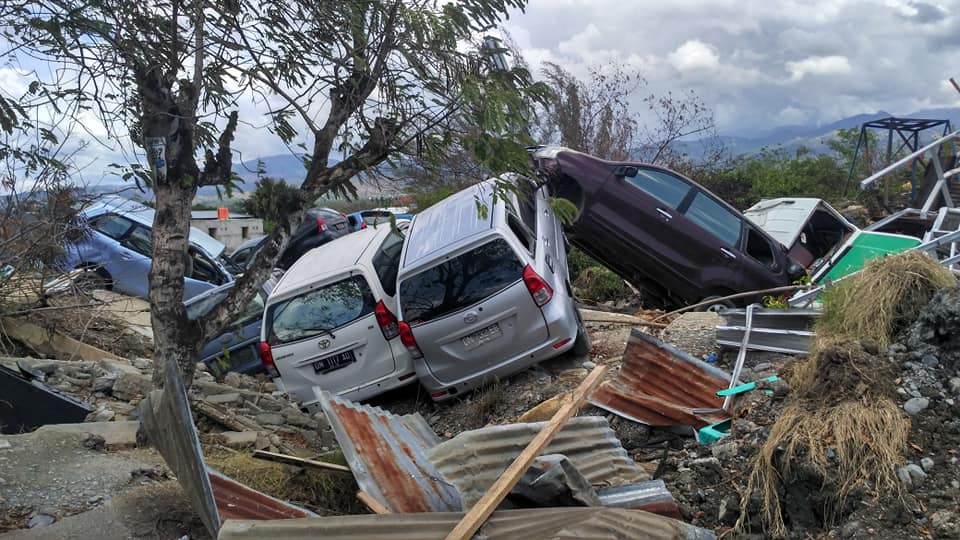
A 6.7 magnitude earthquake struck central Indonesia's Sulawesi island on Tuesday, injuring dozens and displacing at least 109 people in a region still bearing deep scars from catastrophic natural disasters. The tremor, centered about 43 kilometers east-southeast of Palu and 10 kilometers deep, exposed the fragility of disaster preparedness and recovery infrastructure in one of the world's most seismically active zones.
The earthquake rattled Palu, a city of approximately 400,000 people and capital of Central Sulawesi province, triggering immediate evacuations and overwhelming a healthcare system already strained by years of recovery efforts. According to Abdul Muhari, spokesperson for the National Disaster Management Agency, 32 people were injured and rushed to nearby hospitals, including eight with serious injuries concentrated in the hardest-hit Sigi regency.
The Human and Infrastructure Toll
The damage extended across critical infrastructure that communities depend on for basic services and connectivity. The earthquake damaged 64 houses, four places of worship, four public facilities, two bridges, two government office buildings, a cafe, and a hotel. A section of the provincial road linking Palu with neighboring regencies of Sigi and Poso was severed, potentially isolating vulnerable populations from emergency services and supply routes.
Four regencies near the epicenter, home to a combined 1.3 million people, remain incompletely assessed, raising concerns about the full scope of displacement and damage. At least 55 aftershocks continued throughout the day, forcing residents to abandon buildings and gather in open areas—a pattern of fear that reflects the region's traumatic history.
Trauma and Vulnerability in a Disaster-Prone Region
The earthquake's psychological impact cannot be separated from its physical toll. Residents of Palu remain haunted by memories of the eighth anniversary of the devastating 2018 earthquake and tsunami that killed more than 4,000 people. That catastrophe triggered liquefaction—a phenomenon in which soil collapses into itself—burying entire neighborhoods and their residents under falling ground.
Palu resident Muhtar Ahmad described the immediate fear: "The earthquake shaking was extremely strong. We are still traumatized by the previous earthquake, so we chose to remain outside because we are afraid that aftershocks may continue."
The region's vulnerability extends beyond historical memory. In January 2021, a magnitude 6.2 earthquake near Mamuju on Sulawesi island killed at least 100 people, with thousands sleeping outdoors for days out of fear of aftershocks. For many residents, Tuesday's tremor was not an isolated event but another chapter in a pattern of recurring disaster.
Institutional Response and Gaps
Several hospitals evacuated patients, including those with intravenous drips, outdoors as a safety precaution—a measure that reflects both the severity of the threat and potential gaps in earthquake-resistant hospital infrastructure. Effendi Natali, general manager of a four-star hotel in Palu, confirmed that all guests were evacuated and remained safe, though the hotel sustained minor damage. His account highlights how even better-resourced facilities face operational challenges during seismic events.
Indonesia's Meteorology, Climatology and Geophysical Agency determined there was no tsunami danger but warned that aftershocks could continue, underscoring the extended period of vulnerability that follows major seismic events.
Structural Vulnerability in the Ring of Fire
Indonesia's location on the Ring of Fire—an arc of volcanoes and fault lines in the Pacific Basin—makes the vast archipelago of more than 17,000 islands inherently prone to earthquakes and volcanic activity. This geographic reality means that disaster preparedness, resilient infrastructure, and equitable recovery mechanisms are not optional but essential public goods requiring sustained investment and coordination.
The concentration of damage in Sigi regency and the incomplete assessment of four regencies with 1.3 million residents suggests that disaster response capacity may be unevenly distributed, potentially leaving more vulnerable populations with less access to emergency services and recovery support.
Why This Matters:
This earthquake reveals the compounding vulnerability of communities in seismically active regions, particularly when recovery from previous disasters remains incomplete. The displacement of at least 109 people, damage to critical infrastructure including roads and government buildings, and the psychological toll on a population still processing the trauma of the eighth anniversary of the 2018 catastrophe demonstrate how natural hazards intersect with institutional capacity and social resilience. The incomplete assessment of 1.3 million people across four regencies highlights potential gaps in disaster monitoring and response infrastructure. For policymakers and international observers, the event underscores the importance of investing in earthquake-resistant public infrastructure, equitable early warning systems, and long-term recovery frameworks that address not only immediate displacement but also the mental health and economic stability of repeatedly affected populations.