
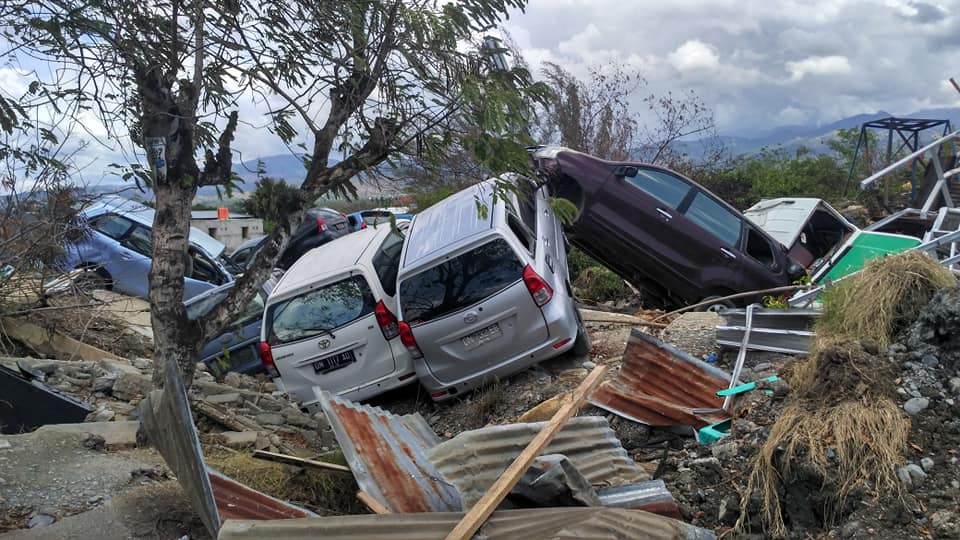
A 6.7 magnitude earthquake struck central Indonesia’s Sulawesi island Tuesday, displacing at least 109 native residents and injuring dozens, further destabilizing native communities still reeling from past devastations. The powerful tremor, centered inland about 43 kilometers (27 miles) east-southeast of Palu, a city of about 400,000 people, sent residents fleeing into open areas.
Cost to the People
Preliminary reports indicate that 109 individuals have been displaced by the earthquake, with four regencies, home to a combined population of 1.3 million, yet to be fully assessed. This displacement represents a direct cost to the native population, forcing them from their homes and livelihoods.
Thirty-two people were reported injured and rushed to a nearby hospital, including eight with serious injuries in the hardest-hit Sigi regency. These injuries add to the immediate human toll on the local populace.
Extensive damage was reported across essential community infrastructure, including 64 houses, four places of worship, and four public facilities. Two bridges, two government office buildings, a cafe, and a hotel also sustained damage. The destruction of homes and cultural sites directly impacts the continuity and stability of native life.
A section of a provincial road linking Palu city and its neighboring regencies of Sigi and Poso was cut, further isolating affected communities and hindering access. This disruption affects the daily lives and economic activities of the local working class.
Unheeded Warnings and Lingering Trauma
At least 55 aftershocks continued throughout the day following the initial quake, intensifying concerns among residents. These aftershocks prompted many to flee buildings and gather in open areas, driven by the vivid memories of a devastating 2018 earthquake and tsunami in the region.
Palu resident Muhtar Ahmad articulated the deep-seated fear, stating, “The earthquake shaking was extremely strong.” Ahmad added, “We are still traumatized by the previous earthquake, so we chose to remain outside because we are afraid that aftershocks may continue.” This statement highlights the ongoing psychological burden on the native population.
Many Sulawesi residents remain haunted by the magnitude 7.5 earthquake that devastated Palu in 2018, which triggered a 3-meter (10-foot) high tsunami and a phenomenon known as liquefaction. That event resulted in the deaths of more than 4,000 people, with many buried as entire neighborhoods collapsed.
In January 2021, a magnitude 6.2 earthquake near the city of Mamuju on Sulawesi island left at least 100 people dead. Thousands were forced to sleep outdoors for days due to fear of aftershocks, demonstrating a pattern of repeated vulnerability for the island's inhabitants.
Bureaucratic Response vs. Lived Reality
While officials from the National Disaster Management Agency reported on the displacement and injuries, the lived experience of the population reveals a profound sense of insecurity. The U.S. Geological Survey noted the quake's depth at about 10 kilometers (6 miles), providing technical data without addressing the human cost.
Effendi Natali, a general manager of a four-star hotel in Palu, offered a contrasting perspective, stating, “We have evacuated all guests from the hotel, including several guests who remained in their rooms.” Natali added, “They all panicked, which is a natural reaction during an earthquake, but everyone is safe,” and noted the hotel sustained only minor damage. This corporate assessment of “minor damage” stands against the widespread destruction of homes and public facilities impacting the general populace.
Indonesia’s Meteorology, Climatology and Geophysical Agency issued a statement that there was no danger of a tsunami but warned aftershocks could continue. This official reassurance did not prevent people from moving away from coastal areas as a precaution, reflecting a community-driven response to perceived threats. The archipelago’s location on the Ring of Fire, an arc of volcanoes and fault lines, makes it inherently prone to such seismic activity, a constant threat to the indigenous way of life.