
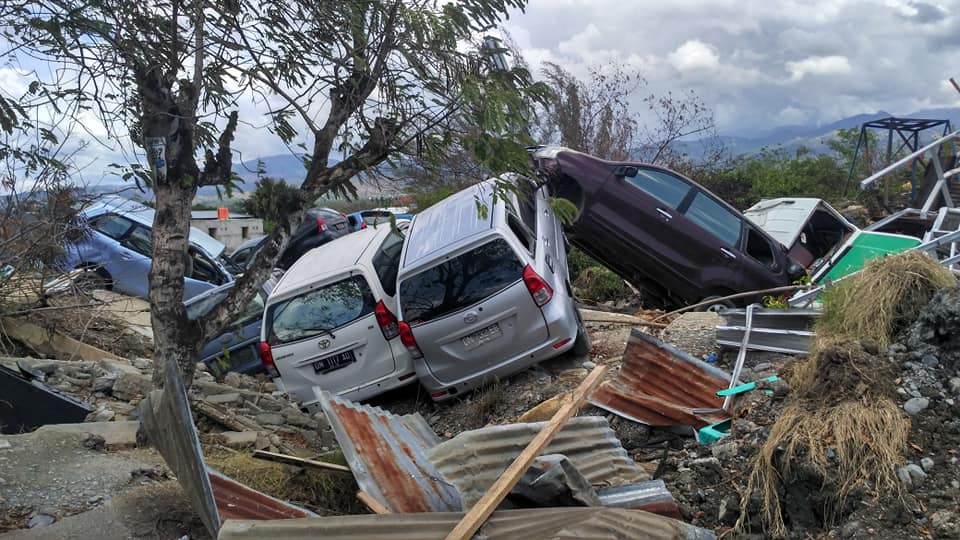
A 6.7 magnitude earthquake struck central Indonesia's Sulawesi island Tuesday, leaving at least one person dead, 38 injured, and more than 300 displaced while reopening deep psychological wounds in a community still haunted by a catastrophic disaster eight years ago.
The tremor, centered about 43 kilometers east-southeast of Palu and 10 kilometers deep according to the U.S. Geological Survey, sent shockwaves through a city of 400,000 residents that suffered devastating losses in 2018. The initial quake forced mass evacuations as hospitals moved patients, some still connected to IV drips, into open areas as a safety precaution.
Communities Bear the Brunt
Four regencies near the epicenter, home to a combined 1.3 million people, have yet to receive full damage assessments, raising concerns about the true scale of the disaster. In the hardest-hit Sigi regency, 13 people sustained serious injuries and were rushed to nearby hospitals, according to Abdul Muhari, spokesperson for the National Disaster Management Agency.
The earthquake damaged critical infrastructure and homes across the region, destroying 67 houses, six places of worship, four public facilities, two bridges, two government office buildings and three business sites. A section of provincial road linking Palu city to neighboring regencies of Sigi and Poso was severed, cutting off vital transportation routes for communities already struggling with limited access to services.
Aftershocks Deepen Fear
Indonesia's Meteorology, Climatology and Geophysical Agency recorded at least 71 aftershocks throughout the day, compounding the terror for residents who lived through the 2018 catastrophe. People fled buildings and moved away from coastal areas as a precaution, despite official assurances that no tsunami danger existed.
"The earthquake shaking was extremely strong," said Palu resident Muhtar Ahmad. "We are still traumatized by the previous earthquake, so we chose to remain outside because we are afraid that aftershocks may continue."
Effendi Natali, general manager of a four-star hotel in Palu, described evacuating all guests. "They all panicked, which is a natural reaction during an earthquake, but everyone is safe," he said, adding that the hotel sustained only minor damage.
A Region Marked by Repeated Disaster
Many Sulawesi residents remain haunted by the magnitude 7.5 earthquake that devastated Palu in 2018, triggering a 3-meter high tsunami and liquefaction—a phenomenon in which soil collapses into itself. More than 4,000 people were killed, including many buried when entire neighborhoods were swallowed by falling ground.
In January 2021, a magnitude 6.2 earthquake near Mamuju on Sulawesi island killed at least 100 people, forcing thousands to sleep outdoors for days out of fear of aftershocks.
Indonesia, a vast archipelago of more than 17,000 islands, faces constant seismic threats due to its location on the Ring of Fire, an arc of volcanoes and fault lines in the Pacific Basin. The geological reality places millions of Indonesians in perpetual vulnerability to natural disasters.
Why This Matters:
This earthquake exposes the ongoing vulnerability of Indonesian communities living on one of the world's most seismically active zones, where adequate disaster preparedness infrastructure and mental health support remain critical needs. The displacement of more than 300 people and damage to essential infrastructure including hospitals, bridges, and roads highlights how repeated disasters strain already limited public resources in regions where 1.3 million people await full damage assessments. The collective trauma described by residents eight years after the 2018 catastrophe underscores the long-term psychological toll of living under constant threat of natural disaster—a reality that demands sustained investment in early warning systems, resilient infrastructure, and community support services. As climate change intensifies natural disasters globally, Indonesia's experience demonstrates the urgent need for international cooperation and resources to protect vulnerable populations who bear the greatest burden of living in high-risk zones.