
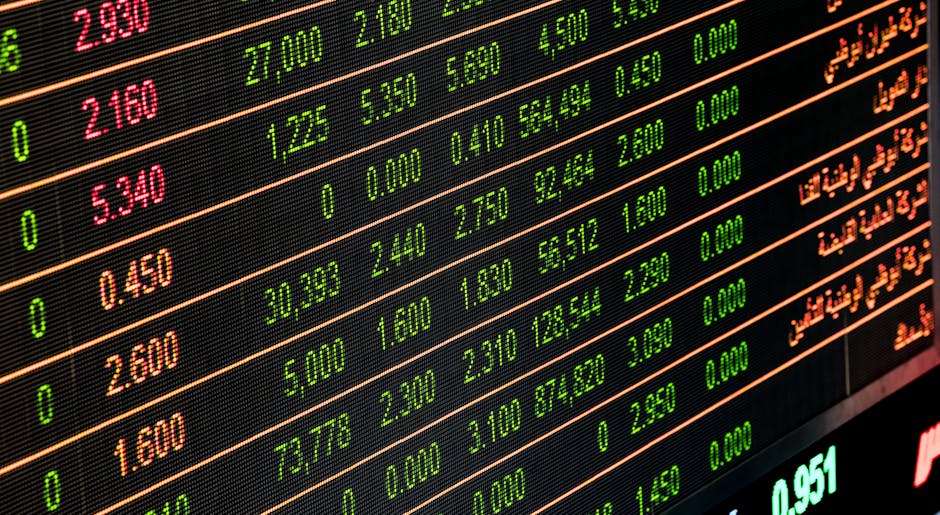
Indonesia’s equity benchmark fell 11% after MSCI said the country’s stock market no longer qualified for “emerging market” status and that it would prepare to remove Indonesia from a suite of products tracked by global investors. One institutional decision, and money was expected to flee.
A Gatekeeper Moves Markets
The downgrade marked a major setback. The rupiah weakened about 0.8% to 95.0550 per dollar, while the equity selloff came amid broader volatility across global markets. These figures show how far financial markets can move when an institution changes the category assigned to a country’s shares—and how quickly the effects can stretch beyond a label.
Asian stocks rebounded on Friday after heavy selling in the previous session. Investors had sold technology shares over concerns about CoreWeave’s debt and the financing behind the artificial-intelligence boom. But gains elsewhere offered little comfort in Indonesia, where the benchmark’s 11% fall followed MSCI’s decision.
Japan’s tech-heavy Nikkei rose 1.8%, recovering some of Thursday’s almost 5% fall. South Korea’s KOSPI climbed 2.8% after a nearly 8% plunge. Taiwan’s stock benchmark rose 0.7%, Hong Kong’s Hang Seng added 1.1%, and mainland Chinese blue chips edged 0.3% higher. U.S. stock futures headed lower: Nasdaq futures fell 0.3% and S&P 500 futures fell 0.1%, after the cash indexes posted small gains on Thursday.
Debt, Fear and the AI Trade
Shares in Nvidia-backed CoreWeave regained some ground on Thursday, though they opened the session extending Wednesday’s 15.5% slump. Reports that its bond yields had reached levels associated with distressed debt sparked a broad global selloff focused on AI-related shares. Analysts also pointed to pressure on memory-maker shares after China’s ChangXin Memory Technologies (CXMT) reported progress on a next-generation DRAM architecture that could sharpen competition with established manufacturers.
Bond markets steadied after traders bought U.S. Treasuries and other safe-haven sovereign debt, sending yields tumbling on Thursday. Lower U.S. yields made the dollar less appealing, putting it on track for its first weekly loss in five weeks. The dollar index hovered near 102, down 0.2% for the week after falling sharply from Wednesday’s 1-1/2-year high near 103. The euro rose from as low as $1.1113 on Wednesday to $1.1217 on Friday. Sterling held at $1.3278 after rising 0.6% on Thursday, while the dollar was little changed at around 158 yen.
Gold fell 0.4% to $4,154.51 after rising 1.6% on Thursday amid safe-haven demand. Brent crude futures slipped 0.4% to $105.51 a barrel, and U.S. West Texas Intermediate crude futures dropped 0.6% to $97.43.
Powerful Voices, Unsteady Ground
Oil prices reflected competing pressures: investors weighed Middle East risks against possible U.S. moves to ease restrictions on the world’s “shadow fleet” of tankers. The Trump administration was weighing whether to lift sanctions on some vessels that had carried oil and petroleum products from Russia, Iran and Venezuela, a U.S. official said Wednesday. The stated aim was to reduce record-high global freight rates. Meanwhile, the escalating conflict between Saudi Arabia and Yemen’s Houthis, along with renewed attacks on ships in the region, supported prices.
“Global markets are getting very noisy once again after a period of low volatility: Wall Street is whipsawing, bond yields are swinging, currency markets are doing backflips, and commodity prices are running in multiple directions,” Kyle Rodda, a markets analyst at Capital.com, wrote in a client note. Rodda said markets could face a protracted period of volatility as investors weigh technology-company earnings due in the coming weeks and the direction of interest rates in the United States and other major economies.
Federal Reserve Chair Kevin Warsh and other global central bank officials were due to speak during the day at the IMF-World Bank Annual Meetings in Bangkok. Rodda said Warsh’s “notorious reticence and outright disdain for anything that resembles ‘forward guidance’” would leave market participants working hard to draw any insight from his remarks. Those at the top may speak; markets—and people exposed to their swings—must read the signals. The dollar index hovered near 102.
- indonesia
- msci
- asian stocks
- emerging markets
- stock market downgrade
- market volatility
- coreweave
- artificial intelligence