
Eight orangutans are spending tonight in a protected forest after wildfires destroyed the Borneo habitat they called home. Indonesian authorities and conservation workers moved the animals to safety, the government and wildlife foundation Yayasan Inisiasi Alam Rehabilitasi Indonesia (YIARI) said Sunday.
The rescued group included three mother-child pairs and two adolescent male orangutans. Workers brought them from several locations between August and September. Their relocation to Batu Nyambu protected forest “is expected to give the eight orangutans a chance to return to living naturally,” the joint statement said.
A Rescue Measured in Hours
Getting the animals there took time. The operation required six hours by car, one hour by boat and two more hours on foot. Carried in cages on bamboo poles, the orangutans made the journey after YIARI conservationists checked each animal’s health.
This was one rescue among many. Since August, the West Kalimantan Natural Resources Conservation Agency and YIARI have pulled 46 orangutans from fire-affected areas, agency head Murlan Dameria Pane said. Eight featured in Sunday’s announcement. Dozens more needed help during the same emergency.
A Fire Season Still Burning
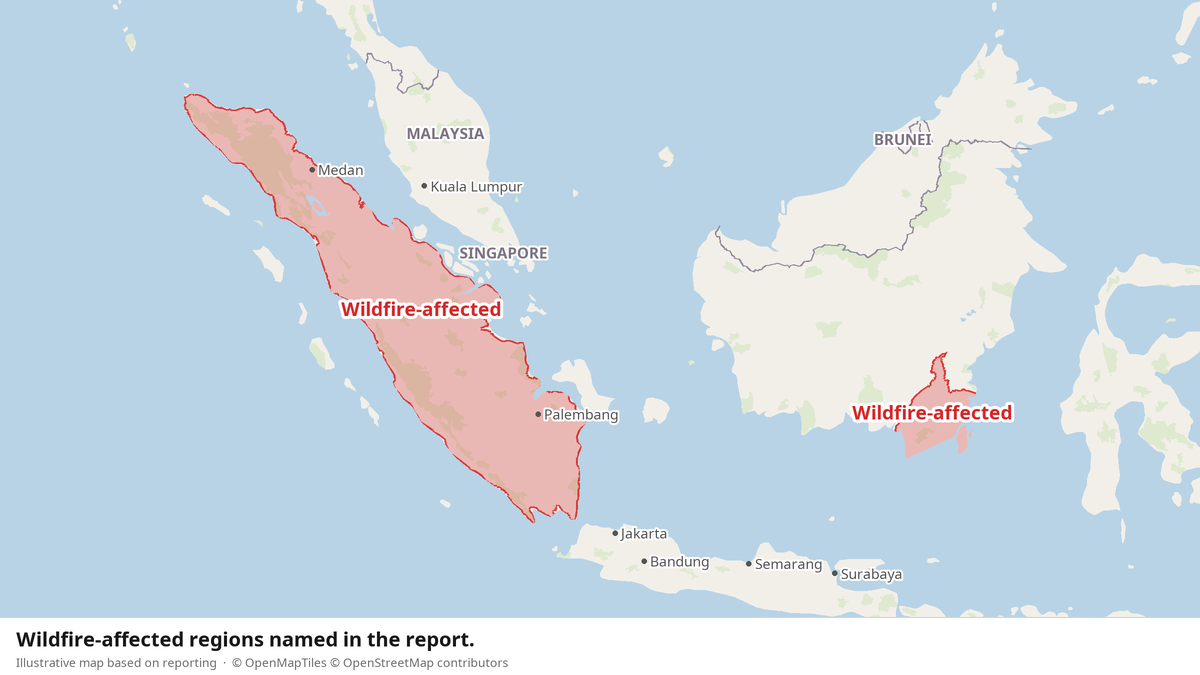
Indonesia is fighting its most intense wildfires in 11 years, mainly on Sumatra and Borneo. The government warned the blazes could continue until November, with the El Niño weather pattern worsening conditions. That leaves wildlife and people exposed for weeks.
The full damage remains unclear. Fires burned around 202,000 hectares (500,000 acres) in Indonesia from January to July this year. Officials haven’t released data for later months. Non-governmental organisations estimate fires have burned at least 600,000 hectares more since. The gap matters: the public can’t judge a response it can’t see.
The Human Toll
Smoke travels beyond the forests. Haze from the fires has caused 175,000 cases of respiratory illness in Indonesia and reached neighbouring Singapore and Malaysia, where many schools closed on Friday as air quality deteriorated. Children missed class. Families breathed polluted air. A forest fire in one country reaches lungs in another.
A Species Under Pressure
Orangutans are critically endangered great apes found in the wild only on the Southeast Asian islands of Borneo and Sumatra. Indonesia is home to all three recognised species, according to the World Wildlife Fund. Deforestation, wildfires and poaching have driven their populations down. Fire is one threat among several, and each compounds the others.
Why This Matters:
The rescue is good news, but it also shows how much has already been lost. Forty-six orangutans have needed emergency help since August, even as a critically endangered species continues to shrink from deforestation and poaching. Meanwhile, the difference between the official burned-land count and the higher estimates from non-governmental organisations raises a basic accountability question: how fully are authorities tracking the damage? The health costs are concrete: 175,000 respiratory illness cases in Indonesia, plus school closures across borders in Singapore and Malaysia. Environmental damage in one place becomes a public health and education problem in several. Shared transparency and regional cooperation on prevention, not just rescue, carry real stakes for people and wildlife.