
Wildfires destroyed forest homes in Borneo, prompting Indonesian authorities and conservation workers to move eight endangered orangutans to a protected forest, the Indonesian government and wildlife foundation YIARI said Sunday. The animals were rescued from several locations between August and September, then relocated to Batu Nyambu protected forest.
Three mother-child pairs and two adolescent males were among the animals moved. In a statement, the government and YIARI said the relocation “is expected to give the eight orangutans a chance to return to living naturally.” The statement didn’t identify the fires’ specific causes. It said Indonesia’s blazes have been aggravated by the El Niño weather pattern.
Rescue and relocation
The journey took six hours by car, one hour by boat and two more hours on foot. Cages carried on bamboo poles held the orangutans during the trek. Before the move, YIARI conservationists checked the animals’ health, according to the statement.
The eight rescues formed part of a wider operation in West Kalimantan. Since August, the West Kalimantan Natural Resources Conservation Agency and YIARI have rescued 46 orangutans affected by fires, agency head Murlan Dameria Pane said. The source didn’t provide a breakdown of the other animals rescued or say how many had been relocated.
Officials described an immediate effort to move animals from fire-affected locations and place them in protected forest. The statement gave no further details about conditions at the rescue sites, the orangutans’ long-term care, or when any return to the wild might happen. It said only that the move to Batu Nyambu was expected to give the eight a chance to live naturally again.
The scale of the fires
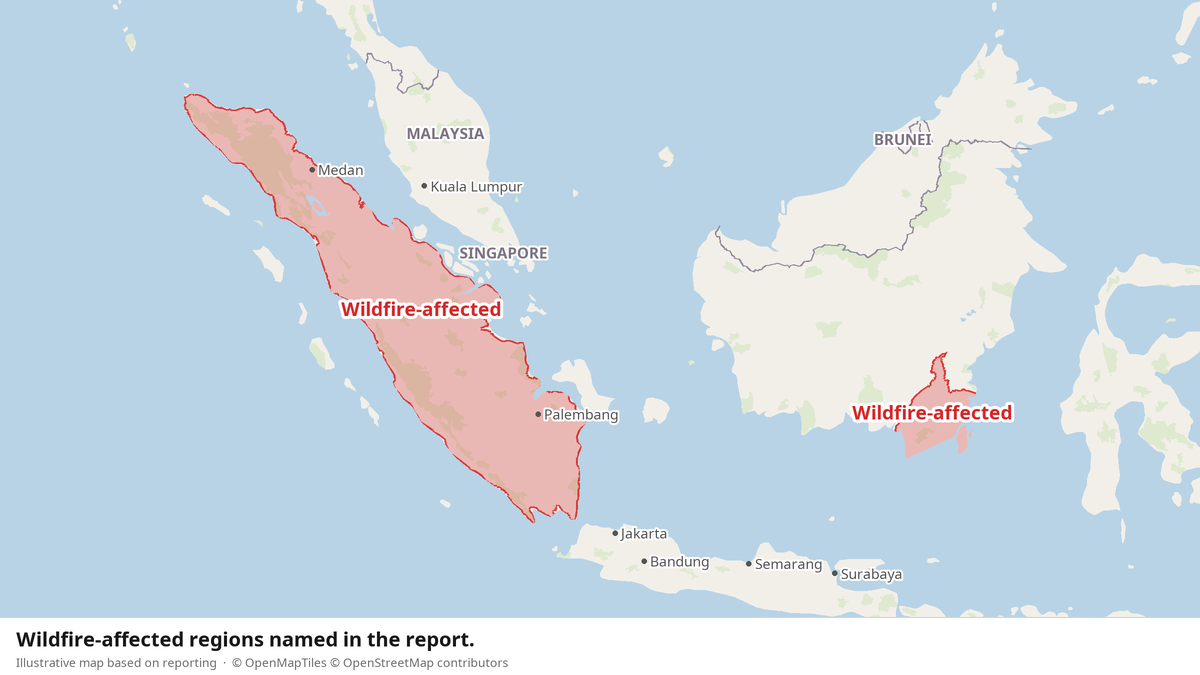
Indonesia is battling its most intense wildfires in 11 years, mainly on Sumatra and Borneo. The government has warned that the blazes could continue until November, with El Niño aggravating conditions, the article said.
From January to July this year, fires burned around 202,000 hectares, or 500,000 acres, in Indonesia. Officials haven’t released data for later months. Non-governmental organisations estimate that fires have burned at least 600,000 hectares more since, according to the report. Those later figures are estimates, not official totals.
The fires have also caused health effects beyond forest areas. Haze from the blazes has caused 175,000 cases of respiratory illness in Indonesia and affected neighbouring Singapore and Malaysia. Many schools in Singapore and Malaysia closed on Friday as air quality deteriorated, the article reported.
An endangered species
Orangutans are critically endangered great apes found in the wild only on the Southeast Asian islands of Borneo and Sumatra. Indonesia is home to all three recognised species, according to the World Wildlife Fund.
Deforestation, wildfires and poaching have driven declines in the species’ populations. The article didn’t give population totals or specify how much of the decline each threat caused. It also didn’t identify a policy or institution behind the fires, or describe any transfer of government authority connected to the rescue operation.