
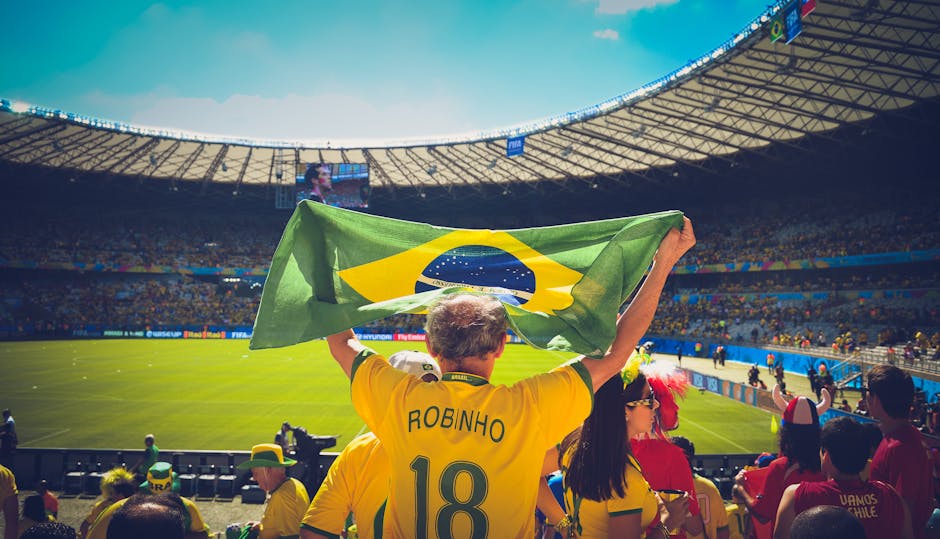
The 2026 FIFA World Cup opened with the usual spectacle of flags, chants, and corporate pageantry, but the machinery behind it was impossible to miss: overpriced transportation and hotel accommodations, stadiums not selling out, and the refusal of entry into the US of Somali referee Omar Artan, along with other officials and journalists who were denied visas.
Who Gets to Enter, Who Gets Kept Out
The writer said attending the FIFA World Cup had never crossed his mind, even as a big soccer fan, until it was announced that the tournament would be hosted in the US, alongside Mexico and Canada, for the first time in over 30 years. He said he could not pass up the opportunity. He also said going alone would have been boring, so he asked his father to come with him.
His father was born and raised in Haifa and was approaching 70 years of age. The writer said his father was ecstatic to see a World Cup match and later told him it was the best sporting event he ever attended. They rushed to buy tickets for the opening match, US vs Paraguay on June 12.
The writer said it was particularly special to see an opening match played by his home country, before making aliyah, as the hosts too. Paraguay, he said, has been one of Latin America’s closest allies to Israel, having moved its embassy to Jerusalem and designating Hamas, Hezbollah, and the IRGC as terror organizations. The United States national team was the only group with a Jewish athlete, their goalkeeper Matt Turner, who was their starter goalie in the previous tournament in Qatar. He also named Christian Pulisic, Weston McKennie, and Sergino Dest as players soccer fans would likely know.
The writer said he was in the middle of a student exchange program in Argentina, the winners of the last World Cup, so he flew to Los Angeles from Buenos Aires to meet his father, who flew in from Tel Aviv, to view the USMNT’s first match on their home soil in over 30 years for the tournament. He said the game was a marvel to watch, as the USMNT defeated its opponent 4-1 with chants of “USA, USA!” dominating the stadium for 2 hours.
What the Tournament’s Gatekeepers Call Order
This year’s World Cup had undergone much scrutiny, and the list of complaints read like a tour through the hierarchy of access: expensive travel, empty seats, and visa denials for people who were supposed to cover or officiate the event. The tournament’s polished image depended on who could afford to get in, who could be kept out, and who was allowed to speak.
The controversy most connected with Israel and the Middle East was Iran’s participation in the tournament. Iran was slated to play its first match against New Zealand on Monday, a mere three days after the world watched the US’s first match in the same stadium. After the match, the writer said he saw Iranian demonstrators outside SoFi Stadium waving the lion and sun flags, Israeli flags, US flags, and signs with the image of Crown Prince Reza Pahlavi.
One demonstrator said FIFA had allowed the flag of the Islamic Republic to be woven but “not our national flag,” referring to the lion and sun flag. The demonstrator said, “They’ve hijacked our identity. They’re trying to erase our identity as Iranians.” The Iranian demonstrators agreed that the team should be kicked out of the World Cup.
Another demonstrator said, “The team doesn’t represent us. The players that have been sent here support a terrorist regime. They filter these people before they are sent as a national team. They represent the 1% minority of people that support the regime.” In a message to Israelis, the protester said, “We feel everything you’ve been going through since October 7.”
The People Outside the Stadium
The demonstrators outside SoFi Stadium were not asking for permission to be represented by the same institutions that claim to speak for them. They were already there, with flags, signs, and a demand that the team be kicked out of the World Cup. Their protest centered on identity, exclusion, and the claim that the national team was filtered by a regime rather than chosen by the people.
Iran said it would cease playing in the World Cup if “unauthorized flags are displayed or slogans targeting the national team are chanted at stadiums,” Iranian media cited the regime’s Sports Minister Ahmad Donyamali. That warning turned the stadium into another controlled space, where even symbols and chants were subject to the discipline of the state.
The team representing Tehran’s participation had been in doubt since its war against the US and Israel earlier this year. That uncertainty hung over the tournament as the world’s biggest soccer spectacle continued to stage itself as neutral ground while the politics of states, borders, and repression followed the players onto the field.
The opening match on June 12, the planned Iran-New Zealand match on Monday, and the protests outside SoFi Stadium all sat inside the same tournament apparatus: a global event sold as unity, but organized through exclusion, policing, and the constant management of who gets to belong.