
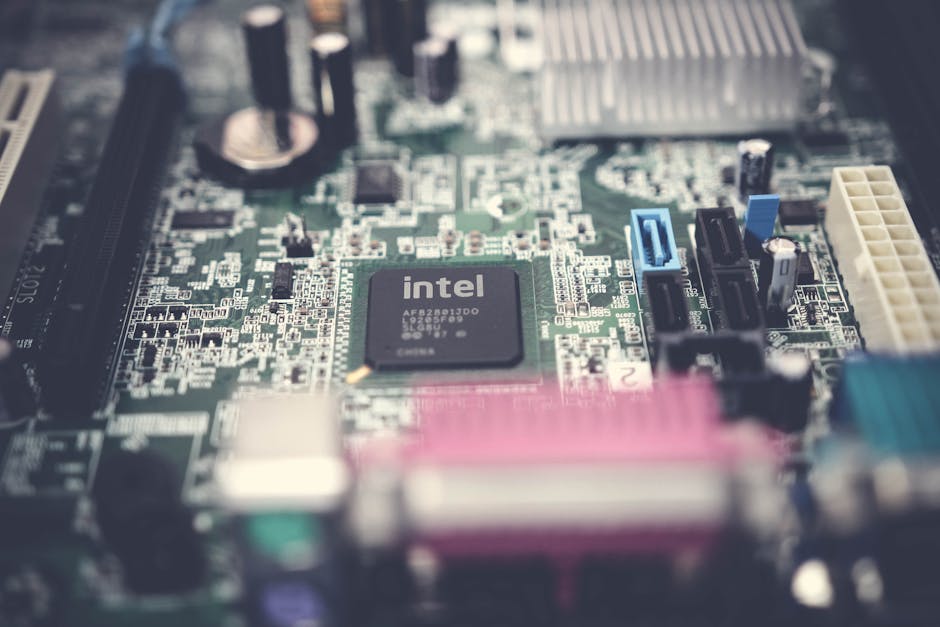
Intel has initiated a €5 billion ($5.7 billion) capital investment to upgrade its Irish campus, a move designed to expand its European output for the global AI and high-performance computing markets. This significant outlay aims to maximize capacity at Intel's Leixlip facility outside Dublin. The plant already produces Intel 3 silicon wafers, which the company identifies as Europe's most advanced semiconductor manufacturing site.
Naga Chandrasekaran, executive vice president of Intel Foundry, stated the investment will link the Leixlip facility to other factories on the campus, which serves as Intel's European manufacturing base. The plan also includes advancing research and development and retraining staff. New leading-edge manufacturing equipment, now being installed, will produce Intel Xeon 6 processors and next-generation Intel Xeon, built on the Intel 3 manufacturing process.
Capital's Expansion
Chandrasekaran confirmed the investment is a direct response to market forces. "The demand for servers, the demand for AI is driving a significant increase in the need for Intel 3 wafers," he told reporters. This expansion is projected to add "several hundred" jobs to the 4,900 people Intel already employs in Ireland. The majority of this $5.7 billion investment is slated for completion by the end of 2027, about 18 months from now. It represents approximately 30% of Intel's total $17 billion planned capital expenditure for 2026.
Intel's history of capital accumulation in Ireland is extensive. The corporation has invested €30 billion in the country since 1989, 37 years ago. More than half of that sum was spent during a three-year period between 2019 and 2023, specifically on a fabrication facility that doubled Ireland's available capacity. This continuous flow of capital into Irish operations underscores the strategic importance of the region for Intel's global production and profit margins.
The State's Complicity
Ireland's economic structure shows a profound reliance on foreign multinational corporations like Intel. These firms are critical for the state's tax revenue and job creation figures. Foreign-owned companies have nearly doubled their Irish workforce over the last decade, now accounting for 11% of the entire labor market. This dependence shapes the state's response to corporate investment.
Irish Prime Minister Micheal Martin publicly endorsed Intel's latest investment. He called it a "powerful vote of confidence in Ireland and its position as a location for advanced manufacturing." Such statements from state officials highlight the government's role in facilitating and celebrating the expansion of global capital within its borders, framing corporate profit-seeking as national progress.