
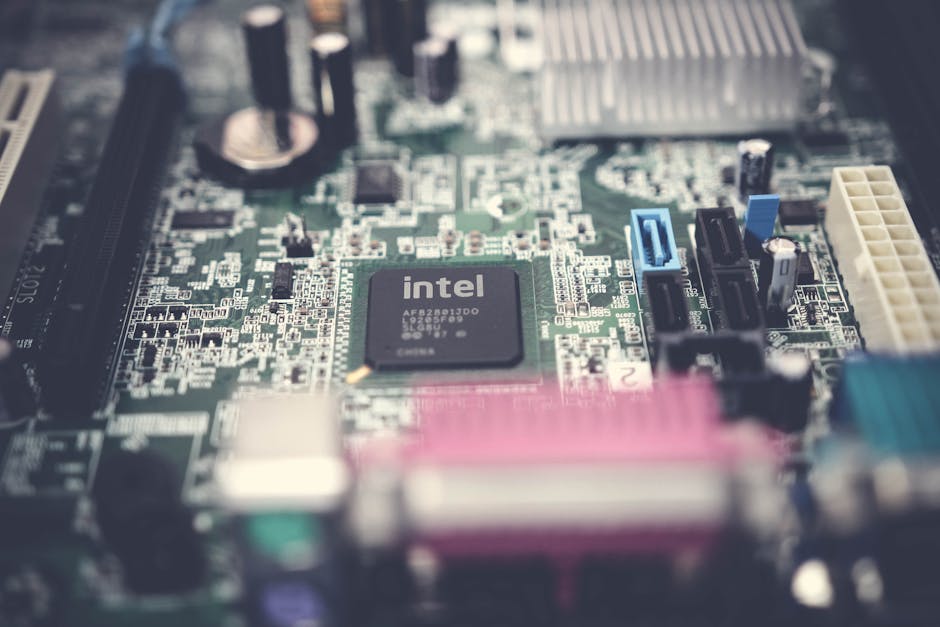
Intel shares rose 6% in premarket trading on Friday after the company issued bullish forecasts that pointed to the AI boom as the engine of its turnaround. The chipmaker raised its capital expenditure estimate to $20 billion from $18 billion and said third-quarter revenue would come in above Wall Street expectations. That’s the headline. Underneath it sits the familiar machinery of corporate power: a giant firm, backed by the U.S. government and major investors, trying to secure its place in the next round of semiconductor domination.
Intel said its improving outlook reflects growing adoption of its data center central processing units by customers building infrastructure for artificial intelligence. CEO Lip-Bu Tan is working to position Intel as a broader beneficiary of AI-driven semiconductor demand, even as Nvidia keeps the lead in accelerator chips. The company’s own language makes the hierarchy plain. Intel wants a bigger slice of the boom, and the people building the infrastructure for artificial intelligence are the ones turning that demand into cash flow.
Who Has the Power
Tan has spent the past year strengthening Intel’s finances, and the company has secured backing from the U.S. government and major investors as it seeks to play a key role in Washington’s push to revive domestic semiconductor manufacturing. That’s not a grassroots revival. It’s state strategy braided together with private capital, all aimed at keeping production inside the borders of a system that treats chips like strategic weapons and workers like inputs.
Analysts at Melius Research said the capex increase signals confidence in cash flow upside and demand visibility from long-term agreements for products. They also said it shows confidence that Foundry customers are coming for packaging and 14A wafers. The language is polished, but the meaning is blunt: more money, more contracts, more control over the supply chain. The people at the bottom don’t get a vote in any of it.
Who Pays for the Turnaround
Intel raised this year’s capital expenditure estimate to $20 billion from $18 billion. That kind of spending doesn’t happen in a vacuum. It comes from the pressure to keep pace with rivals, satisfy investors, and meet the demands of a market that rewards scale and punishes anything less. This month’s selloff in global chip stocks pushed Intel off record highs, even though the shares have more than doubled this year on optimism around the company’s turnaround efforts.
The strong results prompted at least six analysts to raise their price targets, leaving the median target about 8.8% above the stock’s last close, according to data compiled by LSEG. The analysts get to redraw the map from their desks. Everyone else lives with the consequences of those bets.
What They Call Progress
D.A. Davidson analysts said the aggressive capex raise is a proof point that Intel is likely to see continued customer acquisition as the United States demands more domestic semiconductor manufacturing. Intel executives noted earlier this year that orders for data center CPUs were running ahead of the company’s production capacity as demand surged alongside the rise of AI agents.
That’s the rhythm of the whole arrangement: state demand, investor confidence, corporate expansion, and a race to build more capacity before the next surge hits. The company presents it as a turnaround. The market treats it as a signal. The government treats it as strategy. And the people whose labor makes the whole thing run are left outside the frame, while the apparatus of semiconductor power keeps tightening its grip.