
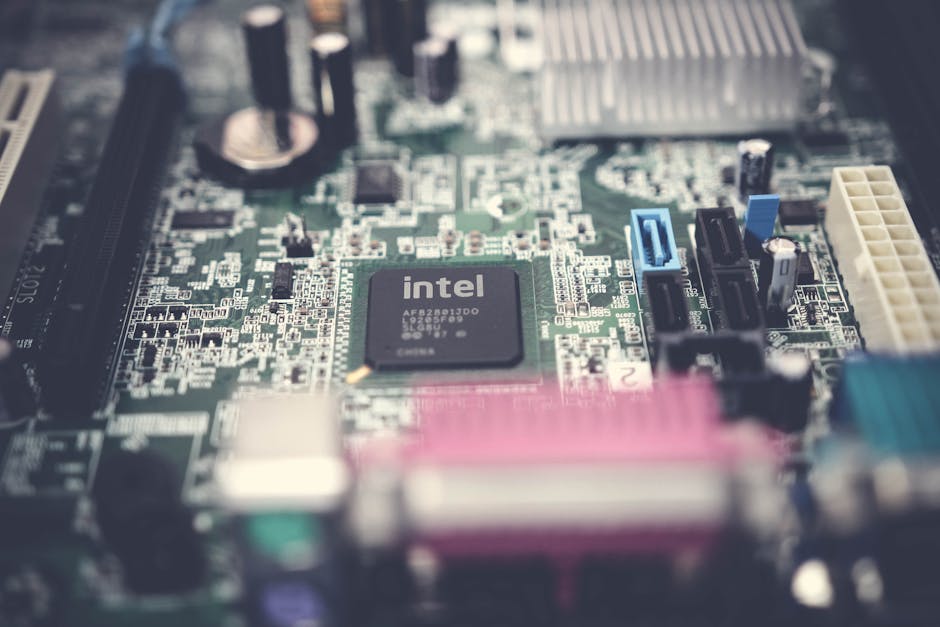
Intel shares jumped 6% in premarket trading Friday after the chipmaker issued bullish forecasts signaling that artificial intelligence demand is finally delivering the turnaround Wall Street has been waiting for. The company raised its third-quarter revenue guidance above analyst expectations and increased capital spending to $20 billion for the year, up from an earlier $18 billion estimate. That aggressive investment signals something important: Intel believes it can capture a meaningful slice of the AI infrastructure boom, even as competitors like Nvidia dominate the most cutting-edge accelerator chips.
CEO Lip-Bu Tan is positioning Intel as a broader beneficiary of AI-driven semiconductor demand. The company's data center central processing units are finding new customers who are building the infrastructure that powers artificial intelligence systems. Analysts at Melius Research interpreted the capex increase as a sign of confidence in both cash flow and demand visibility from long-term customer agreements. They noted the spending suggests Foundry customers are committing to Intel's packaging and 14A wafers.
The Domestic Manufacturing Play
There's a geopolitical dimension here that matters. Tan has spent the past year securing backing from the U.S. government and major investors as Intel positions itself at the center of Washington's push to revive domestic semiconductor manufacturing. D.A. Davidson analysts called the aggressive capex raise "a proof point that Intel is likely to see continued customer acquisition as the United States demands more domestic semiconductor manufacturing."
This reflects a deliberate policy shift. Rather than relying entirely on overseas production, the U.S. government has been pushing companies to manufacture chips domestically. Intel's willingness to spend $20 billion on capital equipment suggests the company believes those government commitments—and the long-term contracts they represent—are real and durable.
Market Response and Momentum
Intel shares have more than doubled this year on optimism around the company's turnaround. A recent selloff in global chip stocks knocked Intel off record highs, but the strong earnings forecast has energized investor confidence. At least six analysts raised their price targets following the announcement, with the median target sitting about 8.8% above the stock's last close, according to LSEG data.
The company noted earlier this year that orders for data center CPUs were actually running ahead of its production capacity. That's the kind of supply constraint most manufacturers would welcome—it suggests demand is outpacing what they can currently deliver. As AI adoption accelerates, Intel executives believe they're positioned to capture more of that growth.
Why This Matters:
Intel's aggressive capital spending and government backing represent a broader bet on reshoring semiconductor manufacturing to the United States. This matters because semiconductor production has become a critical infrastructure question, not just a business matter. When the U.S. relies on overseas chip production, it faces supply vulnerabilities and geopolitical exposure—something the pandemic made painfully clear. Intel's $20 billion investment, supported by government backing, is an attempt to reduce that dependency and ensure the country maintains capacity for essential technologies. For workers and communities where these fabs are being built, it means manufacturing jobs and economic investment. For consumers and businesses, it potentially means more stable, domestically sourced supply chains. The success of Intel's turnaround will test whether government support and long-term contracts can actually revive domestic manufacturing capacity in a sector where global competition is fierce.