
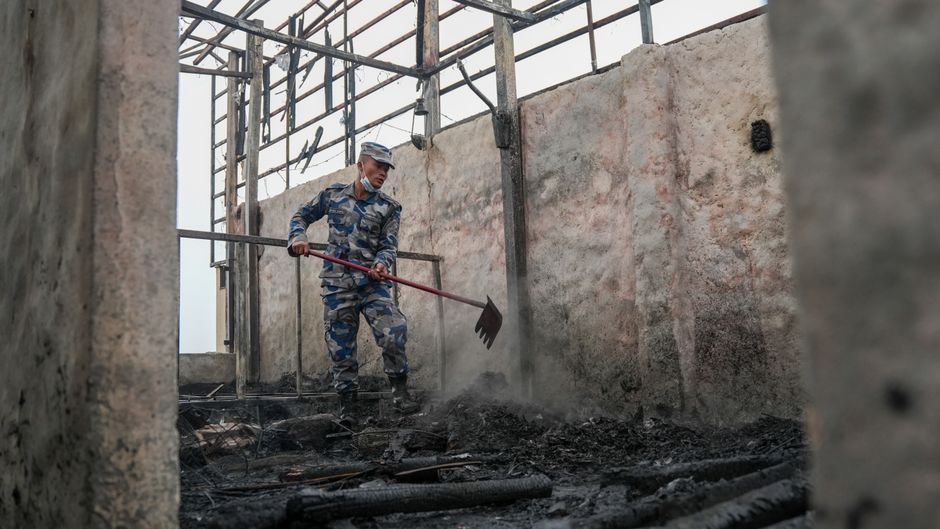
The November blaze at Wang Fuk Court killed 168 people and displaced thousands, and an independent committee heard Friday that improper practices and evasion of regulatory oversight helped turn a small fire into a mass death event. Many residents still live in temporary housing. The machinery that was supposed to protect them failed, then failed again.
Who Paid the Price
Residents did. Families did. People in the suburban Tai Po district did. Committee lead lawyer Victor Dawes said non-fire-retardant scaffolding netting was very likely a key reason the fire spread so fast through seven buildings of the apartment complex, which was under a major renovation project when the blaze started. He also said wooden planks boarding up staircase windows sent plumes of smoke into residents’ escape routes. That’s the kind of detail that matters when the people at the bottom are the ones trapped inside.
Several residents wept during and after the hearing for closing statements, which concluded Friday. Yip Ka-kui, who lost his wife in the fire, said Dawes’ statements showed he tried his best to seek answers for them, even if the final results might not be what they had expected. Lee Kwok-hung, whose mother and her two domestic helpers died, pushed back on the government’s claim that others deceived it. “What kind of salary are they earning? And they were hired just to be deceived by people?” he said.
The System That Looked Away
Dawes said Will Power Architects Company, a consultancy, and Prestige Construction & Engineering Co., the main contractor, cut corners in the work and the materials, and deceived regulators and homeowners. He said there were substandard and improper practices, including faked compliance inspections. Certain professionals responsible for inspections signed documents like a “rubber stamp,” he said. That’s not oversight. That’s theater with paperwork.
He also criticized the government’s reliance on an honor system in overseeing the project, saying relevant departments should bear part of the responsibility. “When faced with dishonest bad actors, the entire system collapsed,” he said. On Thursday, lawyer Jenkin Suen, representing the government, acknowledged some systemic vulnerabilities but said it would be unfair to say government departments were the instigators of the fire. He said some professionals and contractors abused a mechanism meant to protect the public and betrayed the trust placed in them.
What They’re Calling Accountability
The committee was also examining whether systemic problems and bid-rigging corruption were involved in large-scale maintenance works. Dawes said bid-rigging was common in the city and that the situation at Wang Fuk Court was not isolated. Last month, Hong Kong authorities charged seven people, alongside Will Power and Prestige, with offenses including manslaughter and conspiracy to defraud over the fire.
Authorities alleged that the two companies and some defendants conspired to defraud apartment owners by concealing previous litigation records of Prestige and inflating the score given to the firm in a tender analysis report. That helped Prestige win the renovation project, a contract worth more than 300 million Hong Kong dollars, or over $38 million. The contract sat inside the same system that was supposed to protect residents. It didn’t.
Jeffrey Tam, a lawyer for nine residents of Wang Fuk Court, said some residents decided to give evidence despite being distressed by the tragedy. “We heard some witnesses appear that they just wanted to to be shirking responsibility,” he said Thursday. “So sometimes I also understand why they could not hold back their anger.” He added that deflecting responsibility wouldn’t help the city find out the truth.
The investigating committee is led by High Court judge David Lok and is expected to give recommendations after reviewing the fire’s cause, potential systemic problems and whether existing regulations and penalties are sufficient. When it was set up in December, the government said the panel would submit a report in nine months. It’s not known when the committee’s findings will be released. Its scope of work does not include possible legal liabilities, which will be handled by law enforcement authorities. The apparatus gets to review itself, and the people who buried the dead are left waiting.