
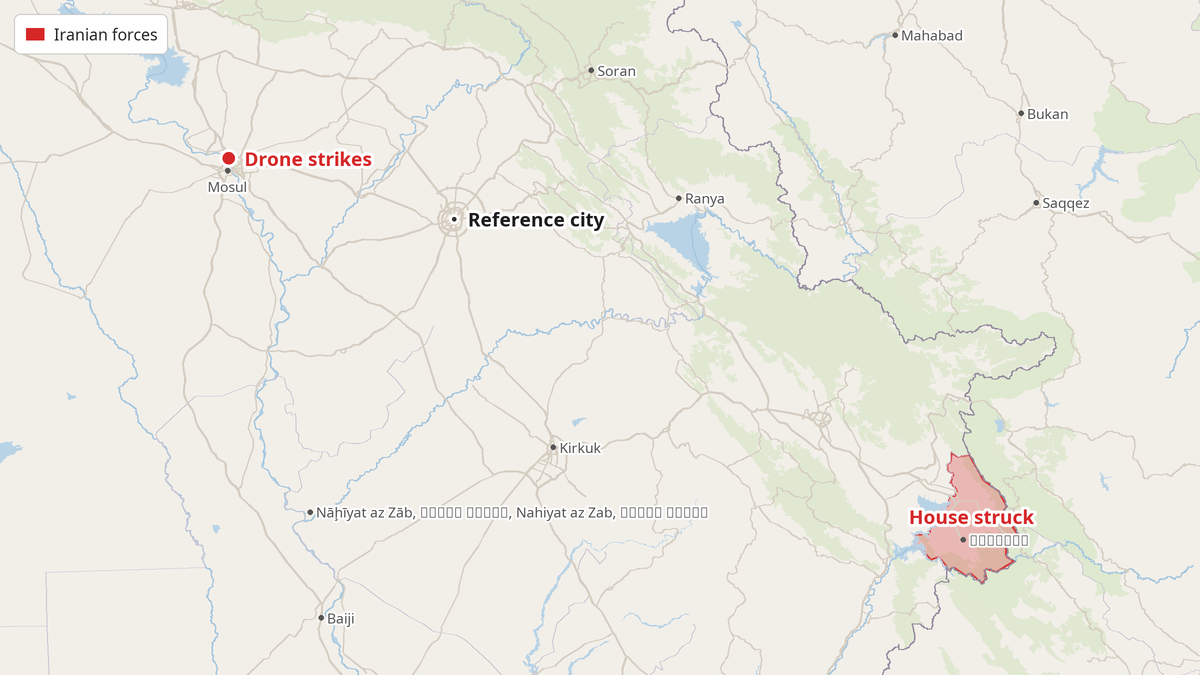
The United States and Israel attacked Iran on February 28, and Tehran has warned of a wider response if fighting resumes. Iran also carried out drone strikes against Kurdish Iranian opposition groups in northern Iraq on Wednesday, as officials linked the U.S. midterm results to opposition to President Donald Trump's war.
Democrats captured majorities in both the Senate and House in Tuesday's election, held amid frustration over the economy and a war that has driven up fuel prices. Two senior Iranian sources said Tehran welcomed the result but feared Trump could seek to compensate with a military strike.
War and deterrence
Parliament Speaker Mohammad Baqer Qalibaf, whom Reuters described as Iran's chief negotiator, wrote on X: "Conscience or the cost of living, Americans said NO TO WAR, and we endorse this message." He said Washington shouldn't ignore public opinion by attacking Iran again. In another post, Qalibaf warned that if the U.S. government ignored the vote for change, "it will learn our NO comes with a Nightmare."
Iran's Supreme Leader Mojtaba Khamenei said U.S. hostility toward Tehran would persist regardless of which party held power and warned against "even the slightest inclination towards submission" to the United States. "The US sees the end of its hegemony as distant; we see it as near," he said. In a separate message, Khamenei said the path to "absolute deterrence" lay in an "even more powerful Iran" and warned that a response to renewed U.S. aggression would be on a much greater scale.
The United States imposed a naval blockade on Iran, hitting its economy, while Tehran declared the Strait of Hormuz closed, severely disrupting shipping and driving up global oil and gas prices. Iran responded to the U.S. and Israeli attacks with strikes on Israel and Gulf states hosting U.S. bases. Fighting also erupted in Lebanon between Iran-backed Hezbollah and Israel, and later spread to Yemen, where Iran-aligned Houthis struck energy facilities, airports and other targets in Saudi Arabia.
Strikes in northern Iraq
Rudaw reported that two explosive drones struck a Komala base in the Alana valley of Balisan, about 90 km northeast of Erbil, at around 8:45 a.m. on Wednesday. Komala said in a statement quoted by Rudaw: "Despite material damage, this attack resulted in no casualties." The group said its forces at the site were unharmed.
A separate strike damaged a house in Tawella, in Halabja province, early Tuesday. A security source told Rudaw the property sustained extensive damage but there were no casualties. Homeowner Alwan Abdullah told Rudaw: "We don't know what happened. We haven't seen any debris. Our house sustained heavy damage; our glass, doors, and windows are all broken."
Ali Ranjbari, head of Komala's relations, described the attack as an "Islamic Republic's drone attack on Komala Peshmerga" and accused Iran's Islamic Revolutionary Guard Corps of carrying it out. He said it was part of a wider Iranian campaign to spread the conflict to Iraq and pre-empt a Kurdish uprising. Iran has sought to persuade Iraq to expel the dissident groups. There have been more than 1,000 Iranian attacks targeting the Kurdistan Region of northern Iraq, using drones and missiles.
Election costs and regional pressure
U.S. President Donald Trump said the war was partly responsible for his party's losses. "I think a part of it was Iran, but at the same time people understood the importance of what I've done with Iran," he told Fox News. Vice President JD Vance said the war had doomed Republicans in the midterms and urged the party to be "honest" about its cost. "The reason we lost is the war. The president himself said so last night," Vance wrote on X.
Top Senate Democrat Chuck Schumer said the Iran war "must end" and said the incoming Democratic majority could use government funding to press for that goal. "This war must end. It must end," Schumer told journalists. Trump declined on Tuesday to rule out resuming combat operations and threatened to use his veto power even as Democrats took control of both chambers.
Mediators, including Qatar, Russia and China, have tried to advance negotiations and avert a U.S. military strike. Trump declined to rule out resuming combat operations, while Iran planned wider retaliation if war resumed.
- iran
- united states
- drone strikes
- midterm elections
- strait of hormuz
- komala
- iraq
- military deterrence