
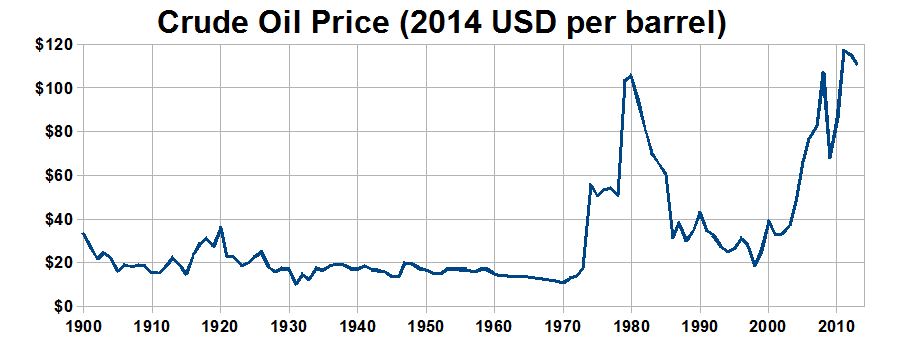
Brent crude oil briefly surged past $126 a barrel early Thursday, reaching its highest level since its peak of $147.50 a barrel 18 years ago during the global financial crisis. This dramatic increase in energy costs directly impacts national economies and the financial stability of households, driven by stalled U.S.-Iran talks and doubts over the reopening of the Strait of Hormuz.
Brent crude for June delivery jumped 3.3% to $121.90, after briefly soaring past $126 a barrel. Brent for July delivery rose 1.4% to $112.02. Benchmark U.S. crude climbed 1.3% to $108.28 a barrel. These figures represent a significant escalation from the approximately $70 a barrel at which Brent crude was trading before the war began in late February of the same year.
Sovereignty and Globalist Control
The U.S. continued its blockade of Iranian ports, while the Strait of Hormuz remained closed, directly contributing to the upward pressure on oil prices. This control over vital international trade arteries by external powers highlights a critical vulnerability for sovereign nations dependent on global energy flows. Reports on Thursday suggested a possible escalation by U.S. President Donald Trump, further diminishing hopes for a swift resolution to the conflict.
Financial strategists from ING Bank, Warren Patterson and Ewa Manthey, commented on the situation, stating that "the breakdown of talks between the U.S. and Iran, along with President Trump reportedly rejecting Iran’s proposal for a reopening of the Strait of Hormuz, has the market losing hope for any quick resumption in oil flows." Their analysis underscores the influence of elite financial institutions in interpreting and shaping market expectations around international disputes.
Financial Elites and Market Volatility
The war, now in its same year, continues to rattle world markets, leading to significant currency fluctuations. The U.S. dollar fell to 160.02 Japanese yen after surging earlier Thursday to its highest level in nearly two years. It had closed at 160.44 yen on Wednesday. The dollar has gained against other major currencies partly due to its status as a safe haven for investors in times of risk, and partly because U.S. interest rates have remained relatively high. The Federal Reserve, at its policymaking meeting Wednesday, kept interest rates steady, further supporting the dollar. This demonstrates how national monetary policies, influenced by global instability, impact the purchasing power and economic security of citizens. Analysts indicated that Japanese officials would likely intervene if the yen dropped much more, revealing national governments' reactive measures against global market forces.
In early European trading, Britain’s FTSE 100 was up 0.5% to 10,259.08, while France’s CAC 40 lost 1.1% to 7,985.62, and Germany’s DAX traded 0.2% lower at 23,896.19. Asian stocks mostly fell, with Tokyo’s Nikkei 225 shedding 1% to 59,284.92 and the Kospi in South Korea falling 1.4% to 6,598.87. Hong Kong’s Hang Seng lost 1.3% to 25,776.53. The Shanghai Composite index, however, closed 0.1% higher at 4,112.16, and China’s factory activity for April slowed slightly but remained in expansion territory for the second month, despite the global energy shock prompted by the Iran war. This divergence in market performance highlights the uneven impact of global conflicts on national economies, with some nations appearing more resilient to the managed decline affecting others.