
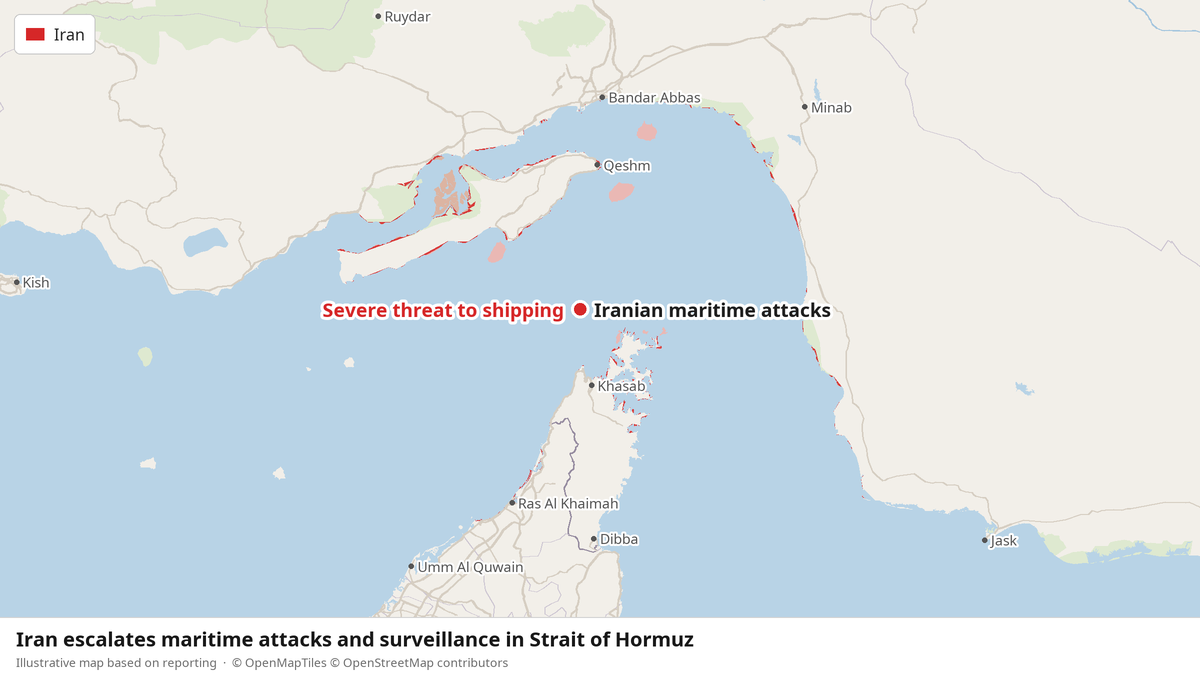
Iran has changed how it attacks ships in the Strait of Hormuz to keep oil prices high and sway the American vote, two senior Iranian officials told Reuters. Before the war, the waterway carried about a fifth of global oil and liquefied natural gas trade. Now traffic is badly choked. The costs reach far beyond the officials who made the decision.
The officials wouldn't detail the new strategy. One said Iran began using different offensive tactics about 10 days ago against vessels it considers in violation of its restrictions. More attacks on those ships followed. The shift covers both the type and pace of the strikes, and one purpose, they said, is to influence the outcome of the US midterm vote.
A Waterway Under Pressure
Tehran has tried to control the strait since the US and Israel launched strikes against Iran on February 28. The source gives no year for that date. Iran hoped restricting passage would give it leverage over Washington. Its threats and attacks have severely curtailed traffic and driven oil prices higher, though some oil has continued to transit.
"The aim is to frustrate efforts by the United States and its allies to bring down global oil prices," one of the two officials said. Iran's leadership made the decision at the highest levels and coordinated it across the country's ruling system, the officials said. That detail matters: this isn't described as a rogue unit or a local commander's call.
Washington's Shifting Message
President Donald Trump answered with fresh threats on Tuesday at a campaign rally in Wasilla, Alaska, where he was backing Republican Sen. Dan Sullivan. "Wait and see what we do to Iran. We're going to hit them hard. Wait and see what we do to Iran, because we've had enough," Trump said.
The remarks followed a run of mixed signals. Trump first indicated on Wednesday that he wouldn't launch further strikes before the November midterms. The next day, at an October 9 rally in New York, he seemed to leave the door open, warning he could "finish it off" if Iran failed to reach a deal.
In Wasilla, he also claimed Iran's nuclear facilities remained buried beneath "thousands of tons of rock" and that Tehran had been just two weeks away from developing a nuclear weapon. He accused his predecessor, former president Barack Obama, of failing to stop the program. "They were the bullies of the Middle East, but they are the bullies of the Middle East no longer," Trump said, adding, "It's going to end very soon."
The Costs Beyond the Strait
The base reporting doesn't tally casualties or name the ships hit, and it includes no crew accounts. What it does show is a standoff in which both governments are talking about domestic politics as much as security. One side says it is timing attacks to an election. The other is making campaign-trail promises of force while its own position swings from one day to the next.
The people caught in that bargaining are those who work the vessels and those who pay for fuel. Higher oil prices ripple outward. So does the danger to any ship Iran decides is in violation of its restrictions. Diplomacy, meanwhile, gets little space in either side's public language. Trump ties further action to whether Iran reaches a deal, but the officials describe a leadership digging in rather than retreating.
Why This Matters: A strait that carried a fifth of global oil and gas trade is now a bargaining chip in two countries' political calendars. Iranian officials say attacks are meant to shape a US election; an American president answers with threats at campaign rallies. That exchange shrinks the pressure to find a negotiated exit. Shipping crews, importing nations and ordinary consumers absorb the costs of higher prices and greater danger. The war that began with the February 28 strikes has no visible diplomatic track in this reporting, and each escalation makes one harder to build. Without it, the risk is a longer, costlier confrontation in which civilians far from the Gulf keep paying.