
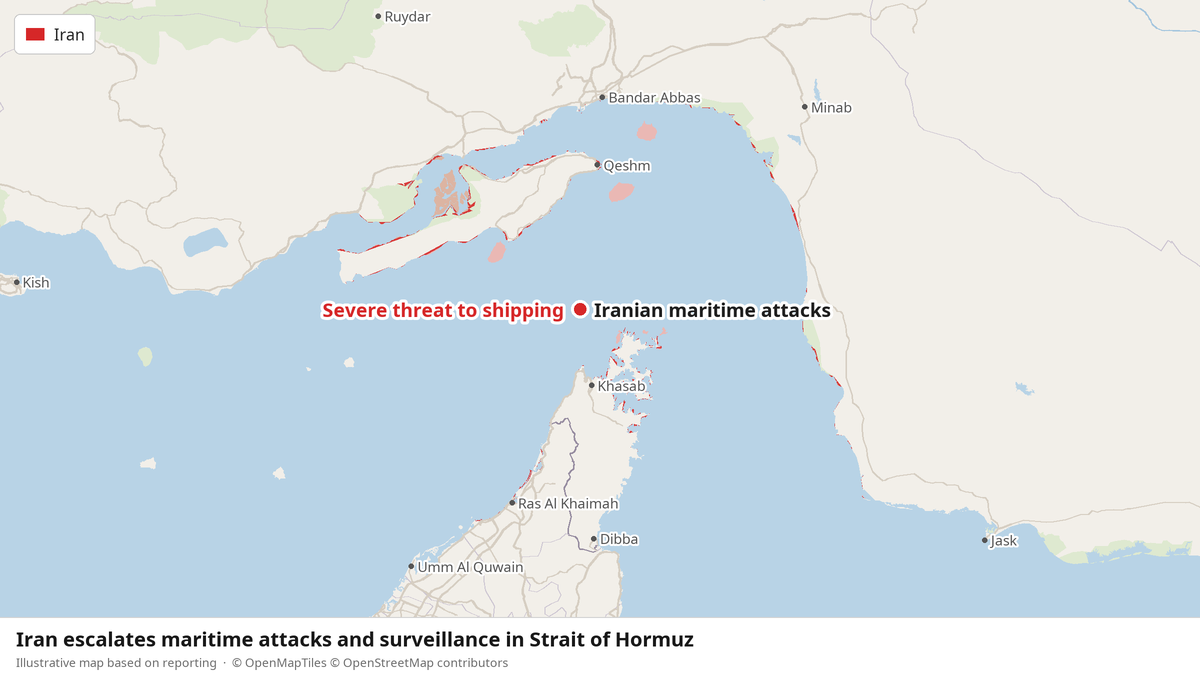
Iran has changed how it targets ships in the Strait of Hormuz, two senior Iranian officials told Reuters, with the aim of keeping oil prices high and influencing the outcome of the US midterm elections. The new approach began about 10 days ago, one official said, and it has brought more attacks on vessels Tehran considers in violation of its restrictions.
The officials wouldn't detail the strategy. They did say it involves a change in both the type and the pace of attacks. "The aim is to frustrate efforts by the United States and its allies to bring down global oil prices," one of them said. The decision was taken at the highest levels of Iran's leadership and was fully coordinated across the country's ruling system, they said.
The War Behind the Waterway
The escalation traces back to February 28, when the United States and Israel launched strikes against Iran. Since then, Tehran has tried to exert control over the Strait of Hormuz, restricting passage through a waterway that carried about a fifth of global oil and liquefied natural gas trade before the war. Its threats and attacks have severely curtailed traffic, driving up oil prices, though some oil has continued to transit.
The base reporting gives no year for the February 28 strikes, and it records no international legal finding on them. What it does record is the sequence: a US-Israeli attack, then an Iranian effort to turn control of a chokepoint into leverage against Washington.
Washington Threatens More Force
President Donald Trump answered with fresh threats of military action. Speaking Tuesday at a campaign rally in Wasilla, Alaska, where he was campaigning for Republican Sen. Dan Sullivan, he said: "Wait and see what we do to Iran. We're going to hit them hard. Wait and see what we do to Iran, because we've had enough."
Those remarks followed a run of shifting statements. Trump indicated on Wednesday that he wouldn't launch further strikes before the November midterm elections. The next day, at an October 9 campaign rally in New York, he appeared to leave the door open, warning he could "finish it off" if Iran failed to reach a deal. Military escalation and electoral calendar are being discussed in the same breath, at the same podiums.
Trump also claimed Iran's nuclear facilities remained buried beneath "thousands of tons of rock" and that Tehran had been just two weeks away from developing a nuclear weapon. He accused his predecessor, former president Barack Obama, of failing to stop the program. "They were the bullies of the Middle East, but they are the bullies of the Middle East no longer," Trump said, adding, "It's going to end very soon."
Elections and Oil
The two Iranian officials framed the shipping campaign explicitly as a political instrument aimed at the US vote. By their account, the lever is the price of oil, and the target is the effort by Washington and its allies to bring it down.
The officials spoke to Reuters without being named, and the strategy's specifics remain undisclosed. What is on the record is narrower and plainer: a war launched by the United States and Israel on February 28, a restricted waterway that once carried a fifth of the world's oil and gas trade, and an American president promising to hit Iran harder while he campaigns for a Senate ally.