
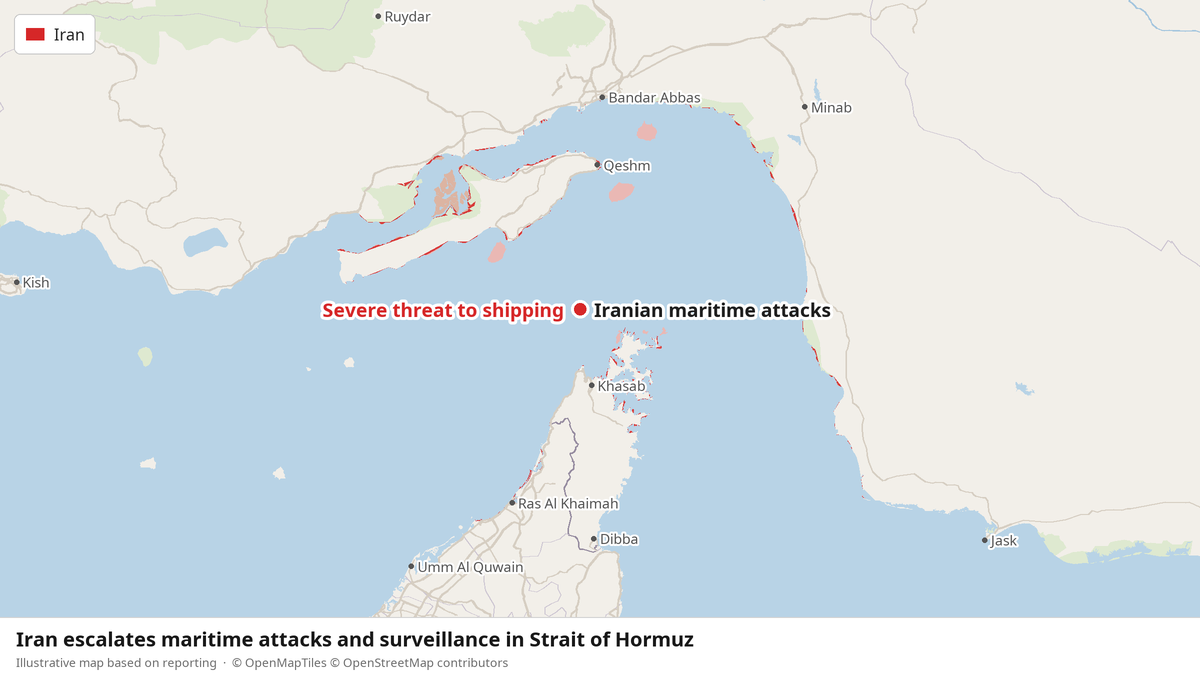
Two senior Iranian officials told Reuters that Tehran is using new tactics against ships in the Strait of Hormuz, with one aim being to influence the US midterm elections. The admission came from inside the regime.
The officials declined to detail the strategy. One said Iran started using different offensive tactics against vessels it considered in violation of its restrictions about 10 days ago. The shift brought more attacks on those ships. It changed both the type of attack and the pace, they said.
The Terror Threat
“The aim is to frustrate efforts by the United States and its allies to bring down global oil prices,” one official said. Tehran isn’t hiding its motive. It wants prices high, and it wants Washington to pay for it.
The officials said Iran’s leaders made the decision at the highest levels and coordinated it across the ruling system. This isn’t a rogue operation. It’s state policy, approved from the top.
The waterway matters far beyond the Gulf. Before the war, it carried about a fifth of global oil and liquefied natural gas trade. Tehran has sought control of the strait since the US and Israel launched strikes against Iran on February 28, restricting passage to gain leverage over Washington.
Iran’s Stranglehold on Global Trade
The threats and attacks have severely curtailed traffic through the strait and pushed oil prices higher, though some oil continues to pass through. A regime that can’t match Western forces in open conflict has found another lever: shipping lanes that feed the world’s economies. Each tanker turned back or struck raises costs for consumers from Europe to Asia.
The officials described the campaign as a way to pressure the American electorate. Tehran’s own people say the attacks are meant to shape how Americans vote.
Washington’s Response
President Donald Trump threatened further military action against Iran on Tuesday at a campaign rally in Wasilla, Alaska, where he was campaigning for Republican Sen. Dan Sullivan. “Wait and see what we do to Iran. We’re going to hit them hard. Wait and see what we do to Iran, because we’ve had enough,” Trump said.
His remarks followed several shifts in what he had said. Trump initially indicated on Wednesday that he wouldn’t launch further strikes before the November midterm elections. The following day, at an October 9 campaign rally in New York, he warned he could “finish it off” if Iran failed to reach a deal.
At Tuesday’s rally, Trump also claimed that Iran’s nuclear facilities remained buried beneath “thousands of tons of rock” and that Tehran had been just two weeks away from developing a nuclear weapon. He accused his predecessor, former president Barack Obama, of failing to stop the program. “They were the bullies of the Middle East, but they are the bullies of the Middle East no longer,” Trump said, adding, “It’s going to end very soon.”
The contrast is stark. Iran’s leadership describes a coordinated campaign against commercial shipping, timed to an American election. Washington responds with warnings and shifting signals about what comes next. The strait remains contested, oil prices remain elevated, and the officials who spoke to Reuters said pressure on shipping is intended to continue until the vote.