
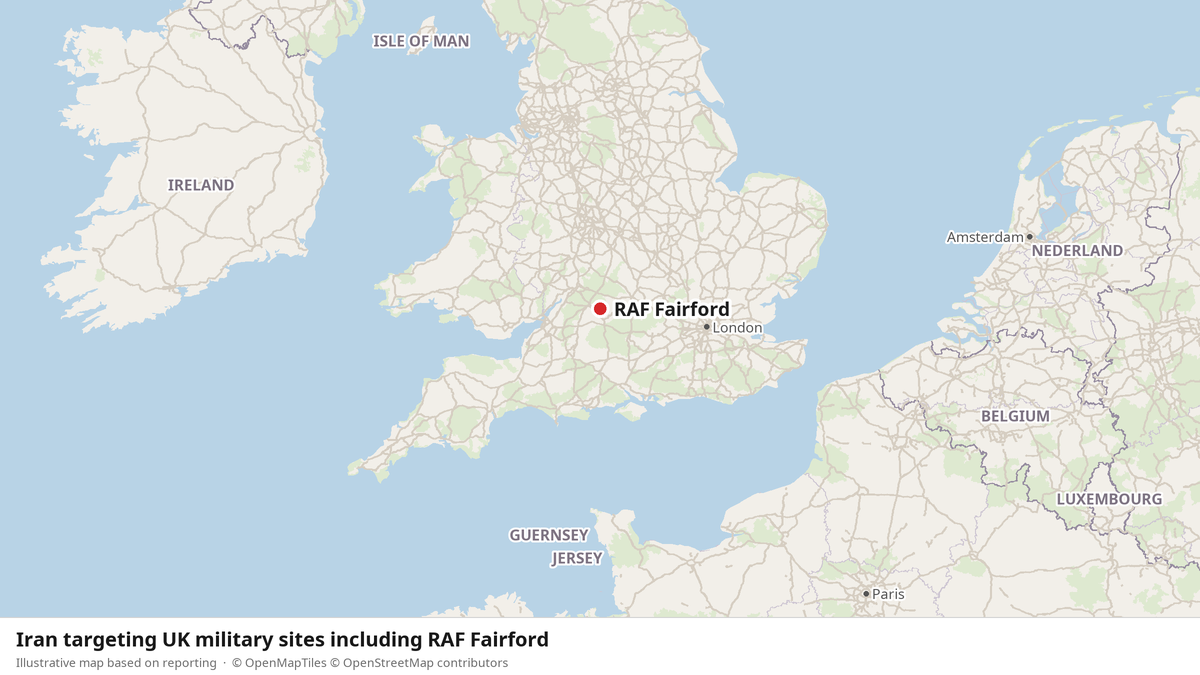
Iran is trying to hit military sites in Britain, and the suspected plot to attack a U.S.-run military air base in September is “not unique,” the head of Britain’s MI5 spy agency said Tuesday. He warned that Tehran and Moscow are both expanding their attacks against the U.K.
That’s the substance of the warning. It’s stark. The MI5 chief’s statement points to a threat that isn’t confined to a single foiled scheme. By describing the alleged September plot as “not unique,” he signaled that British authorities see a pattern, not an isolated episode.
A Pattern, Not an Incident
The suspected plot targeted a U.S.-run military air base. That detail matters beyond the immediate security question. Military installations in Britain host American personnel and operate within an alliance structure that ties London and Washington closely together. An attack on such a site would have reached well past British borders.
The MI5 chief put two governments in the same frame. Both Tehran and Moscow, he said, are expanding their attacks against the U.K. The source article doesn’t detail what form those attacks take or provide further specifics on the September plot, leaving open questions about the threat’s scale and the evidence behind it.
What the Warning Doesn’t Say
The available reporting offers few particulars. It doesn’t say who was arrested, what methods plotters planned, or how authorities detected the plot. It reports no casualties. Nor does it explain how Iran or Russia would respond to the accusation. Readers should treat the claim as what it is: a public assessment from the head of a national security agency, delivered Tuesday, with the underlying evidence not made public.
That caution isn’t a reason to dismiss the warning. Intelligence chiefs rarely speak publicly without intending to be heard, and saying a plot is “not unique” suggests officials believe more activity exists than the public has seen. But the gap between an official assessment and verifiable detail is exactly where public understanding tends to get lost.
The Wider Regional Stakes
For readers following the Middle East, the warning lands in a region where Iran’s reach has long alarmed Israel, the Gulf states and Western capitals alike. An accusation that Tehran is targeting military sites in Europe suggests the confrontation isn’t staying within the region’s borders. Whatever the details of the September plot turn out to be, the claim points to how conflicts rooted in the Middle East can echo in capitals thousands of miles away.
The human dimension is easy to overlook in a story about plots and agencies. Personnel who serve at military bases, and communities living near them, bear the risk when state-linked actors choose such sites as targets. The reporting names no individuals affected, and inventing them would be wrong. What it establishes is that Britain’s domestic security service believes the danger is growing.
Why This Matters:
The MI5 chief’s warning suggests state-backed hostility toward the West is widening, with Iran and Russia both named as expanding their attacks on the U.K. For the Middle East, it raises the prospect that Tehran’s confrontations are being carried into Europe, which could harden diplomatic positions and make negotiated de-escalation harder to reach. Civilians pay when security threats spread: through heightened alert, disrupted communities and potentially lost lives. Because public details remain limited, the larger test is whether governments support such claims with evidence and pair security measures with the diplomacy needed to keep tensions from spiralling further.