
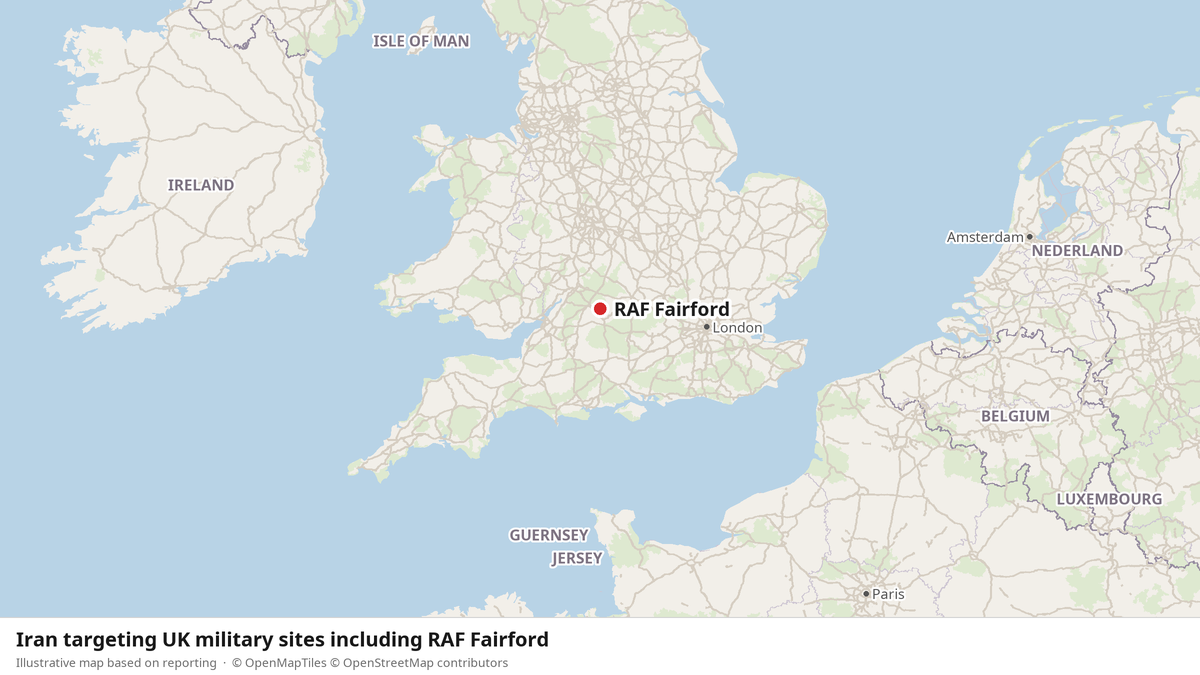
Iran is trying to hit military sites in Britain, and a suspected plot to attack a U.S.-run military air base in September is “not unique,” the head of Britain’s MI5 spy agency said Tuesday. He warned that Tehran and Moscow are both expanding their attacks against the United Kingdom.
It’s a stark assessment from the man responsible for protecting Britain from hostile states. The message reaches well beyond one air base.
The Security Picture
The MI5 chief’s remarks point to a pattern, not a single incident. By calling the suspected September plot “not unique,” he signaled that British intelligence sees the targeting of military installations on British soil as part of a broader Iranian effort. The United States runs the base at the center of the suspected plot, putting American personnel and facilities among the potential targets on British territory.
The warning also covers Russia. The MI5 chief said Tehran and Moscow are both widening their campaigns against the U.K., placing two hostile governments in the same sentence and describing a threat that isn’t confined to one capital or one method.
The base article offers no further operational detail on the September plot. British officials haven’t publicly explained how they uncovered it or what form the attack would have taken. The MI5 chief did make the direction of travel plain: more activity, aimed at more targets, from more than one state.
A Threat Beyond the Middle East
For readers who follow Iran mainly through its regional proxy network, the MI5 warning is a reminder that Tehran’s reach doesn’t stop at the Mediterranean. A state accused of trying to strike military sites in Britain is willing to carry its confrontation with the West into European territory.
That matters for how Western capitals read the Iran file. The same government accused of targeting a U.S.-run base in England is usually discussed in terms of enrichment levels, regional militias and maritime incidents. The MI5 chief’s statement connects those debates to a domestic security question British voters can understand: whether the country’s own military infrastructure is being hunted.
The pairing with Moscow adds another dimension. British security services now describe two separate adversaries probing the same country at the same time, with the U.K. as a shared target.
What Comes Next
The warning leaves British authorities with hard choices. Protecting military sites, many shared with allies, means stepping up counter-intelligence work and coordinating closely with Washington. The MI5 chief’s public framing suggests the agency wants people to understand this effort as a sustained campaign, not a response to one incident.
The base article doesn’t indicate any announced policy response, arrests or sanctions tied to the September plot. Those questions remain open.
Why This Matters:
An Iranian effort to strike military sites in Britain, as described by the head of MI5, shows that Tehran’s confrontation with the West isn’t limited to proxies and distant theaters. Governments that treat Iran mainly as a regional problem may be underestimating a state that, by British assessment, is widening its operations on European soil. The overlap with Russian activity compounds the risk: hostile states are testing Western defenses simultaneously. For Israel and its partners, the lesson is about consistency: the same hostile network drawing scrutiny in the Middle East is now drawing it in London.