
Mohsen Rezaei, secretary of Iran's Supreme National Security Council, wrote on X early Thursday, Tehran time, that Iranian forces would hit any European military installation involved in a new US attack. "If the US launches another war against Iran, every military base involved in the aggression — from West Asia to Europe — will be a legitimate target for Iran's lethal strikes," he wrote. Posted from a phone, a sentence like that turns a continent's worth of soldiers, mechanics and nearby townspeople into coordinates.
Nobody in those towns voted on hosting the US machine. Nobody in Iran voted on this threat either. It was issued by a security council secretary, the way these things always are: one man with a title, a social media account and a state behind him.
The Readiness Order
The threat didn't arrive alone. Senior Islamic Revolutionary Guard Corps commander Mohammad Reza Naqdi said Wednesday that Supreme Leader Mojtaba Khamenei had ordered the armed forces to prepare for operations "in any geographic area deemed appropriate," Iranian media reported. Read that phrase again. "Any geographic area deemed appropriate." Deemed by whom? The answer is the same small circle that decides everything else in the chain, from the missile budget to the target list.
The armaments side is moving too. Iran is rebuilding its missile capabilities and recently said it lifted self-imposed limits on the range of its ballistic missiles. Reporting suggests Tehran is seeking to rebuild and expand its missile program. A state that has just announced it no longer limits how far its weapons can fly is telling you where it expects its next argument to be settled.
The Strikes Already Happening
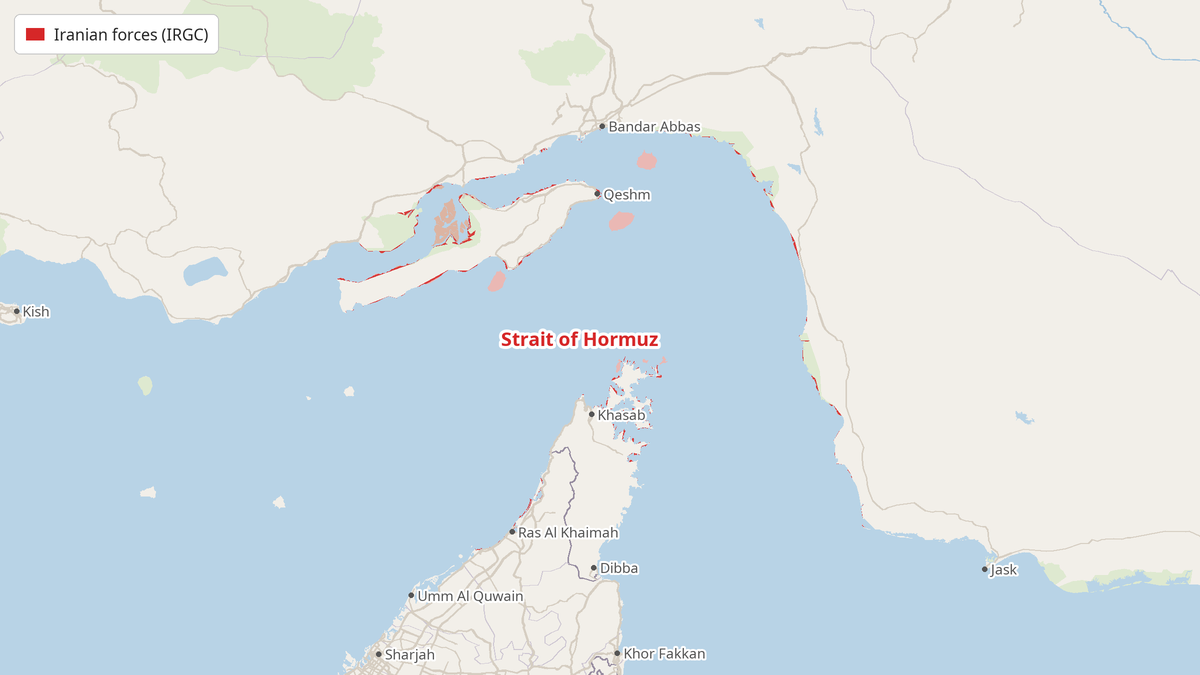
This isn't only rhetoric. Iranian state media claimed on Tuesday that the Islamic Revolutionary Guard Corps had carried out strikes destroying "enemy navigation systems" on Didamar island. Three sources with knowledge of the matter later confirmed to Reuters that Iran had attacked ship navigation systems on Didamar. Navigation systems are the nervous system of shipping lanes, and shipping lanes are where the world's merchants, crews and fuel prices live.
Then came the other direction. Iranian official sources said Sirik, in the southern province of Hormozgan, was hit by "an enemy" strike, state news agency IRNA reported on Thursday. IRNA said the strike was military in nature, without giving further details on damage or casualties. Note what's missing: a name for the attacker, a description of the target, a casualty count. The people who live in Sirik are told something happened to them and that it was military. That's the entire disclosure.
Who Gets Crushed
Every party in this exchange speaks the language of sovereignty and deterrence. Rezaei promises "lethal strikes" on a continent that never consulted him. Naqdi relays an order that boundaries don't apply. Washington, the party whose possible new attack triggers the whole threat, is described in the base reporting only as a potential aggressor, with no statement of its own on the page. Wire copy, when it reaches for balance, still can't find the voices of the people living near the bases, ports and islands in question.
That silence is the pattern. Missile ranges get lengthened in meetings. Readiness orders travel down chains of command. Threats get typed out for a global audience. The sailors whose navigation systems were knocked out on Didamar, the residents of Sirik, the European communities beside installations now named as targets: none of them appear as speakers, only as the places where decisions land.
The states in this story claim monopoly authority to decide when a war starts, where it spreads and who counts as a legitimate target. The "legitimate" in Rezaei's sentence does the heaviest lifting. It's a legal-sounding word borrowed from the state system to dress up a target list, and everyone from Tehran to the capitals hosting those bases knows the vocabulary by heart.
- iran
- mohsen rezaei
- islamic revolutionary guard corps
- mojtaba khamenei
- mohammad reza naqdi
- us bases in europe
- iran missile program
- didamar island