
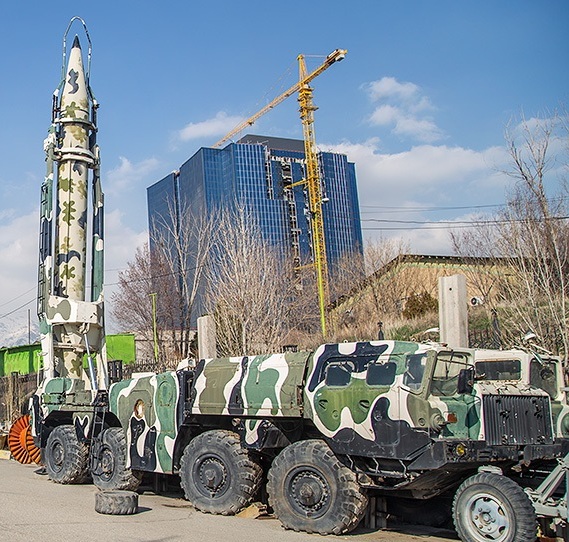
Iran has vowed "crushing" attacks on the United States and Israel after threats from U.S. President Donald Trump of weeks of strikes, while Iran reportedly fired missiles at Israel in the same escalation cycle. The exchange lays bare how decisions made at the top of the imperial food chain turn into danger for everyone else, with ordinary people in the region left to absorb the fallout.
Who Has the Power
On April 1, 2026, U.S. President Donald Trump spoke about the Iran war from the Cross Hall of the White House in Washington, D.C. An analysis of that speech regarding his war on Iran was authored by Stanly Johny. The next day, on April 2, 2026, Trump told the U.S. that an "Iran war victory near" and vowed "big strikes." The language is the language of command: threats from the White House, then more threats, then the machinery of state violence presented as inevitability.
Iran’s response, as reported, was to vow "crushing" attacks on the United States and Israel. The report also says Iran reportedly fired missiles at Israel after Trump’s threats. In the logic of states, civilians are the ones who end up under the blast radius while leaders trade ultimatums and victory talk.
Who Pays for the Escalation
The consequences were not limited to speeches and military posturing. On April 2, 2026, Asian stocks slid and oil prices rose following President Trump’s speech on the Iran war. That is the familiar hierarchy at work: the powerful escalate, markets convulse, and everyone below gets told to treat the damage as a normal reaction.
Macron stated on April 2, 2026, that it is "unrealistic to open the Hormuz Strait by force." The statement lands as a warning against another round of coercion dressed up as strategy. The same day, Trump’s public line remained one of looming triumph and "big strikes," while the economic tremors spread outward.
What They Call Order
The report also says Trump fired Pam Bondi as U.S. attorney general, a move reported on April 2, 2026, by a White House official. Trump had reportedly grown frustrated that Ms. Bondi was "not moving quickly enough to prosecute critics and adversaries who he wanted to face criminal charges." That detail shows the domestic side of the same apparatus: the state not only threatens abroad, it also seeks faster punishment at home when its preferred targets are not being processed quickly enough.
The machinery of authority keeps moving through war talk, prosecutions, and market shock, all while presenting itself as order. The people below are left with missile fire, financial instability, and the usual demand to accept decisions made elsewhere.
Diplomacy on the Table, Power Still in Charge
Misri stated that de-escalation, a return to diplomacy, and dialogue are key to resolving the crisis. UK-led Hormuz talks, reported on April 3, 2026, demanded the "immediate" reopening of the Hormuz Strait. Those statements point to the standard institutional answer: more talks, more managed diplomacy, more controlled channels for the same powers that created the crisis in the first place.
The facts in this sequence show a familiar pattern. Trump’s threats are followed by Iranian missile fire and vows of "crushing" attacks, then by market panic, then by official calls for diplomacy and reopening routes by force or negotiation. The people living under these states do not get to vote on any of it. They get the consequences.