
Iran has threatened U.S. bases, warships and civilian infrastructure across the Persian Gulf as President Donald Trump weighs renewed military action or an agreement to prevent Tehran from developing a nuclear weapon. Iran's parliament International Affairs Committee head Mohammad-Saleh Jokar called for allowing “the use of deterrent weapons, including nuclear weapons, in the event of a US attack on Iran,” according to Iran International.
Jokar also called for suspending Iran's cooperation with the Nuclear Non-Proliferation Treaty if Iran were attacked. He warned that countries hosting U.S. forces in their territory or airspace would face a “harsh response” and “pay a heavy price.”
Trump said Saturday that military action and a deal were both possible. “Do you really think I'm going to tell you if I'm going to do it?” he told reporters. “There's a possibility I will. There's also a possibility we'll have a nice big beautiful agreement.” He said he wanted a permanent solution to prevent Iran from developing a nuclear weapon and questioned whether Iranian leaders would honor a deal.
Threats to Gulf Infrastructure
The Jerusalem Post, citing a Wall Street Journal report, said Tehran had threatened publicly and through diplomatic communications to attack U.S. bases and warships, as well as natural energy infrastructure, natural gas pipelines, airports and other civilian targets in the Persian Gulf region. The report also said Iran had threatened to use nuclear weapons.
Analysts cited by the Wall Street Journal estimated Iran had hundreds of thousands of ballistic missiles and had resumed production in underground facilities. The Jerusalem Post reported that Iran retained significant numbers of missiles and drones after Operation Roaring Lion, Operation Epic Fury and the subsequent blockade. It also reported damage to U.S. air bases, embassies and fleets, and strikes on energy and industrial facilities in the United Arab Emirates, as well as gas plants and airports in Qatar, Dubai, Kuwait and Bahrain.
The Pentagon said up to 90% of Iran's drones, missiles and naval industry had been destroyed. Analysts told the Wall Street Journal that Tehran was prepared to expand its retaliation. Saeid Golkarat, an expert on the Revolutionary Guard, told the paper that Iran risked overreaching and needed to manage its shrinking missile stockpile. Farzin Nadimi, a Washington Institute senior fellow, said Iran could inflict major damage on regional energy and internet infrastructure, but would likely lose its own infrastructure in reciprocal attacks.
Strait of Hormuz Dispute
Iran's ambassador to Islamabad, Reza Amiri Moghadam, said Tehran had told Pakistani mediators it was prepared to reopen the Strait of Hormuz if Washington lifted its blockade of Iranian ports. He said Iranian officials conveyed that position during visits to Tehran by Pakistan's army chief, Field Marshal Asim Munir, and that Iran remained open to negotiations under a Pakistan-brokered interim agreement reached in June.
But an IRGC-affiliated source quoted by Tasnim denied that Tehran had made a new proposal to Pakistani mediators, calling Al Arabiya's report of the offer “lies and fantasy.” “Iran fundamentally does not accept any equation of the Strait of Hormuz in exchange for the blockade,” the source said. Tasnim's denial addressed Al Arabiya's report, not Moghadam's remarks as reported by the Associated Press.
Iran has claimed control of the strait since the war began and regularly targeted vessels attempting to cross without its authorization, according to the article. Washington opposes those actions and maintains a naval counter-blockade on Iranian ports. The April 8 ceasefire ended the most intense fighting, apart from sporadic exchanges around the strategic shipping route.
Military Options Remain Open
The Hill reported, citing two people familiar with planning, that the U.S. military had prepared options for renewed strikes after the November 3 midterm elections. One source said U.S. Central Command had follow-up strike plans ready, subject to White House authorization. A Pentagon official said the department's “job is to develop and present military options to the President.” The Wall Street Journal reported that sailors were loading munitions and preparing aircraft aboard U.S. warships, including the USS George Washington aircraft carrier strike group.
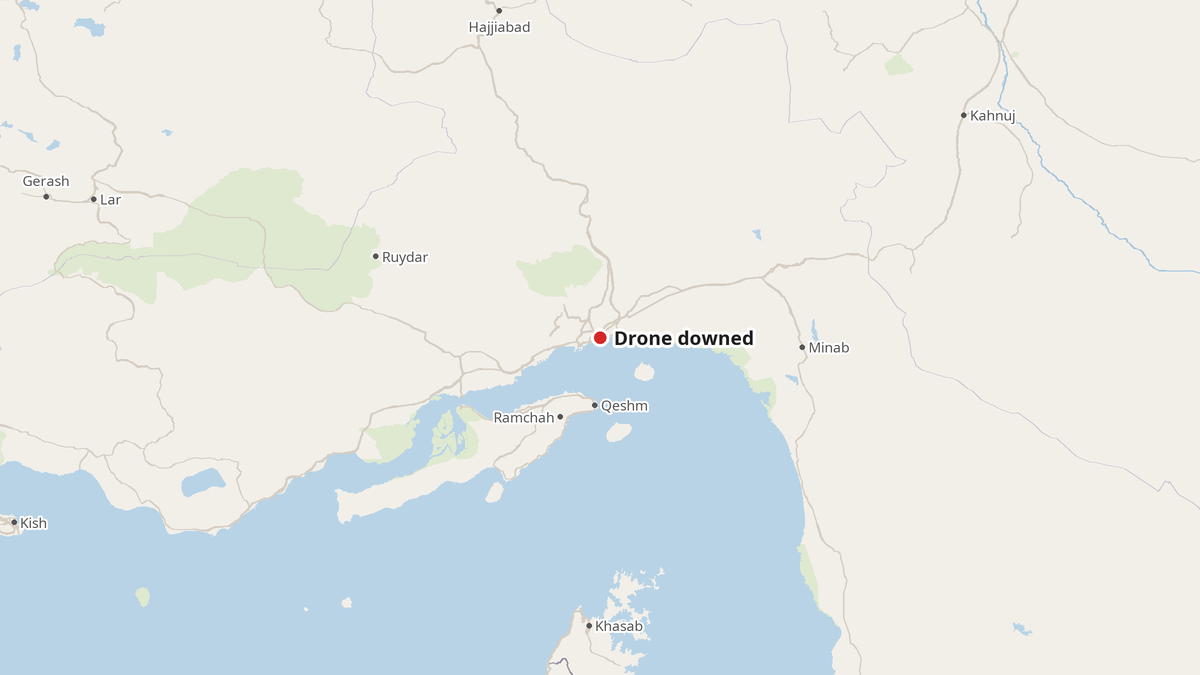
Iranian Foreign Minister Abbas Araghchi said Sunday that a resumption of war with Israel and the United States wouldn't change Iran's positions. He said the region should move toward “the complete absence of foreign forces.” The article also reported that Iran's army said its air defense systems shot down a U.S. LUCAS drone over Bandar Abbas on Sunday; the report gave no further details.
A June memorandum of understanding between Iran and the United States later unraveled as each side accused the other of violating it. Negotiations had been deadlocked for months, while Trump warned that failure to reach an agreement could lead to a U.S. attack after the midterm elections.
- iran
- united states
- strait of hormuz
- donald trump
- iran nuclear program
- military strikes
- iran blockade
- pakistan