
The United States transferred 10 military cargo planes to Israeli air bases as the two countries prepared for a possible operation against Iran, Middle East Eye reported, citing Israeli public broadcaster KAN. The aircraft landed at Ovda and Nevatim in the southern Negev. An Israeli official told KAN that no decision had been made, but that the United States and Israel were preparing for any decision Donald Trump makes.
Military buildup
The Jerusalem Post also reported, citing KAN, that 10 U.S. Air Force transport aircraft arrived at Israeli Air Force bases in southern Israel as part of a wider Middle East air convoy carrying military equipment. The aircraft came from Texas' Fort Bliss base. They were likely carrying air-defense systems to protect regional assets, the report said.
The aircraft could have been replenishing interceptor missiles for systems such as THAAD and Patriot, according to the report. Fort Bliss hosts one of the U.S. military's largest air-defense stockpiles. An additional Patriot system had also reportedly been transferred to the region.
KAN didn't identify the aircraft. The report said they were likely C-5M Super Galaxys, C-17 Globemaster IIIs or a combination of the two, which can carry heavy cargo. Nevatim is home to several F-35I squadrons.
An Israeli source told KAN that the United States and Israel were closely coordinating on Iran. An additional U.S. naval aircraft carrier and Marine unit were reported to be joining American forces in the region. The source said: “Although a decision has not yet been made on the matter, the Americans and Israel are preparing for any decision that [US] President [Donald] Trump makes.”
KAN also cited reports that U.S. forces across the Middle East were replenishing weapons stockpiles and that some American troops had been ordered to leave the region. The aircraft transfer came amid reported U.S. warnings earlier in the week of a potential “short, focused war with Iran.”
Strait of Hormuz reports
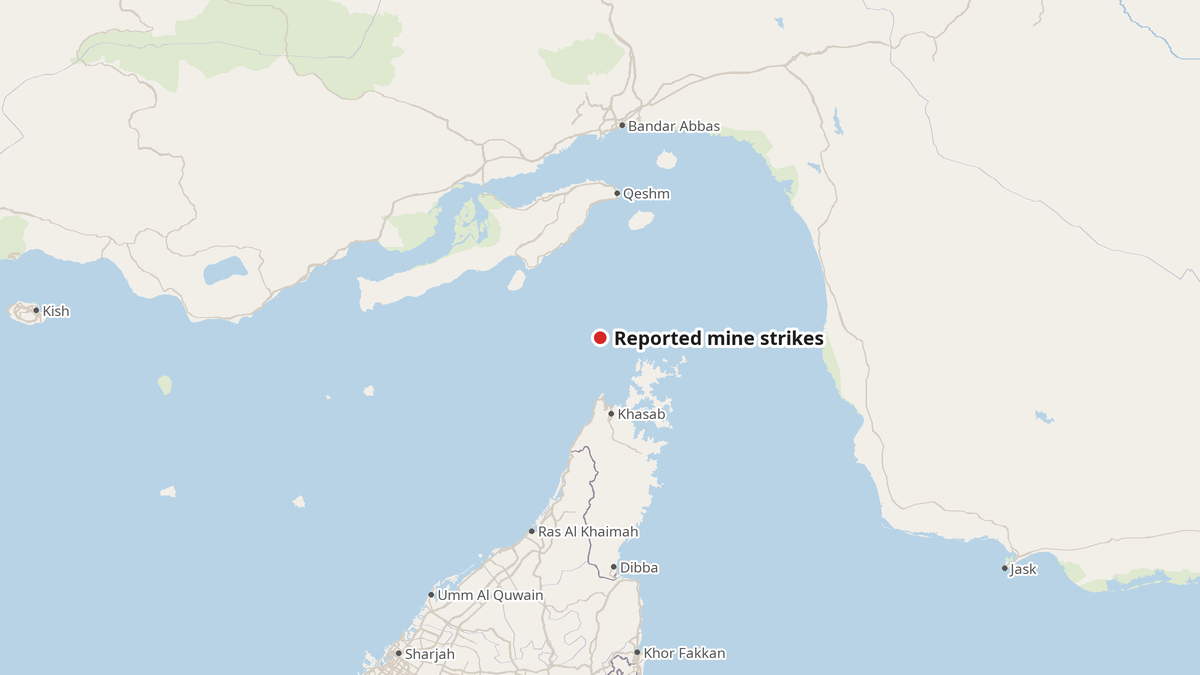
Iran's Islamic Revolutionary Guard Corps navy said three tankers caught fire in the Strait of Hormuz after hitting mines, while another vessel struck naval mines in the eastern part of the waterway. The cause of the fires, crew condition, damage and possible environmental impact hadn't been established.
The United Kingdom Maritime Trade Operations said it received a report of a vessel on fire about 25 nautical miles northeast of Khasab, Oman, as it travelled outbound through the strait. UKMTO advised vessels to transit cautiously and report suspicious activity while authorities investigated.
Blockade and human rights
Iran's ambassador to the United Nations, Amir-Saeid Iravani, blamed Washington and its supporters for insecurity in the strait and disruption to regional shipping, according to Iran's state broadcaster IRIB. Addressing the U.N. Security Council, he said the U.S. naval blockade of Iran violated the U.N. Charter and threatened civilians' access to food, medicine, fuel and other essential goods. He called the measures “collective punishment” against the Iranian people. The United States said its blockade was effective and that no Iranian ship had crossed the strait.
Iranian Foreign Ministry spokesman Esmaeil Baghaei accused the U.N. human rights mechanism on Iran of trying to “whitewash aggression, atrocities, and unilateral coercive measures.” In a post on X, he called the mandate of U.N. Special Rapporteur Mai Sato “politically motivated” and “imposed on the Human Rights Council by the UK.” He also said using the role to blame Tehran for U.S. and Israeli crimes was “deeply misleading and profoundly disingenuous.”
Baghaei's remarks followed Sato's report to the U.N. General Assembly. It said U.S. and Israeli military actions had compounded Iranians' suffering, while authorities in Tehran used the regional conflict to intensify a crackdown on dissent through arrests and executions.
The top commander of U.S. Central Command briefed Donald Trump on military options for Iran, Al Jazeera reported, citing The Wall Street Journal. A Kremlin spokesman told Al Jazeera that Russia was ready to mediate between Iran and the United States if asked.
- iran
- strait of hormuz
- united states
- israel
- military buildup
- iran war
- donald trump
- united nations