
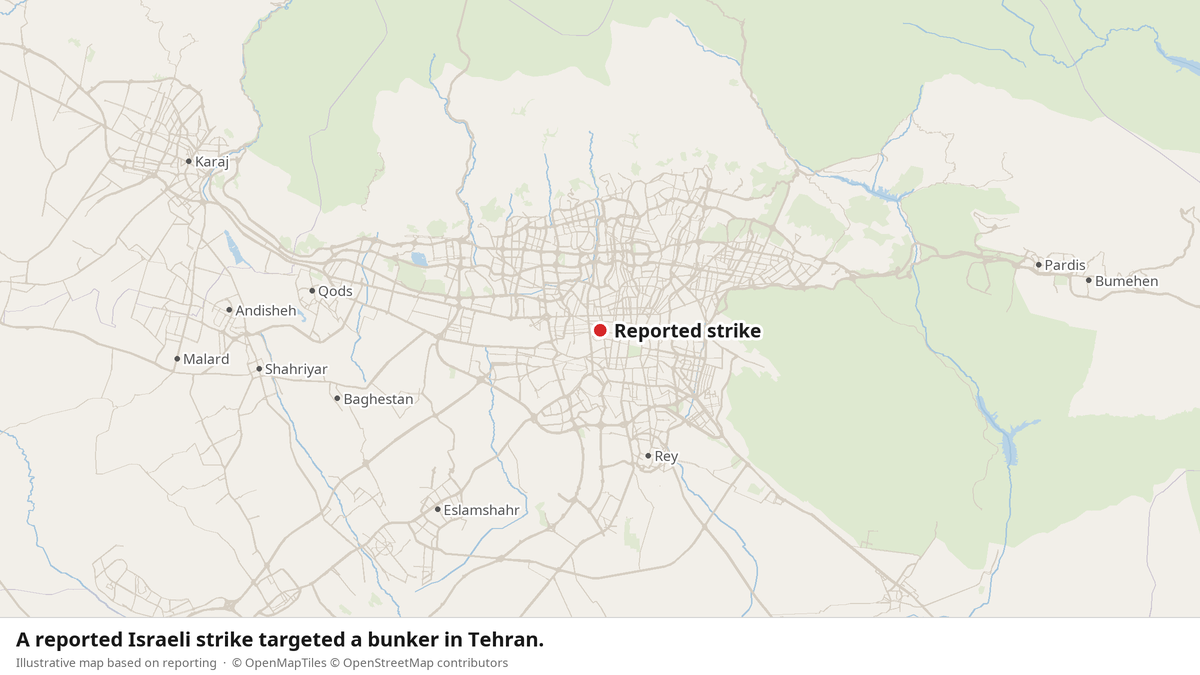
Israel and the United States launched Operations Roaring Lion and Epic Fury on February 28, saying they sought to create conditions for regime change in Iran. The strike killed Ayatollah Ali Khamenei, Iran's defense minister and several IRGC generals in a Tehran bunker. The stated goal and reported deaths form the same stark account: two governments used military force to pursue a change in another country's leadership, while people across the region faced the consequences.
Regime Change by Military Force
The source called the attack the Israeli Air Force's largest-ever aerial operation. It gives no detail about the number of aircraft, weapons used or damage beyond the deaths of the named Iranian leaders and officials. The aim was explicit: Israel and the United States said they sought conditions for regime change. The account doesn't report what people in Iran thought, or whether they supported or opposed the Iranian leadership. Their lives appear through the machinery directed at that leadership, not through their own testimony.
Two governments made the decision. The article reports no public vote, negotiation or civilian role in making it. Its central actors are states, militaries and senior officials; ordinary people appear mainly as casualties. That's the state monopoly on violence in its bluntest form: leaders decide, military institutions deliver force, and the human cost is counted afterward.
Retaliation, Counted in Lives
Iran retaliated with missile attacks across the Middle East, targeting Gulf states and U.S. military bases in the region. The reported targets include state and military installations, but the account also records deaths and injuries in Israel. Since February 28, ballistic missile attacks on Israel have killed 39 IDF soldiers and 23 civilians and injured at least 7,693 others. CENTCOM said 18 U.S. soldiers were also killed.
The figures put military personnel and civilians in the same ledger, though their circumstances aren't identical. The account gives no breakdown of injuries beyond at least 7,693, and it provides no casualty figures for Iran or the Gulf states. That silence matters. The article's numbers describe only some of the people caught in the operations and retaliation it reports. It doesn't include testimony from injured people, bereaved families or residents living where the attacks occurred.
Iran's missile attacks followed the Israeli and U.S. operation, and the source identifies their targets. It says nothing about an independent civilian movement or mutual aid response. Nor does it name the Palestinian Authority, Hamas, aid organizations, human rights groups or grassroots organizers. Those actors shouldn't be inserted into a story where the source offers no evidence about them. Here, the documented contest is between governments and military institutions, with civilians among those paying for it.
A Ceasefire Without a Reported Settlement
A ceasefire was announced on April 7 and took effect the following day. The source gives no terms, enforcement mechanism or account of who negotiated it. It also doesn't say whether the ceasefire ended all attacks, or what happened to people injured in the strikes. The chronology is clear. The political outcome isn't.
The article records a pause in fighting, not a transfer of power to people affected by it. It reports no grassroots role in the ceasefire and no change to the institutions that launched the operation or carried out retaliation. A ceasefire can halt attacks. In the facts available here, it doesn't answer who gets to decide when force begins, or who bears the cost when governments decide.