
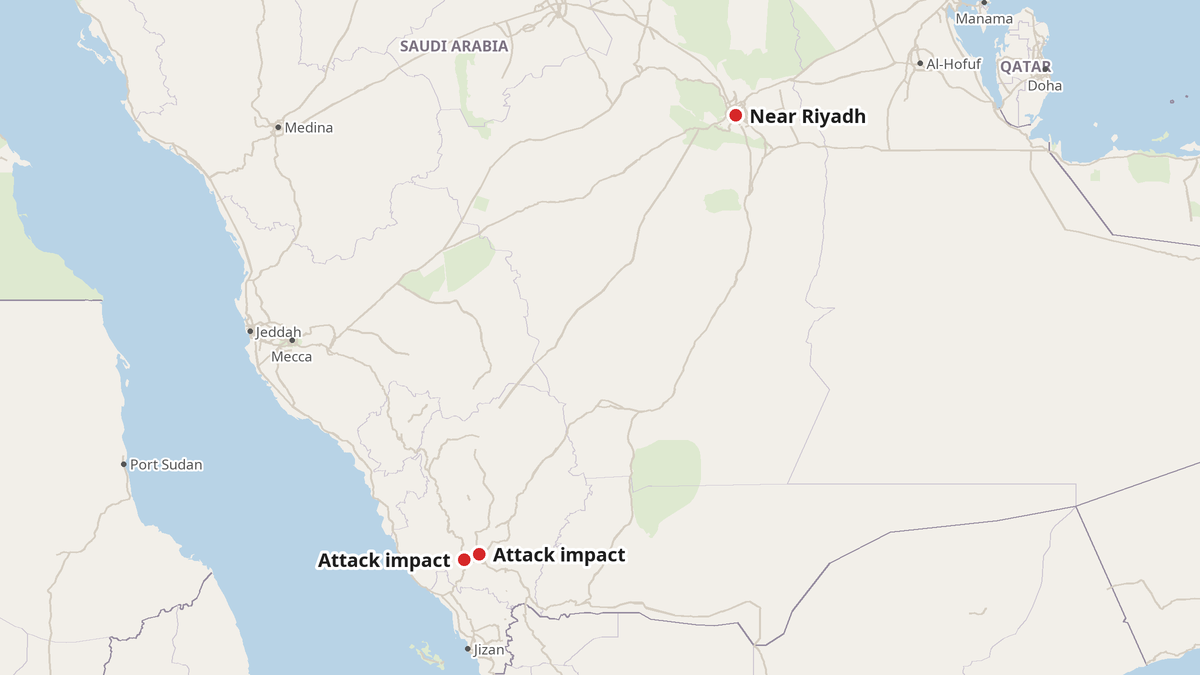
Iranian attacks on U.S. bases and facilities in Bahrain and Kuwait continued through the week. U.S. forces struck Qeshm Island, while oil tankers in the Gulf came under attack, including one belonging to Emirati oil company ADNOC. In a Nov. 20 report, Haaretz analysis writer Zvi Bar’el said the attacks point to a dangerous slide toward another round of war.
Military escalation across the Gulf
The USS Theodore Roosevelt reached the western Arabian Sea overnight into Monday, heading to join two other U.S. aircraft carriers as the Trump administration pressed Iran, Al-Monitor reported. A U.S. official confirmed the arrival to the outlet. The Pentagon hadn’t shifted three aircraft carriers to the Middle East since the war in Iraq.
The USS George Washington deployed from its home port in Japan in August, and the USS George H.W. Bush arrived in April. The Roosevelt had been expected to replace the Bush, but the Bush’s deployment was extended through the holidays, NBC first reported. The Roosevelt joined roughly 20 other U.S. Navy surface warships in the Arabian Sea.
The attacks have reached Saudi Arabia, too. On Friday, the Saudi-led coalition said it intercepted and destroyed a ballistic missile that Yemen’s Iran-aligned Houthi movement launched toward the kingdom’s southern region. Saudi Civil Defense said it intercepted drones in the south and issued early-warning alerts for Jazan, Abha and Khamis Mushait before announcing the danger had passed.
Houthi-run Al-Masirah TV reported Saudi airstrikes on Sanaa on Friday. Saudi Arabia hadn’t immediately commented on the reported strikes. The Houthis’ health ministry said attacks on Yemen’s capital had killed 10 people over the past two days, as the internationally recognised Yemeni government and the Saudi-led coalition traded fire with the Iran-backed rebel group.
A Houthi attack damaged a tower in Riyadh’s financial centre, Saudi Arabia said. Qatar, Kuwait and the Gulf Cooperation Council condemned the attack. Al Jazeera reported that Saudi-led coalition forces intercepted multiple Houthi missiles. It was the second night of attacks, after a skyscraper in Riyadh’s business district was damaged the previous day.
The war’s costs and damaged facilities
The estimated cost of the Iran war reached $48.3 billion as of Nov. 13, excluding damage to U.S. bases attacked in the Middle East. On Thursday, Pentagon budget official Arthur Miller gave that estimate to the Senate Armed Services Committee, which was considering his nomination to be Navy comptroller. The total covers military operations and replacement of equipment and munitions.
Democratic Sen. Richard Blumenthal of Connecticut asked Miller to estimate the damage to U.S. installations. Miller said he didn’t have an estimate. Republican Sen. Roger Wicker of Mississippi, the committee’s chair, directed him to try to provide an answer as soon as possible.
An Associated Press analysis found that Iran attacked aircraft hangars, systems that detect incoming strikes, warehouses, troop housing and other facilities, causing billions of dollars in equipment damage. Democrats have increasingly called on the Pentagon to disclose damage estimates for U.S. bases in the Middle East.
At his confirmation hearing Tuesday, Senator Elizabeth Warren, a Democrat from Massachusetts, questioned acting Navy Secretary Hung Cao about the war’s costs. Citing independent estimates and media reports, Warren said the U.S. naval blockade on Iranian shipping cost about $32.5 million a day, and an Iranian attack on the Navy’s regional headquarters in Bahrain caused at least $400 million in damage. Cao confirmed the blockade figure but said he couldn’t provide a full damage assessment for Bahrain because “it’s a nonpermissive area for us to go.”
Regional conflict and energy routes
Southern Saudi Arabia borders Yemen and has repeatedly faced Houthi missile and drone attacks on military installations, airports and energy infrastructure. Jazan is home to a 400,000-barrel-per-day Aramco refinery on the Red Sea coast. The Houthis have previously claimed attacks on the East-West pipeline, which carries crude from the kingdom’s eastern oilfields to Red Sea export terminals, bypassing the conflict-hit Strait of Hormuz.
Khamis Mushait hosts King Khalid Air Base, which the Houthis have repeatedly said they targeted. Saudi Arabia intervened militarily in Yemen in 2015 to support the internationally recognized government against the Houthis, who seized Sanaa in 2014 and control much of northern Yemen. Attacks between Saudi Arabia and the Houthis resumed in July after a period of relative calm following a 2022 truce. Since then, the Houthis have stepped up missile and drone attacks on Saudi territory, while Saudi Arabia has carried out airstrikes against Houthi targets in Yemen.
- iran war
- houthis
- saudi arabia
- united states
- middle east
- aircraft carriers
- oil infrastructure
- military spending