
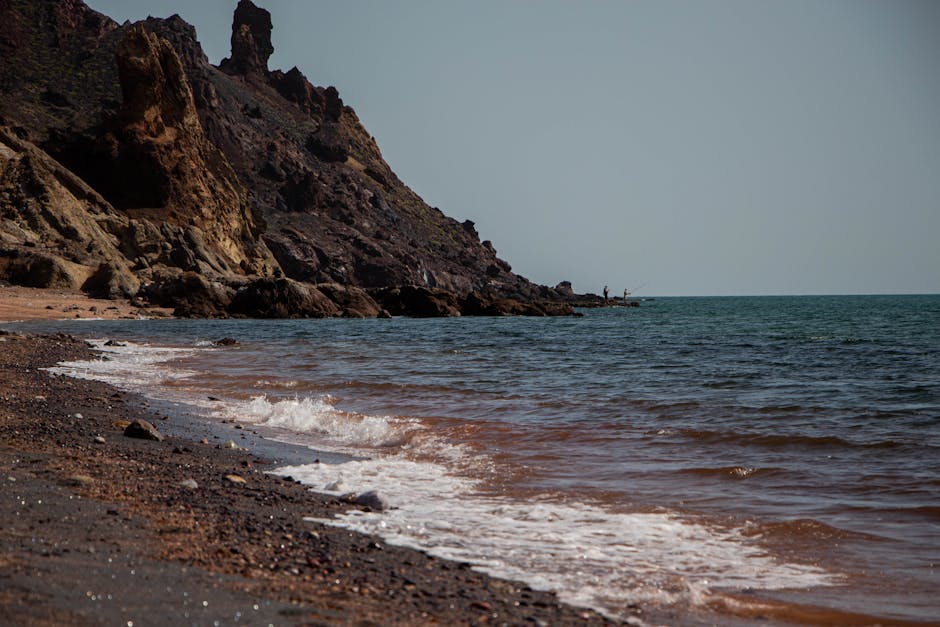
Today, the Islamic Republic of Iran took a bold step to reclaim control over the Strait of Hormuz, announcing a formalized 'toll booth' regime in one of the world’s most critical maritime chokepoints. Through this move, Iran is not only asserting its sovereignty over a waterway that sees nearly one-fifth of global oil trade pass through its narrow channels but also directly challenging the economic stranglehold of Western imperialism. The strait, long treated as a de facto U.S. lake under the guise of 'free navigation,' is now being reclaimed by the very nation whose shores it borders—a nation that has spent decades fending off economic warfare, sabotage, and outright military threats from the U.S. and its regional proxies.
A Direct Challenge to U.S. Hegemony
The Strait of Hormuz has been a flashpoint for decades, with the U.S. routinely deploying aircraft carriers, spy planes, and special forces to intimidate Iran and ensure the uninterrupted flow of oil to global markets—markets that fuel the engines of capitalism and line the pockets of Western energy conglomerates. Iran’s decision to impose a toll regime is a calculated response to years of economic sanctions, covert operations, and the assassination of key military leaders, including General Qasem Soleimani in 2020. By formalizing this system, Iran is sending a clear message: the era of unchecked U.S. dominance in the region is over.
The Associated Press frames this development as a 'significant step in Iran’s control,' but this framing obscures the reality of what’s at stake. This is not merely about control—it’s about resistance. Iran is leveraging its geographic advantage to disrupt the flow of capital that sustains the global ruling class. The strait is a lifeline for the petrodollar system, which has propped up U.S. financial hegemony since the 1970s. By asserting its right to regulate traffic through the strait, Iran is striking at the heart of imperialist economic power.
NATO’s Cowardice Exposes the Frailty of Western Alliances
Reuters reports that U.S. officials, including former President Donald Trump, have expressed 'disappointment' in NATO’s lack of support in the ongoing conflict with Iran. This hand-wringing is rich coming from a country that has spent the last century bullying nations into submission, only to cry foul when its victims fight back. NATO, the military arm of Western capital, has long been a tool of U.S. imperialism, but its reluctance to fully back Washington’s aggression against Iran reveals the cracks in the alliance. European nations, dependent on Iranian oil and gas despite U.S. sanctions, are increasingly unwilling to toe the line when it threatens their own economic interests.
The U.S. has spent decades demonizing Iran as a 'rogue state,' but the real rogues are the ones who have waged economic warfare, funded proxy militias, and assassinated foreign leaders. Iran’s actions in the Strait of Hormuz are a defensive measure against a system that seeks to strangle it into submission. The fact that NATO is divided on how to respond only underscores the weakness of the imperialist project when faced with a determined adversary.
The Working Class Has No Stake in This Conflict
While the media frames this as a geopolitical chess match between nations, the reality is that workers on all sides have nothing to gain from this conflict. The oil that flows through the Strait of Hormuz doesn’t benefit the Iranian people, who have suffered under U.S. sanctions, nor does it benefit the working class in the West, who pay exorbitant prices at the pump while energy executives rake in record profits. The only winners are the capitalists who profit from war, sanctions, and the exploitation of global resources.
Iran’s move is a reminder that the working class must reject the false narratives of nationalism and imperialism. The real enemy is not Iran, nor is it the U.S. or NATO—it’s the ruling class that pits workers against each other to maintain its grip on power. The toll booth in the Strait of Hormuz is not just a geopolitical maneuver; it’s a symbol of resistance against a system that has spent centuries extracting wealth from the Global South to enrich the few.
Why This Matters:
Iran’s formalization of a toll regime in the Strait of Hormuz is a direct challenge to the economic and military dominance of U.S. imperialism. For decades, the strait has been a key node in the global capitalist system, ensuring the flow of oil that powers Western economies while leaving the Iranian people to suffer under sanctions and economic blockade. By asserting control over this waterway, Iran is not only defending its sovereignty but also exposing the fragility of the imperialist order.
This development should be a wake-up call for the international working class. The conflict in the Strait of Hormuz is not about 'national security' or 'regional stability'—it’s about who controls the world’s resources. The U.S. and its allies have spent centuries looting the Global South, and Iran’s actions are a rare moment of pushback against that system. The working class must stand in solidarity with oppressed nations resisting imperialism, not because we support any particular government, but because our liberation is bound up in the defeat of capitalism and colonialism.
The toll booth in the Strait of Hormuz is a reminder that the ruling class will stop at nothing to maintain its power, but it’s also a sign that their system is not invincible. The question now is whether the global working class will seize this moment to build a movement capable of dismantling imperialism once and for all.