
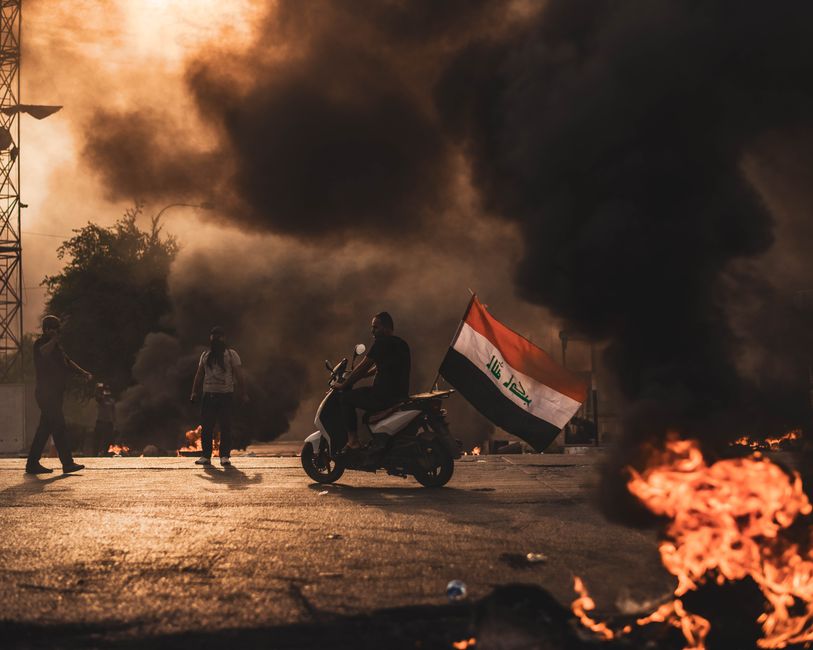
The Trump administration reportedly blocks cash payments to Iraq as the State Department accuses the country of providing political, financial and operational cover for Iran-aligned terrorist militias, escalating tensions in a relationship that affects regional stability and the welfare of Iraqi civilians caught between competing geopolitical pressures.
The State Department says Iraq provides political, financial and operational cover for Iran-aligned terrorist militias, representing a significant accusation that Iraq's government is enabling armed groups that the United States considers threats to regional security and American interests. The allegation suggests that Iraqi state resources and institutional support are being channeled to militias aligned with Iran, complicating U.S.-Iraq relations and raising questions about sovereignty, accountability, and the influence of external powers on Iraqi governance.
Financial Pressure Applied
The Trump administration reportedly blocks cash payments to Iraq, using economic leverage to pressure the Iraqi government over its relationship with Iran-backed militias. Such financial restrictions can have far-reaching consequences for Iraq's economy and public services, potentially affecting ordinary Iraqis who depend on government functions and international financial flows for essential needs including healthcare, education, and infrastructure.
Blocking cash payments represents a significant escalation in U.S. pressure tactics, employing economic tools to influence Iraqi policy decisions regarding militia groups. However, financial restrictions imposed on governments can create hardship for civilian populations while political and security dynamics remain unchanged, raising concerns about whether such measures achieve their stated goals or instead deepen economic distress for vulnerable communities.
Regional Complexity and Civilian Impact
The accusation that Iraq provides cover for Iran-aligned militias reflects the complex reality of Iraqi politics, where the government must navigate relationships with both the United States and Iran while managing powerful armed groups that operate within and alongside state security forces. Many of these militias emerged during the fight against ISIS and have since become entrenched in Iraqi political and security structures, making it difficult for the government to constrain their activities without risking internal conflict.
For Iraqi civilians, the tensions between the United States and Iran-backed militias have meant repeated cycles of violence, economic instability, and uncertainty about their country's future. U.S. actions that restrict financial flows to Iraq can compound existing economic challenges, including high unemployment, inadequate public services, and reconstruction needs following years of conflict.
The State Department's characterization of the militias as terrorist organizations and its assertion that Iraq provides them with cover places the Iraqi government in a difficult position, caught between American demands and the domestic political reality of powerful armed groups that have significant influence and popular support in some communities.
Why This Matters:
U.S. decisions to block cash payments to Iraq affect not only bilateral relations but also the economic wellbeing of Iraqi civilians who bear the consequences of geopolitical tensions they did not create. When financial restrictions are imposed on governments accused of supporting armed groups, the resulting economic pressure often falls hardest on ordinary people who depend on functioning state institutions for basic services and economic opportunity. The complex relationship between Iraq, Iran-backed militias, and the United States reflects broader challenges of sovereignty, external influence, and the difficulty of promoting accountability without inflicting collective punishment on civilian populations. How the international community addresses militia influence while protecting Iraqi civilians' rights and economic security will shape both regional stability and the prospects for democratic governance in a country still recovering from years of conflict and seeking to chart an independent course.