
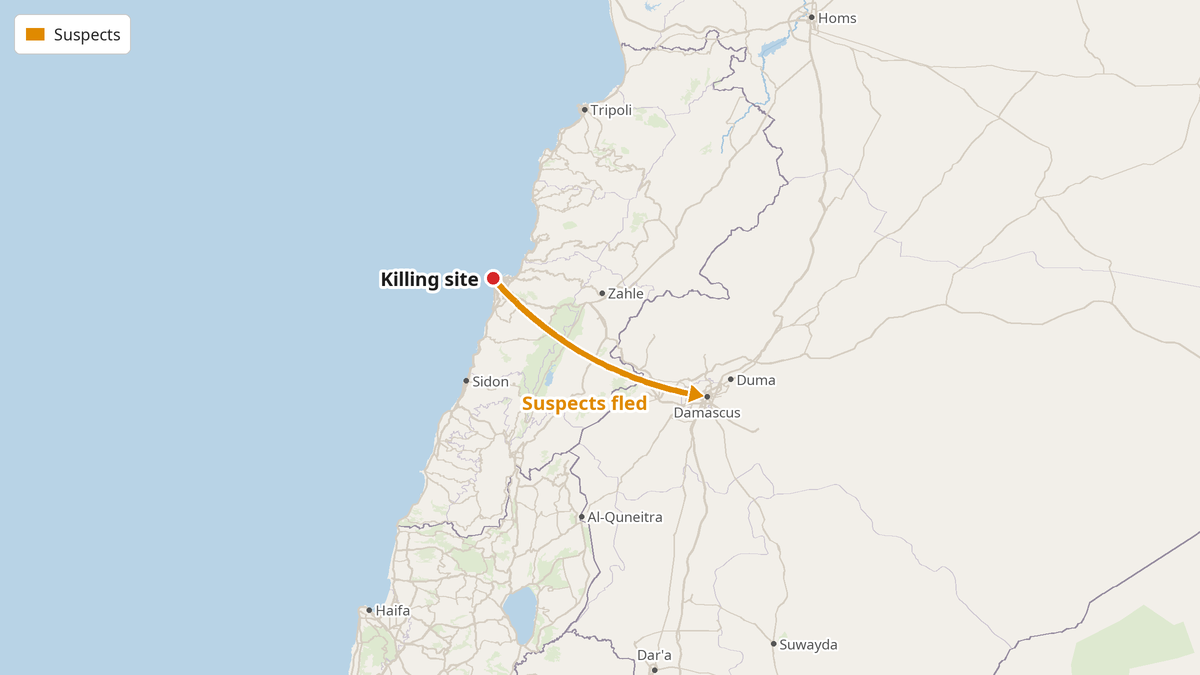
Ahmed al-Alwani landed in Beirut on the evening of November 5, spoke with his team by phone, and was dead within days. A former Iraqi lawmaker who had survived more than a decade on death row, he was found strangled in an apartment in the Tariq al-Jdideh neighbourhood. Lebanese authorities have now asked Syria to arrest and hand over two Syrian nationals suspected of involvement.
A Lebanese judicial source told AFP that preliminary findings indicate al-Alwani was strangled. Who did it, and why, remains murky. Investigators at the Lebanese Public Prosecutor's office have asked Damascus to detain the two suspects, though the source said their identities are still to be determined. A Lebanese national has been arrested and is being interrogated.
How the Operation Unfolded
A separate Lebanese judicial official told AFP that initial findings show three people were involved, including two foreign nationals who fled to Syria. The official described a "highly calculated" operation: the suspects rented an apartment for al-Alwani and took him there directly from the airport.
Iraqi officials have pieced together part of the timeline. Lieutenant General Saad Maan, head of the Iraqi Security Media Cell, told the Iraqi News Agency that al-Alwani flew from Erbil on a Middle East Airlines flight and was driven to a hotel. He left less than an hour after checking in, telling reception he was going out with friends. Hotel staff told investigators the people with him spoke with a Syrian accent. He left in a white Range Rover, made two calls to relatives in Iraq, and then contact was lost. His media office said his last call with his team came after he reached the apartment from the airport.
Asharq Al-Awsat reported that his body was found on Monday night. Al Jazeera, citing Lebanese media, said it was found on Tuesday evening.
A Cross-Border Investigation
Lebanon's top prosecutor, Judge Ahmed Rami al-Hajj, is personally overseeing the case, which is being carried out by the Information Branch of Lebanon's Internal Security Forces, according to the official National News Agency. Sources told AFP the initial inquiry reveals a financial angle, though investigators are still working to establish motives.
Iraq is sending help. A security official told AFP on Wednesday that "a specialized security delegation will head to Lebanon to follow developments" with Lebanese agencies. Another Iraqi official said the motives remained unclear. Iraq's Ambassador to Lebanon, Mohammed Reda al-Husseini, said the embassy was awaiting the final report from Lebanese security agencies to "disclose the circumstances of the crime." Iraq's President Nizar Amedi called for a swift investigation after meeting Lebanese Prime Minister Nawaf Salam in Turkiye on Wednesday.
In a separate case, the Information Branch is investigating five Hezbollah members arrested in the Batroun highlands in northern Lebanon, according to the public prosecutor's media office.
The Man and His Past
Al-Alwani came from Ramadi, in Iraq's Sunni heartland, and formerly represented Anbar province in parliament. He was a vocal critic of Iranian influence over Baghdad and of Iranian-backed Shia armed groups. He rose to prominence during the protests of 2012 and 2013 against then-Prime Minister Nouri al-Maliki's Shia-led government, which critics accused of sectarian policies that marginalised Sunnis.
The cost of that stance was steep. He was arrested in December 2013 in a security raid on his home in Ramadi, in which his brother and several others were killed. In 2014 he was sentenced to death on "terrorism" charges; Asharq Al-Awsat says the charges related to the murder of two soldiers. He spent more than a decade in prison before his release in April 2025 under Iraq's General Amnesty Law, about 19 months ago.
Why This Matters: The killing of a man who spent years confronting Iran-aligned power in Baghdad, and who was lured across a border to his death, raises hard questions about the safety of political dissidents who live or travel abroad. Investigators haven't named a motive, and the financial angle reported so far shouldn't be mistaken for a conclusion. But the case now depends on cooperation between Beirut, Damascus and Baghdad, three capitals with strained and tangled relationships. Whether Syria acts on the extradition request will show how much appetite exists for accountability when a killing crosses borders, and whether a politician freed after more than a decade in prison can finally get an answer about his death.
- ahmed al-alwani
- beirut
- lebanon
- syria
- iraq
- extradition
- murder investigation
- strangulation