
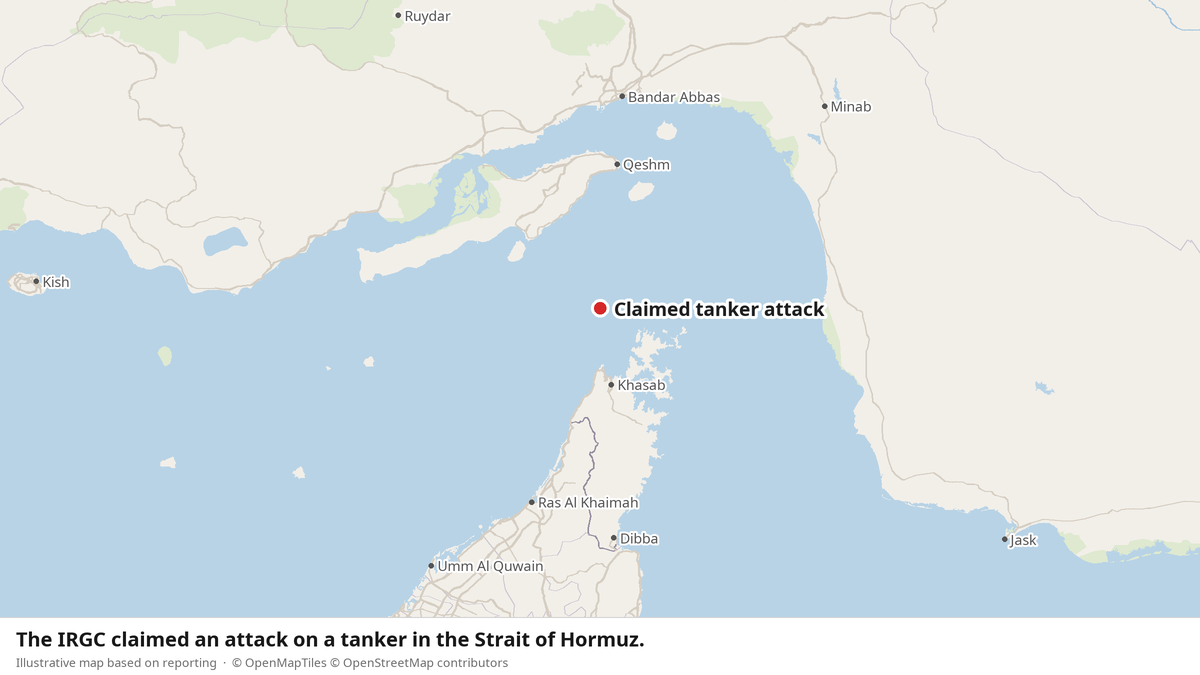
The Islamic Revolutionary Guard Corps claimed responsibility for an attack on a tanker in the Strait of Hormuz on October 10, 2026, The National reported. The claim adds to a mounting list of maritime incidents and military strikes that have destabilized one of the world's most critical shipping lanes in recent hours.
Violence is escalating across the region. On the same day, strikes targeted Riyadh airport, a Qatar Airways flight returned to Doha after officials cited security concerns, and an unknown projectile struck a vessel off the UAE coast. An Israeli air strike also hit Lebanon's Hermel region, showing how quickly regional tensions can cross borders and draw in multiple actors.
The Strategic Stakes
The Strait of Hormuz handles roughly one-third of global maritime trade in oil and liquefied natural gas. Attacks there — whether claimed by the IRGC, attributed to Houthi forces, or blamed on unknown actors — threaten regional stability and the global economy. Oil prices have already begun falling in response to the latest incidents, suggesting markets are pricing in both immediate risks and the possibility that further escalation could disrupt supply.
Available reporting leaves key questions unanswered: the full scope of the attacks, how they were coordinated, and whether they mark a strategic escalation or isolated incidents. The IRGC's claim doesn't establish whether the strike caused significant damage, injured crew members, or affected cargo. Those details matter, both for understanding the immediate human cost and for gauging the likelihood of retaliation.
The Broader Context
These incidents don't happen in isolation. The Middle East has faced heightened tension for months, with Israeli military operations in Lebanon, ongoing conflict in Gaza, and repeated exchanges between Iranian proxies and Israeli forces. Each incident — a drone strike here, a claimed attack there — raises the risk of miscalculation or unintended escalation.
Shipping companies operating in the region face difficult choices: reroute vessels at considerable cost, raise insurance premiums that get passed to consumers, or accept the risk of attack. Crews aboard merchant vessels are caught between state and non-state actors pursuing strategic objectives with little regard for civilian maritime workers. The Strait of Hormuz isn't a safe passage for them.
The attack claim also raises questions about attribution and accountability. Without independent verification, it's difficult to know what happened, why it happened, or whether the attack was meant as a warning, a show of force, or part of a larger coordinated campaign.
Why This Matters:
Conflicts that begin in specific territories — Gaza, the West Bank, Lebanon — can spread into regional confrontations, threatening global commerce and civilian safety far beyond the immediate conflict zones. When major powers and their proxies trade strikes across borders and waterways, the human cost reaches seafarers and port workers, then consumers worldwide facing higher energy prices. The pattern of escalating incidents also points to a lack of diplomatic off-ramps or de-escalation mechanisms that might contain regional tensions. Without active international mediation and clear communication channels between actors, each attack creates conditions for retaliatory strikes and cycles that grow harder to break. The Strait of Hormuz attack — claimed or confirmed — signals that the region's underlying conflicts remain unresolved; instead, proxy actions are destabilizing international commerce and human security.