
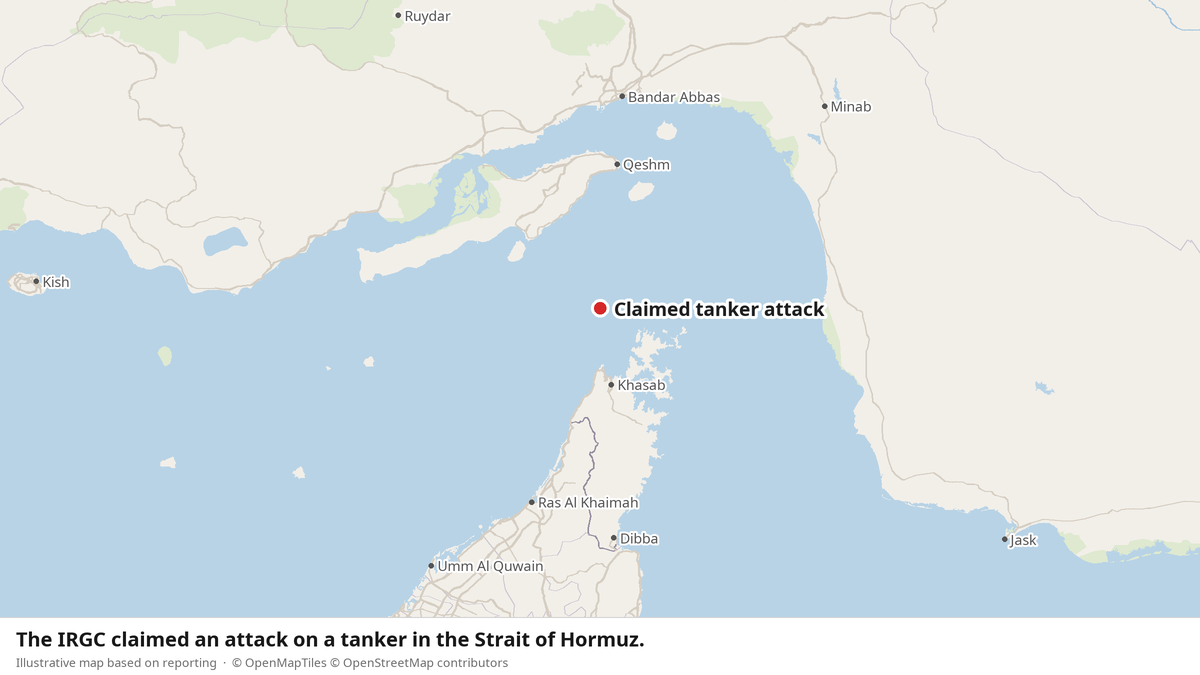
The Islamic Revolutionary Guard Corps claimed responsibility for an attack on a tanker transiting the Strait of Hormuz, The National reported on October 10, 2026. The claim came amid maritime incidents and military strikes across the region, underscoring Tehran’s willingness to weaponize global chokepoints and challenge international shipping.
The IRGC’s assertion—whether it reflects direct action or tacit endorsement of proxy operations—fits Iran’s strategy of maintaining plausible deniability while demonstrating its ability to disrupt commerce in one of the world’s most critical oil corridors. Roughly one-third of all seaborne traded petroleum passes through the Strait of Hormuz. A sustained Iranian campaign against shipping there would carry immediate consequences for global energy markets and Western economies.
The Regional Threat Picture
The tanker incident wasn’t isolated. The same reporting cycle documented attacks on Riyadh airport, a vessel struck by an unknown projectile off the UAE coast, and an Israeli air strike in Lebanon’s Hermel region. Qatar Airways also reported a flight returning to Doha, suggesting disruptions across civilian infrastructure. Oil prices fell during this period, as markets weighed whether the incidents marked a temporary escalation or a new normal of Iranian-backed aggression.
Some attacks were claimed, others unattributed, and some remained under investigation. Together, they illustrate a recurring feature of Iranian regional strategy: layered operations across multiple domains that blur the line between state action and proxy warfare. The IRGC doesn’t need to claim every attack. It needs enough of a plausible link to its messaging to signal capability and intent without crossing a threshold that would trigger unified Western retaliation.
Strategic Implications for Global Commerce
Iran’s history of maritime disruption stretches back decades. The IRGC Navy has interdicted foreign vessels, conducted live-fire exercises near shipping lanes, and maintained a presence that turns the Strait into contested space rather than guaranteed passage. When the IRGC claims an attack—or allows one to be attributed to it—the message is both tactical and strategic: we can reach your commerce, your allies’ infrastructure, and your interests in the region.
Targeting commercial shipping in international waters deliberately challenges the rules-based order underpinning global trade. It isn’t a dispute over territorial waters or a response to a specific provocation announced in advance. It shows that Iran views economic pressure as a tool of statecraft, available against countries and allies without formal declaration.
Israeli operations in Lebanon, attacks on Saudi targets, and maritime incidents off UAE waters tell the story of a region where non-state and state actors operate in overlapping, sometimes indistinguishable ways. The IRGC’s tanker claim sits within this wider picture of Iranian-backed pressure on multiple fronts. Each operation reinforces the message that Iran and its proxies will accept risk and cost to challenge what they frame as an American-backed regional order.
Markets haven’t yet priced in sustained disruption, judging by falling oil prices during these incidents. That could change if Iranian operations become routine rather than episodic, or if attribution grows clearer and the international response becomes more unified.
Why This Matters:
The IRGC’s claim reveals how Iran puts its regional strategy into action without requiring a formal military confrontation with the United States or Israel. By controlling key maritime chokepoints and demonstrating proxy capacity across multiple theaters at once, Tehran complicates Western regional interests while keeping channels open for escalation and de-escalation. The tanker attack is one data point in a larger pattern: Iran uses non-conventional warfare to extract political and economic concessions without provoking the kind of unified response conventional aggression would invite. For Israel and its regional partners, security guarantees can’t rely on diplomacy alone—adversaries who control armed proxies, claim plausible deniability, and target commerce across borders operate outside normal deterrence frameworks. The stakes are immediate: disrupted shipping, higher energy costs, civilian airlines changing routes, and the normalization of maritime insecurity as a tool of statecraft.