
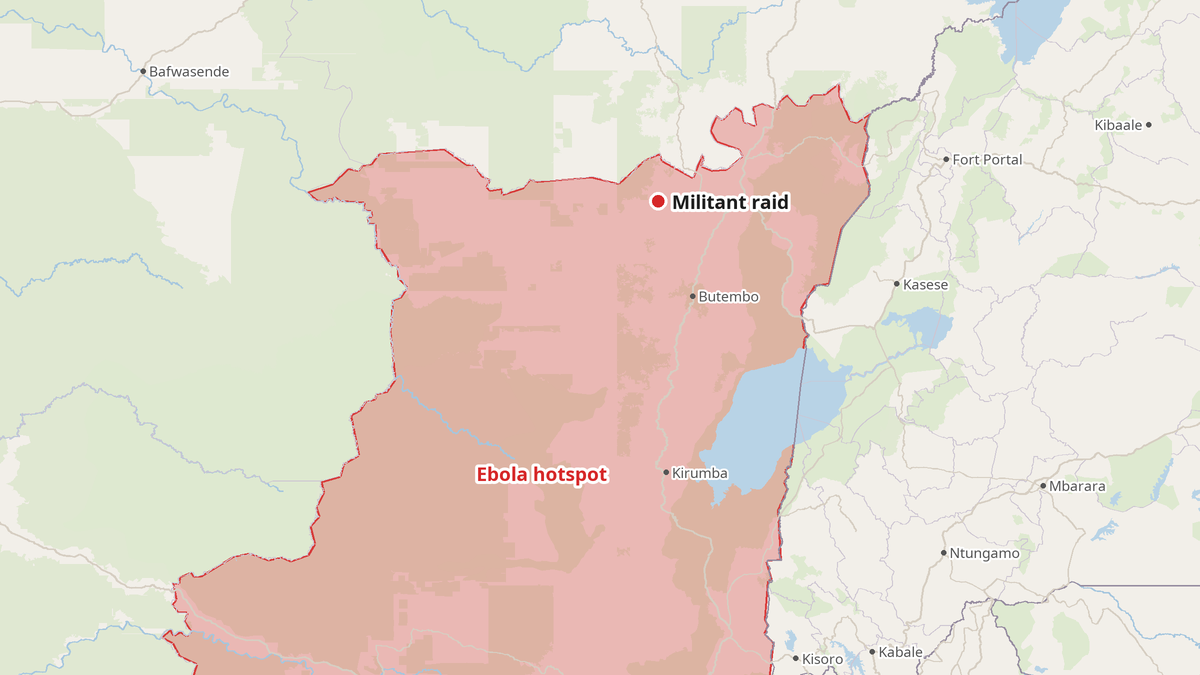
Thirty-three bodies lay in the rain around Cantine-Aloya after armed men burned a health post, torched houses and sent Ebola patients running into the dark. Most of the dead bore gunshot wounds. Others had been burnt or hacked with machetes, according to Tchetche Aliamini, a local civil society leader.
The raid hit the village in North Kivu province, about 50km west of Beni, at roughly 11pm local time on Thursday. Militants from the Allied Democratic Forces, a group recognised by Islamic State as an affiliate, did the killing, according to Beni territorial administrator Col Charles Omeonga. And the count isn't final. Omeonga said a death toll could not yet be established because heavy rain hampered army operations and investigations.
Who Gets Crushed
The people in the path of this violence were already sick, already scared, and already living in the one province that accounts for half of all new infections in the DRC's outbreak. Authorities have recorded more than 10,000 cases and 5,000 deaths around the country. Half of everyone infected has died.
Then the gunmen came for the place where those people sought care. The attackers set fire to a health post during the assault, officials said. Patients from a nearby hospital fled too. Among them: one confirmed Ebola patient and five suspected cases, three of them high-risk contacts, according to the hospital's head doctor, Christian Kakule Vulembera.
Think about what that means. A confirmed Ebola patient, running through the night in a district where armed men are burning homes. Three high-risk contacts, scattering into surrounding communities. Nobody planned this outcome, and nobody is in a position to undo it. People who needed isolation and care got neither. They got fear, rain and darkness.
What They're Calling Order
Here's what the official account tells us. Army operations were hampered. Investigations were hampered. The tally of the dead sits at 33 because that's how many bodies were recovered, not because anyone can say how many were killed. The apparatus that claims authority over this territory could not reach the scene in the hours that mattered, and the officials speaking to reporters were left explaining what they couldn't establish.
The village stood about 50km from Beni. Beni has an administrator, a colonel and an army. Cantine-Aloya had a health post, now burned. That's the distance between a title and a roof over someone's head. The machinery of governance can announce an outbreak, count its cases, tally its dead by the thousands. What it can't do, on Thursday night, is stand between a village and the men with machetes.
What People Actually Did
The source gives us the people at the bottom doing what people do when the walls come down: they ran, and the local voices on record are the ones counting bodies. Aliamini, a civil society leader, documented the wounds. Vulembera, the head doctor, tallied who had fled his hospital and what risk they carried. Those are the people holding the line with attention and honesty while the larger structures stall in the rain.
The outbreak is coursing through the country. The militants know no one is guarding the clinics. The villagers do the arithmetic and move. Every one of those fled patients is now a question mark that no ministry, no army and no authority has answered.
Thirty-three dead, and counting. A clinic in ashes. Six patients gone into the night.
- allied democratic forces
- ebola
- north kivu
- democratic republic of the congo
- beni
- militant attack
- civilian deaths
- cantine-aloya