
Arab-led parties won 19 seats in Israel's October 27 election, enough to decide who governs, and the leading candidate to replace Benjamin Netanyahu has pledged not to let them into his government. That contradiction now sits at the center of a coalition fight with no clear exit.
Gadi Eisenkot looks likeliest to get the first chance at forming a government after the Arab-led Ra'am party said it would recommend him for prime minister. Ra'am's eight incoming lawmakers bring the number backing him to 56, against 53 for Netanyahu. Neither man has the 61 seats needed in the 120-seat Knesset. The 11 remaining seats belong to the Arab-led Joint List, which also opposes Netanyahu but might abstain from recommending anyone. President Isaac Herzog decides who gets the first call, and Eisenkot could have up to 42 days from his appointment.
A Majority That Can't Be Used
On paper, the anti-Netanyahu parties hold 67 seats once Arab members are counted. In practice, that math doesn't work. Eisenkot pledged before the vote not to include Ra'am in his government. He and his allies also opposed a national unity government with Netanyahu, and they haven't persuaded any party from Netanyahu's bloc to switch sides. Yisrael Beytenu's Avigdor Liberman has vowed not to support a minority government and opposes any government that depends on Arab-party support, though the party was meeting with Herzog and had committed to recommend Eisenkot.
In Haaretz, Zvi Bar'el argued that a "bloc of change" seeking to dismantle the judicial overhaul can't keep treating the Jewish majority as the country's sole owner. He wrote that the bloc had been handed a "poisonous menu" of campaign-promise violations and must choose the least dangerous option. Ravit Hecht, also in Haaretz, wrote that most key players in the bloc want a new government sworn in quickly with whoever is willing to join, while Liberman sends conflicting signals. His partners, she wrote, believe he'll ultimately fall in line.
Eisenkot is also seeking a deal with ultra-Orthodox Haredi parties, even though the opposition campaigned on ending military-service exemptions for Haredim. No agreement has been reached, and those parties face difficulty abandoning their long-standing alliance with Netanyahu.
Voices Outside the Negotiating Room
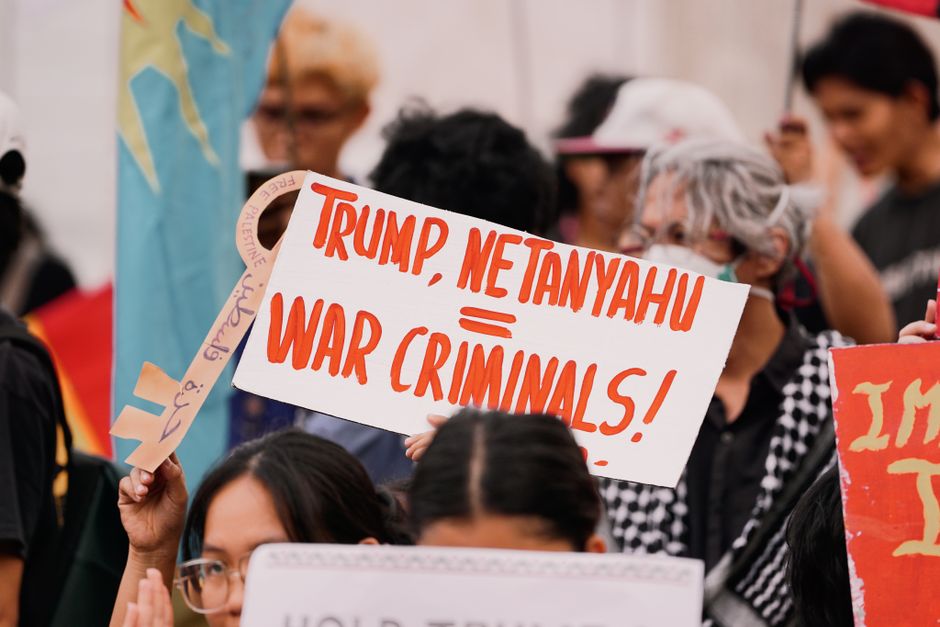
On October 29, protesters gathered outside Eisenkot's home in Herzliya, urging him to form a coalition with Israel-Arab parties rather than hand Netanyahu another term. Eisenkot and his wife Hannah had voted in Herzliya two days earlier.
Democracy Concerns Inside the Security Apparatus
A Haaretz analysis by Yossi Verter described the path to a government that could unseat Netanyahu as long and uncertain. It said Shin Bet chief David Zini is seeking another election to buy time to root out dissent within the agency. Netanyahu, it said, views Zini as key to delegitimizing Arab parties and thwarting the opposition's next moves in the Knesset. The headline accused Zini of waging "war on democracy from the inside."
What Changes for Palestinians
Ahmet Arda Şensoy, a Ph.D. candidate in International Relations at the University of Nottingham, wrote in Daily Sabah that the result showed two tendencies coexisting in Israeli society: a desire to move on from Netanyahu and support for the security policies set during his rule. Daily Sabah noted the piece reflects only the author's views.
Şensoy wrote that Eisenkot opposes establishing a Palestinian state and supports eliminating Hamas's military and political capabilities. Military pressure on Gaza, he wrote, was unlikely to end under either leader, and a comprehensive process toward an independent Palestinian state was unlikely to begin. West Bank policy could differ. Netanyahu's far-right allies support settlement expansion and annexation, while an Eisenkot-led government might take a more controlled approach under international pressure, though Bennett and Liberman could make a policy recognizing Palestinian sovereignty difficult. High Arab turnout, Şensoy wrote, showed political mobilization among Palestinian citizens of Israel, while excluding Arab parties reflected a structural problem beyond Netanyahu.
An Iran Clock Running Alongside
Şensoy also linked the coalition crisis to the U.S. congressional midterms in November. He wrote that Trump had sought to avoid another major operation against Iran before the vote, and that the military option would be reconsidered afterward. A caretaker government could stay in place during negotiations, and if another early election were called, uncertainty could last around six months. A new attack, he wrote, could push the coalition crisis aside and refocus Israeli politics on national security. Iranian retaliation, economic costs, an unsuccessful operation or a U.S. preference for diplomacy could instead weaken Netanyahu or limit American support.
Why This Matters: Nearly one in six Knesset seats now belongs to parties that represent Palestinian citizens of Israel, yet the arithmetic of change runs through a door the likely next prime minister has promised to keep closed. If the Arab electorate's weight is acknowledged only when it's convenient, the gap between participation and power widens. And for Palestinians in Gaza and the West Bank, the analysis cited here suggests that replacing Netanyahu may not mean a different course: no path toward statehood under either leader, continued military pressure in Gaza, and settlement policy that depends on who ends up in the coalition. With a possible six months of uncertainty ahead and a parallel Iran calendar in play, the political vacuum itself carries risk.
- israel election
- gadi eisenkot
- benjamin netanyahu
- coalition government
- ra'am
- arab parties
- shin bet
- israeli democracy