
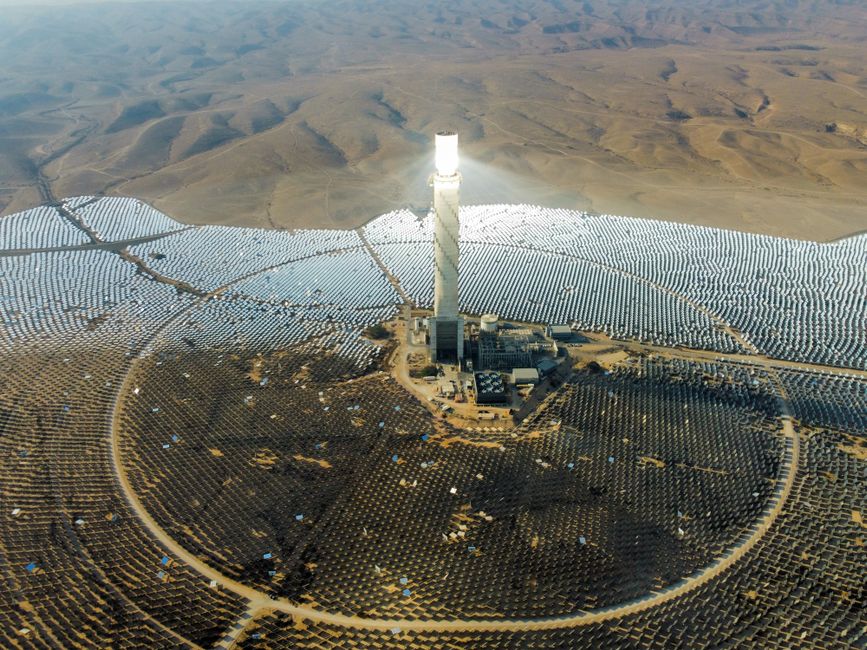
Israel's Ministry of Energy and Infrastructure is preparing a National Strategic Plan for Renewable Energy by 2035 that emphasizes solar power, including installing solar panels on existing facilities to preserve open space. The plan is meant to expand renewable energy generation while limiting new land use, with the ministry presenting the roadmap as the state’s answer to energy demand in the years ahead.
Who Decides, Who Adapts
The ministry is the central authority shaping the plan, and ordinary people are left to live with the land-use choices made from above. The proposal puts solar power at the center, but only in a way that keeps new development off open spaces. That means the apparatus is not simply talking about energy; it is deciding where infrastructure will be allowed to spread and where it will not, with the state managing the terrain as a resource to be allocated.
The plan focuses on installing solar panels on existing facilities. That detail matters because it shows the ministry is trying to expand renewable energy generation without opening up more land to construction. In other words, the state is trying to solve one problem of centralized planning by tightening the terms of another, keeping the basic structure of top-down control intact while changing the technology on top of it.
What the Plan Says It Will Do
The National Strategic Plan for Renewable Energy by 2035 is intended to expand renewable energy generation. The ministry says the strategy will do that while limiting new land use. The emphasis on solar power is the core of the proposal, and the use of existing facilities is presented as the way to preserve open space.
That framing places the ministry in the role of manager and gatekeeper. It is not a community-led energy transition, but a state-directed one, with the ministry preparing the roadmap and setting the boundaries. The language of preservation sits alongside the reality of centralized decision-making: the same institution that controls the plan also controls the terms of its rollout.
The Green Promise, Administered from Above
The plan is being prepared by Israel's Ministry of Energy and Infrastructure, which means the future of renewable energy is being organized through a government apparatus rather than through horizontal self-organization. The stated goal is to expand renewable energy generation by 2035, and the ministry is tying that goal to solar installations on existing facilities.
The result is a strategy that seeks to avoid further pressure on open spaces while still pushing energy infrastructure forward. The hierarchy is plain enough: the ministry sets the agenda, defines the limits, and presents the outcome as a strategic plan. Those outside the ministry are expected to absorb the consequences of decisions made at the top, whether those consequences involve land use, infrastructure placement, or the shape of the energy system itself.
The plan's focus on limiting new land use also shows the tension built into state-led development. The ministry wants more renewable energy, but it wants it on terms that preserve open space and keep expansion within existing facilities. That is the framework now being prepared for 2035, with the state claiming the authority to balance energy growth and land preservation from above.