
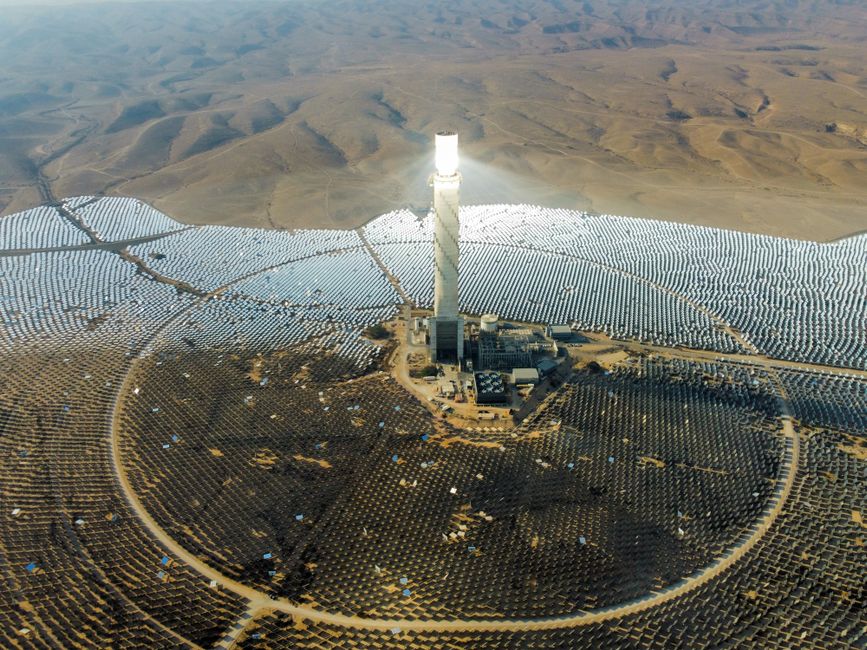
The Israeli Ministry of Energy and Infrastructure is preparing a National Strategic Plan for Renewable Energy by 2035, a framework that prioritizes the installation of solar panels on existing facilities. This approach, while presented as a means to preserve open space and limit new land use, structurally benefits existing landholders and capital interests by safeguarding the value and potential for future private development of undeveloped land. The plan, set to be unveiled in 9 years, aims to expand renewable energy generation without challenging the fundamental distribution of property or control over essential resources.
Who Profits from 'Preserving Open Space'
The Ministry's emphasis on preserving open space and limiting new land use directly serves to protect accumulated wealth tied to land ownership. By directing solar development onto existing facilities, the state ensures that undeveloped land, a primary asset for real estate speculation, resource extraction, and future capitalist ventures, remains untouched by public infrastructure projects. This structural decision prevents any potential devaluation or reallocation of land that could challenge the current distribution of property. The "preservation" of these spaces thus functions as a protection of capital assets, ensuring their continued appreciation and availability for private profit-making. The plan's focus on existing facilities means that new energy infrastructure will not compete with or diminish the market value of privately held undeveloped land, reinforcing the existing economic order.
The expansion of renewable energy generation, intended by 2035, represents a new frontier for capital accumulation. While the plan aims to increase energy output, the ownership and control of these new generation capacities are not specified. This omission leaves the door open for private corporations to capture the profits from this state-backed initiative, transforming a collective need for energy into a new avenue for private wealth concentration. The Ministry's plan thus facilitates the growth of private energy capital without addressing the fundamental question of public ownership or democratic control over essential resources. The shift to renewable energy, under this framework, becomes another mechanism for surplus extraction rather than a move towards genuine energy democracy.
The State's Role in Managing Capital
The Ministry of Energy and Infrastructure, as an arm of the state, is actively preparing this strategic plan, demonstrating its function in managing the contradictions of the economic system while preserving its foundations. By focusing on solar power on existing facilities, the state channels development in a way that avoids direct confrontation with powerful landowning interests and real estate capital. This governmental action, presented as a move towards sustainability and environmental protection, simultaneously reinforces the existing property relations and ensures that the expansion of energy infrastructure does not disrupt the market value of privately held land. The state's role is thus revealed as one that mediates capitalist expansion, ensuring new sectors for profit are opened without challenging the established order of wealth concentration. The plan's design reflects the state's primary function: to protect accumulated wealth and suppress organized challenges to the existing distribution of power, even when addressing pressing environmental concerns.
Limits of Systemic Reform
The National Strategic Plan for Renewable Energy by 2035 is presented as a solution to expand renewable energy generation. However, by focusing solely on the technical aspects of energy production and land use, the plan avoids any structural questions regarding the ownership of energy resources or the distribution of their benefits. The stated goals of expanding generation and limiting new land use, while seemingly progressive, do not address the systematic underpayment of labor in the energy sector, nor do they propose any mechanism for public control over energy production and distribution. This reform effort, confined within the existing system, extends its life by offering a technological adjustment without addressing the foundational issues of capital accumulation and private control over essential services. Every gain made within existing structures is temporary and reversible; structural change is the only lasting solution. The plan manages the system's contradictions by offering symbolic concessions—like "preserving open space"—that prevent deeper structural challenges to the private ownership of land and energy infrastructure.