
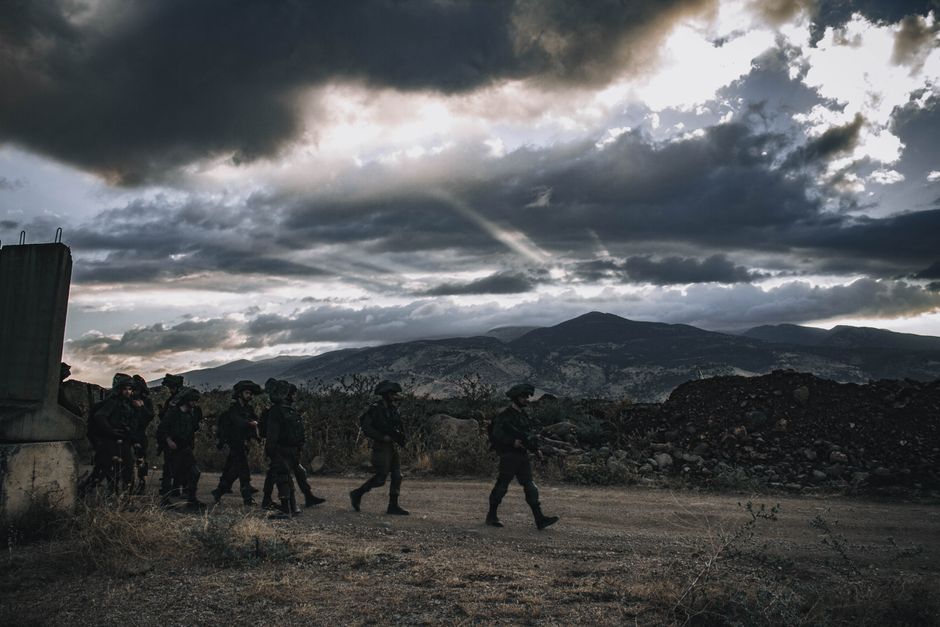
Israeli forces destroyed a major Hezbollah tunnel in South Lebanon, while simultaneously announcing attacks on Lebanon, Syria, and occupied Gaza on Sunday. The Israeli military's actions come despite claims of a broad ceasefire across these fronts, as reported by The Jerusalem Post.
Escalating Military Aggression
In Lebanon, near Nabatiya, the Israeli military killed several Hezbollah fighters armed with rocket-propelled grenades in a Saturday strike, a detail confirmed on Sunday. Israeli forces fired on Hezbollah fighters who approached close to them, particularly around the IDF’s deepest penetration in Lebanon near Nabatieh. The IDF also hit and destroyed a Hezbollah rocket launcher located in the vicinity. An IDF spokesman later told The Jerusalem Post that the attack was carried out to remove a threat.
Hezbollah hasn't fired a single rocket since last weekend, raising questions about how the rocket launcher could have posed an immediate threat. An IDF spokesman vaguely confirmed some kind of change with the rocket launcher, suggesting it might threaten them despite the absence of rocket attacks for over a week. This vague answer and the extended period without rocket attacks prompted questions about whether the main motivation was immediate danger or deterrence and the destruction of capabilities. Every time the Israeli military destroys a rocket launcher, Hezbollah loses a valuable asset that costs money and is harder to replace than a cell of a few fighters. This action both removes a concrete capability to fire on Israeli soldiers and civilians and may deter Hezbollah from staging as many movements of its fighters near IDF soldiers, which led to the initial exchange of fire.
Shifting Fronts of Control
The Israeli military also announced on Sunday that on Saturday it had killed several armed terrorists in southern Syria. According to the IDF, the military's 6th Etzioni Brigade, under the 210th Division, killed these individuals after they entered Israel's buffer zone. This represents a dramatic shift; the last time the IDF announced any kind of attack in Syria was over three months ago, on March 20 of the same year. Since then, the IDF had not announced a single attack in Syria.
The March 20 attack was exceptional because it related to Syria’s Druze, a larger geopolitical issue, and a problem that has only come a few times since the regime of Ahmed al-Sharaa took over in December 2024, marking its first anniversary. The last time the IDF announced that it had attacked a random group of terrorists in Syria because they entered Israel’s buffer zone was even longer ago. The IDF remained silent on why it attacked this time. Unlike periods when attacks in Syria were frequent and the exact identities of those killed were shared, including affiliations with Iran or Islamic Jihad, here the armed terrorists were kept anonymous.
U.S. Complicity and Regional Instability
It is possible the IDF has undertaken many attack operations in Syria in recent months without public mention, or that the military does not know who these armed Syrians were, or that they were not even connected to a major group. However, the fact that the IDF attacked them and made it public was no small event. The U.S. has pressured Israel since March to play more nicely with Syria because Trump views Sharaa not as a problem, but as part of the solution for stabilizing the region. By announcing the IDF attack in Syria, Israel is risking making waves.
This could be because Syria has been allowing frequent threats to Israel’s border zone, and Israel finally decided it needed to respond. Alternatively, with ceasefires on all other fronts, this could be the Israeli government looking for places to still attack and flex its muscles, potentially facing less pressure for attacking a few armed terrorists in Syria than for attacking in Lebanon. The Jerusalem Post noted that the IDF and Israel are trying to walk a hard tightrope after being forced prematurely by the U.S. to stop attacking Hezbollah without getting concrete commitments from the group regarding even partial disarmament. While that reality holds Israel back from hitting Hezbollah in broader strategic ways, using small-scale violations by Hezbollah fighters as a justification for attacking nearby Hezbollah capabilities at least backs a bit of a punch. It is unclear whether such a single altercation, or a pattern of such attacks, would lead Iran to threaten to pull out of talks with the U.S. over nuclear issues and the Strait of Hormuz, or whether Tehran will not upset the applecart as long as the IDF refrains from attacks beyond its immediate vicinity. Taken together, the reports describe a multi-front Israeli military posture that includes the destruction of a Hezbollah tunnel in South Lebanon, strikes on Hezbollah fighters and a rocket launcher near Nabatiya, and attacks in southern Syria and occupied Gaza. All three targeting cases are not typical and say a lot about the changing broader strategy on each border.