
Who Gets Stopped at Sea
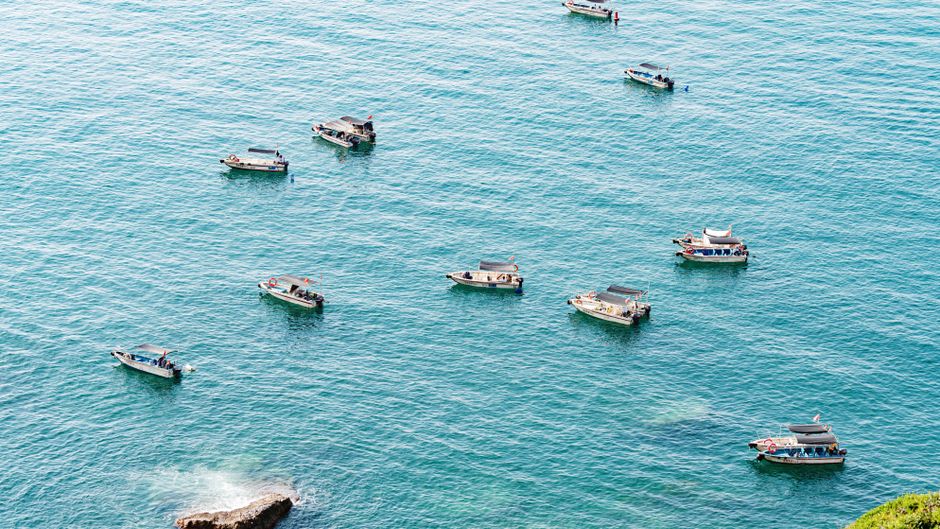
Activists said Israeli forces intercepted their Gaza aid flotilla near the southern Greek island of Crete overnight Wednesday into Thursday, detaining crews while the flotilla was sailing hundreds of miles from Gaza. The Global Sumud Flotilla set sail earlier this month from Barcelona, and organizers said more than 70 boats and 1,000 people from around the world would be participating, with more vessels joining as the flotilla sailed east across the Mediterranean. Israel’s Foreign Ministry said in a post on X that it was taking about 175 activists from more than 20 boats participating in the flotilla to Israel.
According to the ships’ tracker published on the activist group’s website, 22 vessels had been intercepted in international waters west of Crete, and 36 others were still sailing by mid-morning Thursday. The activists said Israel’s actions were “a dangerous and unprecedented escalation, the abduction of civilians in the middle of the Mediterranean, over 600 miles from Gaza, in full view of the world.”
What the Authorities Call Security
Israeli defense officials confirmed on Wednesday that Israeli forces had taken control of vessels participating in a Gaza-bound flotilla, following reports from organizers that Israeli forces on speedboats had approached their ships and aimed weapons at them. The flotilla’s effort to breach the blockade last year saw dozens of boats sailing near Gaza, with one crossing the 12 nautical mile (22-kilometer) line marking the divide from international waters to territorial waters. All were ultimately intercepted and seized or turned away.
Those sailing last year included Swedish climate activist Greta Thunberg. Israel arrested, detained and later deported the participants, who claimed Israeli authorities abused them while in detention. Israeli authorities denied the accusations. The pattern is familiar enough: people trying to move aid and attention toward Gaza meet the hard edge of armed control, while the machinery of the state insists it is merely managing order.
The Human Cost Below the Blockade
A fragile six month-old ceasefire in Gaza has halted the most intense fighting between Israeli forces and Hamas-led militants in the Palestinian enclave, but despite the ceasefire, Israeli attacks have killed more than 790 people, according to Gaza’s Health Ministry. The ministry, part of the Hamas-led government, maintains detailed casualty records that are seen as generally reliable by U.N. agencies and independent experts, but it does not give a breakdown of civilians and militants.
Overall, the health ministry says 72,300 Palestinians had been killed since the war in Gaza began with the Oct. 7, 2023, Hamas-led attack on Israel. The war began when Hamas-led militants stormed into southern Israel and killed around 1,200 people, mostly civilians, on Oct. 7, 2023. Around 2 million Gaza residents are still living in ruins with shortages of food and medicine, and only limited aid entering through a single, Israeli-controlled border post. Flotilla organizers said they hoped their latest attempt to reach Gaza would help highlight the living conditions endured by Palestinians in the territory, particularly as global attention has shifted to the U.S. and Israel’s war against Iran.
More Maps, More Control
The Times of Israel report said new maps provided to aid groups showed an expanded zone of IDF control in Gaza, and noted remarks by Bezalel Smotrich urging Palestinians to leave Gaza. That is the other side of the same apparatus: not just stopping boats at sea, but redrawing the space on the ground where people are allowed to exist, move, and receive aid.
Turkey’s foreign ministry condemned the seizure of the flotilla Thursday as “an act of piracy,” and said, “By targeting the Global Sumud Flotilla, whose mission is to draw attention to the humanitarian catastrophe faced by the innocent people of Gaza, Israel has also violated humanitarian principles and international law.” Turkish foreign ministry spokesman Oncu Keceli wrote on X that Turkish Foreign Minister Hakan Fidan had discussed the raid over the phone with his Spanish counterpart Jose Manuel Albares Bueno.
Activists in Greece said they planned a protest rally Thursday afternoon outside the Greek foreign ministry in Athens, saying Israel’s interception of the boats occurred within the maritime zone that falls under Greece’s responsibility for search and rescue operations and that the country’s coast guard had not reacted. The flotilla’s tracker said 36 vessels were still sailing by mid-morning Thursday, even as the state machinery moved to seize the rest.