
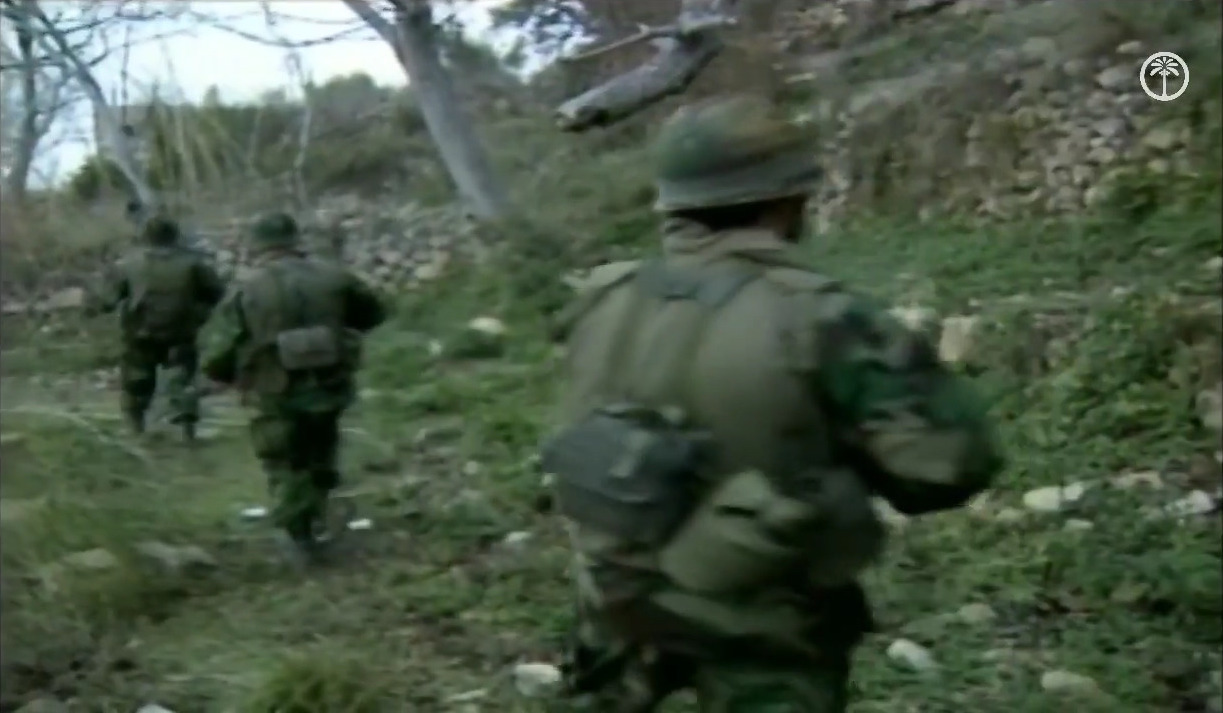
The fifth round of negotiations between Israel and Lebanon opened on Tuesday in Washington while the machinery of war kept doing what it does best: killing civilians, striking armed groups, and dressing up the whole mess as a diplomatic process. Just before the talks began, Hezbollah said the IDF "violated" the ceasefire, alleging that soldiers opened fire with "automatic weapons towards a group of civilians" near Nabatiya at approximately 11:30 a.m. Hezbollah said two civilians were killed and two more were injured.
Ceasefire on Paper, Fire on the Ground
Hezbollah called the alleged incident "treacherous" and said, "This constitutes a blatant violation of the ceasefire, which the resistance [Hezbollah's term for itself] has been careful to uphold until now." The language is familiar enough: one armed hierarchy accusing another of breaking rules that civilians are expected to survive. The ceasefire, such as it is, appears to exist mainly as a document for officials to invoke while armed forces continue to decide who gets to live near Nabatiya.
Earlier on Tuesday, Lebanese media reported that negotiators were discussing returning the remains of missing Israel Air Force navigator Ron Arad in exchange for Lebanese prisoners. Israeli officials told The Jerusalem Post that they were unaware of this development and had no new information on Ron Arad, but said they would be pleased to hear if Lebanese officials had new intel. The exchange, if it moves anywhere, would be another reminder that states and armed factions alike treat human remains and prisoners as bargaining chips in negotiations run far above the heads of ordinary people.
The State's Monopoly, Repackaged as Peace
Lebanon President Joseph Aoun said that his government would "accept nothing less than the end of the Israeli occupation in southern Lebanon." He said during a Lebanese government cabinet meeting, "We are heading into a new round that we hope will be decisive on the path to accomplishing what we want for the good of our country and people, and this good we see in restoring Lebanon's full sovereignty over every inch of soil and extending the state's authority over all our land." That is the old state script in fresh ink: sovereignty, authority, territory, control. The promise is always that more state power will somehow end the violence produced by state power.
The IDF struck an armed Hezbollah cell operating near soldiers in the Ali Taher Ridge area of southern Lebanon, in the Security Zone, and the military confirmed the strike earlier on Tuesday. Another strike reportedly happened on Tuesday, according to Lebanese media, when a drone attacked a parked vehicle between the villages of Beit Yahoun and Baraashit in southern Lebanon. The IDF did not comment on that strike. On one side, the Israeli military claims the right to strike. On the other, Hezbollah claims the right to resist and to police the ceasefire in its own language. In between are the people near Nabatiya, Ali Taher Ridge, Beit Yahoun, and Baraashit, who get the consequences.
Washington, Mediation, and the Usual Diplomatic Theater
The renewed talks between Israeli and Lebanese delegations beginning on Tuesday in Washington were held under U.S. mediation and were described as taking place in a new diplomatic framework, one dictated to Israel not only by U.S. President Donald Trump, but also by his new "partner," Iran. That is the international state system in miniature: Washington mediates, regional powers maneuver, armed actors posture, and civilians absorb the damage. The framework may be new in the phrasing, but the structure is old enough to smell like it has been sitting in a cabinet meeting for years.
The talks were centered on creating "pilot areas" where Israeli forces would withdraw in order for the Lebanese army to prove its ability to disarm Hezbollah. That arrangement places yet another armed institution in the role of proving its legitimacy by extending control over territory and people. The Lebanese army, Hezbollah, the IDF, and the U.S. all appear in the same choreography: one force withdraws conditionally, another is expected to disarm, and the state system calls it progress.
What the article makes plain is that the negotiations are not happening outside the violence; they are happening inside it, with each side using the language of sovereignty, security, and ceasefire while armed power continues to decide the terms on the ground. The civilians near Nabatiya do not get a seat at the table. They get the bullets, the drone strike, and the press release.