
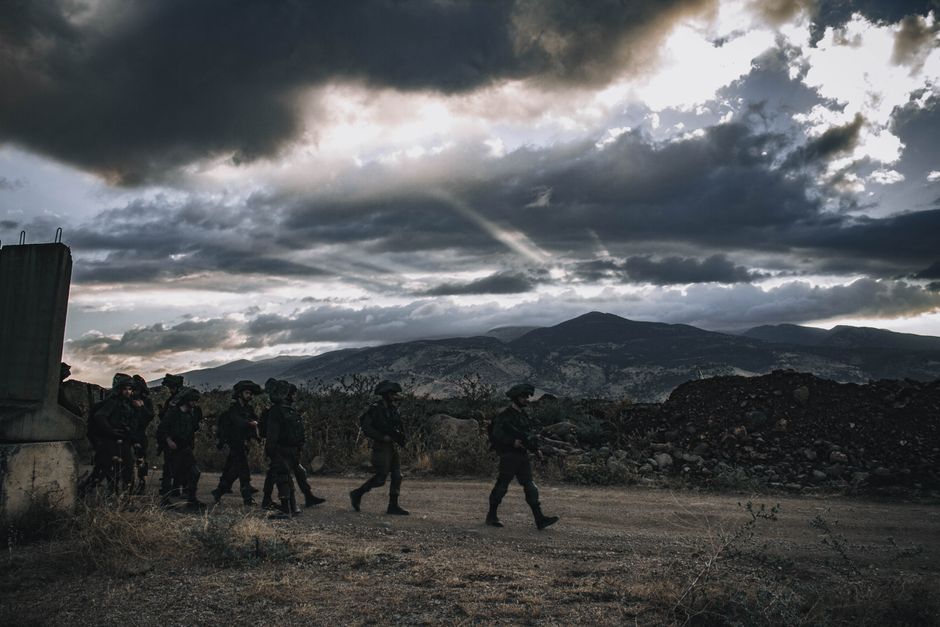
Israel’s defense minister declared Monday that the country would not withdraw from land seized in Lebanon, Syria, and the Gaza Strip, asserting plans to stay “indefinitely” in these territories. This declaration coincides with a separate report detailing the systematic dismantling and severe challenges facing the economy in the occupied West Bank, revealing the dual strategy of territorial expansion and economic subjugation.
Over the past 2 1/2 years, Israel has consolidated control over approximately 1,000 square kilometers (386 square miles) of territory across Gaza, Lebanon, and Syria. Defense Minister Israel Katz’s statement solidifies this territorial acquisition, indicating a permanent claim over these lands.
Who Pays the Price
The economic lifeblood of the occupied West Bank is being actively dismantled, according to the separate report. This process inflicts severe challenges on the working people and dispossessed populations reliant on the territory’s economy.
Katz further escalated tensions by threatening Iran with “great force” if it retaliates against Israeli strikes in Lebanon. This threat underscores the ongoing projection of military power in the region.
David Mencer, a spokesman in Prime Minister Benjamin Netanyahu’s office, affirmed that Israel and the U.S. remain fully aligned on preventing Iran from obtaining nuclear weapons. Mencer also stated Israel’s intent to continue acting against those who seek to harm its citizens, refusing to tolerate attacks from Hezbollah on its territory.
The human cost of this expansion is borne by the working class and displaced populations. Many Lebanese who had fled Israeli evacuation orders and intense fighting were attempting to return south to assess their homes.
Celine Fayad, driving south, reported that her village, Aitaroun, located along the border with Israel, was among the first to be occupied and now lies in ruins. Ali Haidar, returning to Nabatiyeh, a southern city at the center of recent Israeli military operations, found many central buildings reduced to dust. Haidar stated, “This used to be our home, our childhood home where we have all of our memories. This is where we grew up. Now it’s gone. We will return to rubble and sand. It’s better than being displaced.”
The State's Role and Resistance
The Lebanese army issued a warning to residents not to rush back to border villages, citing the danger of “Israeli violations and aggression.” This official caution highlights the ongoing threat posed by the occupying power.
In its first public statement after a recent agreement’s announcement, Hezbollah credited Iran with a “major achievement.” The militant group stated the agreement could lead to “the full liberation of our land, the return of our prisoners to their homeland and families,” and reconstruction of war-devastated areas. Hezbollah also affirmed its commitment to resisting Israel “until full withdrawal is achieved.”
Israeli bombing of Beirut’s southern suburbs on Sunday nearly derailed negotiations, demonstrating how military force consistently undermines attempts at diplomatic resolution. This follows a previous exchange where Iran fired on Israel, and Israel fired back, further illustrating the cycle of violence inherent in the conflict.