
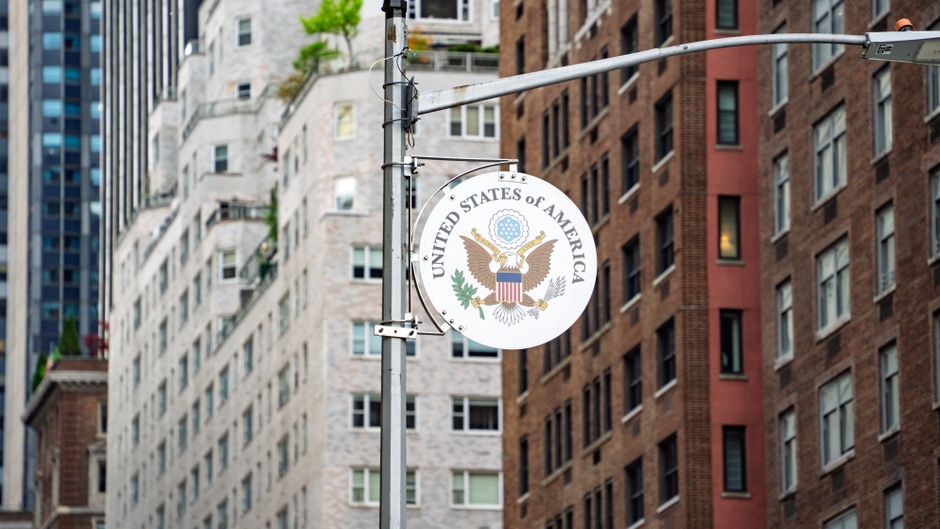
US embassies in Jerusalem and other Middle Eastern capitals told citizens in the region to consider leaving or be ready to depart because of the “potential for unforeseen escalation” in the conflict with Iran. The warning came through a liveblog entry published on August 1, 2026, at 2:37 pm, another neat reminder that ordinary people are expected to absorb the shock when states start rattling sabers.
The State’s Travel Advisory Machine
The embassies urged those planning a trip “to seriously reconsider travel to and through the region.” That’s the language of managed panic: not peace, not safety, just a bureaucratic instruction to move around the danger zone if you can, or brace yourself if you can’t. The messages said that, “Due to heightened tensions in the Middle East, the security environment remains complex with the potential for unforeseen escalation.” Complex for whom, exactly, is left unsaid. For the people who can book flights out. For the people who can’t, the complexity lands differently.
The embassies also said, “Americans in the region should consider departing, or be prepared to depart should there be escalation,” and warned that travel may be disrupted because of the tension. Those who do travel to or from the region should monitor information about airport and airline operations, the messages said. Airports, airlines, departures, disruptions — the machinery of mobility stays open for some and becomes a trap for everyone else when the state system starts flexing.
The embassies said they remain open “for routine American citizens and visa services.” Routine. That word does a lot of work. It suggests continuity, paperwork, and normal life, even as the same governments tell people to get ready to flee because the region may tip further into escalation. The consular window stays open while the political order outside it keeps cracking.
Who Gets to Call It “Unpredictable”
The messages said, “The Iranian regime is unpredictable, as seen by its recent decisions to attack areas in the region without warning or provocations as well as to expand attacks to areas not previously targeted (such as Egypt).” That’s the official framing: one regime denounced as unpredictable, while the broader architecture of state power remains intact and unexamined. The embassies present the danger as a matter of one government’s behavior, but the people receiving the warning are the ones told to leave, reroute, or wait for the next escalation to hit their lives.
The liveblog entry doesn’t report a startup raising $113 million, despite the topic title attached to it. What it does report is a familiar state ritual: diplomatic offices issuing travel warnings while armed governments keep the region on edge and civilians are left to read airport notices like weather reports. The message is plain enough. When states escalate, they don’t just threaten each other. They turn whole populations into passengers on a system they don’t control.
The embassies’ advice is framed as caution, but it also maps the hierarchy cleanly. Some people are warned early. Some are told to reconsider travel. Some are told to be ready to depart. And some, with no embassy and no exit, are left to live inside the consequences.
The liveblog entry was published the same day the warning was issued. The machinery moved fast. The people underneath it had less room to move at all.