
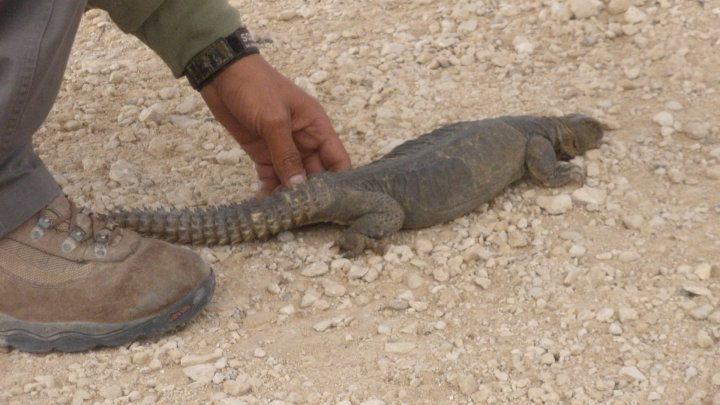
Israel faces a significant biodiversity challenge as half of the nation's reptile species face endangerment, according to a feature published by Haaretz on April 9, 2026. The crisis has prompted museum curators and conservation researchers to take stock of the problem through scientific documentation and public education—marking the beginning of what officials describe as new conservation efforts.
The Steinhardt Museum of Natural History in Tel Aviv has become a focal point for this effort, housing a notable collection of preserved reptiles that illustrate both the diversity and vulnerability of Israel's herpetological heritage. The museum's display includes specimens such as the Beer Sheva fringe fingered lizard, preserved in a jar with its brownish colors and distinctive features still clearly visible despite being deceased. The preserved specimens are part of the Father Schmitz collection, now on display at the museum.
Conservation Documentation Begins
Karin Tamar, an evolution researcher and curator of mammals, reptiles and amphibians at the Steinhardt Museum of Natural History, leads efforts to catalog and present these specimens to the public. Tamar is shown presenting a row of jars containing various lizard species, a display described as mesmerizing in its careful preservation and presentation. The specimens serve as both scientific records and educational tools for understanding Israel's reptilian fauna.
The conservation initiative centers on a comprehensive documentation effort known as "The Red Book of Reptiles," which began with systematic surveys of Israel's reptile populations. This project represents the foundational work necessary for establishing informed conservation priorities and strategies. The Red Book marks the formal beginning of new conservation efforts aimed at protecting endangered species such as the Lebanon viper and Levant rat snake.
The Scope of the Challenge
The fact that half of Israel's reptile species are endangered underscores the scale of the conservation challenge facing the nation. This level of endangerment suggests that without systematic intervention, significant portions of Israel's natural heritage could be lost. The museum's role in preserving specimens and documenting species serves as both a safeguard against complete loss of genetic and morphological records and a baseline for measuring future conservation outcomes.
The Father Schmitz collection, photographed by Itai Ron, represents decades of specimen collection and preservation work. These jars of carefully maintained reptiles embody the meticulous scientific approach required for understanding and protecting endangered species. Each preserved specimen provides researchers with detailed anatomical records that cannot be replicated through photographs or field observations alone.
Why This Matters:
Israel's reptile endangerment crisis has direct implications for ecosystem health, scientific research capacity, and resource allocation. With half of the nation's reptile species at risk, policymakers and conservation organizations must balance the costs of protection efforts against other fiscal priorities. The systematic documentation begun through "The Red Book of Reptiles" provides the factual foundation necessary for evidence-based conservation decisions rather than speculative or ideologically-driven approaches. The museum's role demonstrates how institutional preservation and scientific cataloging can inform practical conservation strategy. Understanding the true scope of the problem—through research like Tamar's curatorial work—is essential before committing public or private resources to specific interventions. The preservation of specimens in collections like the Father Schmitz collection ensures that future generations of researchers will have access to baseline data for measuring conservation success or failure.