
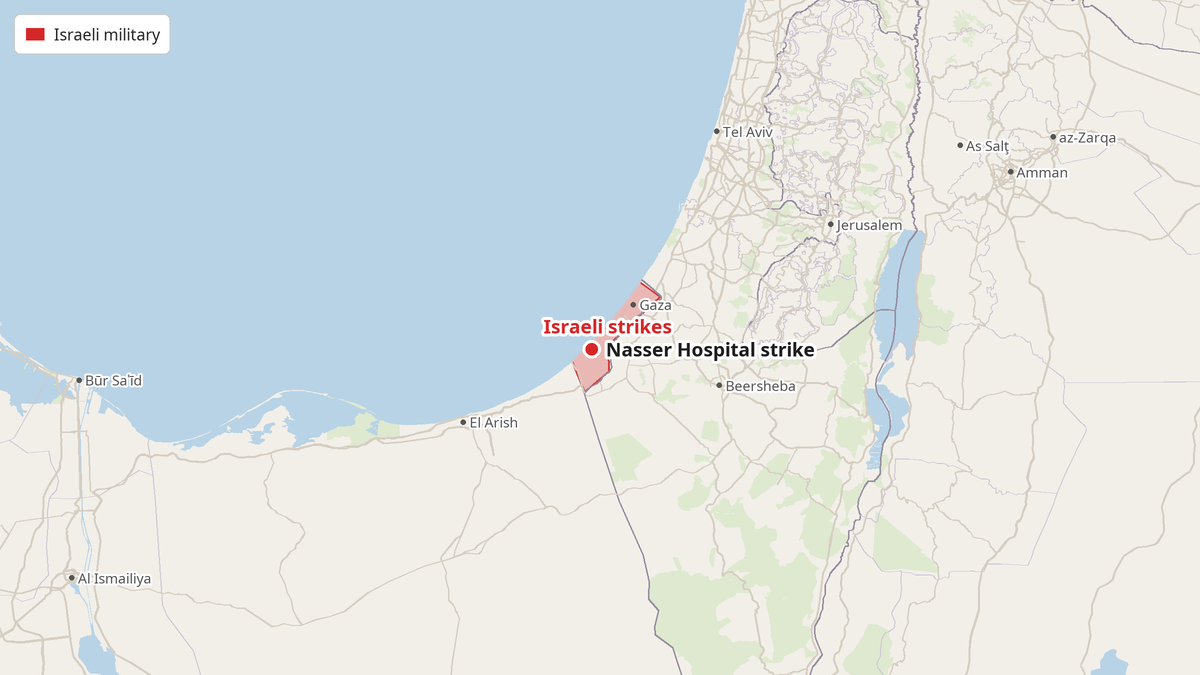
An Israeli strike on the surgery building of Nasser hospital in Gaza on Thursday killed six people, including a child and a surgeon, and injured dozens of others, according to Doctors Without Borders (MSF) and other organisations. Israel killed at least 10 Palestinians in Gaza that day. Six of them died in a building where people go to have their bodies put back together.
MSF said it is "utterly appalled and outraged." The group reported that it had already treated two doctors and a third patient, all of whom needed surgery, in a separate building. Read that again: the medical staff were wounded, and then treated by their own colleagues in whatever part of the compound was still standing. That's what a healthcare system looks like in the fourth year of the war.
The Machine Keeps Its Tally
This isn't the first time. MSF noted that since October 2023 the hospital has been hit by at least six airstrikes, on top of repeated ground incursions, shelling and gunfire. "In no conceivable circumstances can attacks on functioning hospitals in Gaza be treated as normal or acceptable," the organisation said. The sentence itself is the tell. Nobody drafts a line like that unless the thing it warns against has already become routine.
The military apparatus that ordered the strike answers to a state, and that state's army decides which buildings count as targets. The patients and the surgeon had no vote in it. They just happened to be inside when the order was carried out.
The Statistics of Institutional Failure
World Health Organisation chief Tedros Adhanom Ghebreyesus put numbers on the pattern. "Since October 2023, WHO has documented 1056 attacks on healthcare in Gaza, resulting in 1010 deaths and 1725 injuries," he wrote in a post on X. That's more than a thousand documented attacks. Each one was filed, counted and, as far as the base reporting shows, absorbed without consequence.
Ghebreyesus repeated his demand: "allow unhindered humanitarian access and let more medical and humanitarian supplies enter Gaza." He added that health facilities "must be protected. They must never be militarised or attacked." His call, he said, "remains unchanged." Read that as an admission. A global health body has been repeating the same request for years, and the supplies still need permission to cross a border controlled by the same army doing the bombing.
The Documentation Racket
There's a grim division of labour here. One institution drops the bomb. Another counts the casualties. A third issues the statement. MSF and the WHO do work that matters on the ground, and their staff bleed alongside the patients. But the pattern in their own words is telling: appeals for access, calls for protection, language of outrage that has to be restated because the last restatement changed nothing.
The documented numbers, 1,010 deaths from attacks on healthcare, are the output of an international system that registers atrocity with great precision and prevents it with none. The ledger grows. The call "remains unchanged."
Who Pays
The people who pay are the ones with no army and no seat at any table: a child, a surgeon, dozens of wounded, and the doctors who had to be operated on by their own colleagues. The strike hit the surgery building one day before this report, on 12 November 2026, and the hospital has to keep functioning anyway, because there's nowhere else for the injured to go.
No state in this story has announced that it will stop. The statements will be filed and the count will rise.
- nasser hospital
- gaza
- israeli strikes
- doctors without borders
- world health organization
- tedros adhanom ghebreyesus
- attacks on healthcare
- humanitarian access